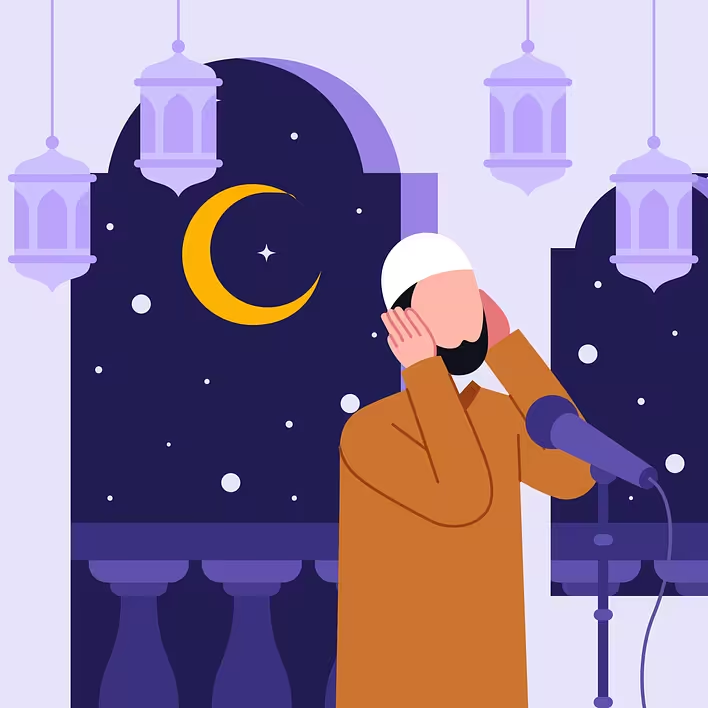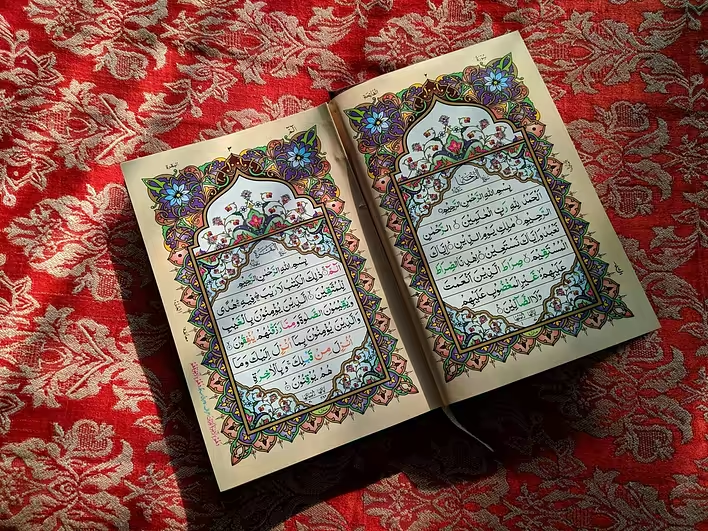


A fatwa is an official religious opinion or legal consultation in Islam. It is issued by an authoritative Islamic scholar or mufti, that is, a person who has deep knowledge of Sharia (Islamic law). Fatwas usually concern issues that do not have a clear resolution in the Quran or hadiths (traditions of the Prophet Muhammad).
Historical Context
The fatwa has an ancient history. It emerged in the early centuries of Islam as a way to resolve legal and ethical questions that arose within the Muslim community. At a time when Islam was spreading to new territories, many new situations arose that required religious explanation. This is where fatwas appeared as a tool for adapting Islam to various cultural and social contexts.
How is a Fatwa Issued?
The process of issuing a fatwa is quite complex and responsible. A mufti must carefully study all aspects of the issue, refer to existing religious texts, and consider the opinions of other scholars. Only after this can he issue a fatwa. It is important to understand that a fatwa is not a command, but a recommendation or interpretation. It is not mandatory to follow.
The Role of Fatwas in the Modern World
Today, fatwas play an important role in the lives of Muslim communities around the world. They help address complex issues arising from scientific discoveries, social changes, or political events. For example, questions about the use of biotechnology or participation in elections may become the subject of a fatwa.
Examples of Fatwas
- Biotechnology: Is it permissible to use genetic engineering to treat diseases?
- Economics: Is it permissible to invest money in certain types of businesses?
- Social Media: How should Muslims behave online?
How to Distinguish an Authoritative Fatwa?
To understand whether a fatwa is authoritative, pay attention to the source of its issuance. Authoritative muftis usually have a high level of education and are recognized by other scholars in their field. It is also important to consider the context and target audience of the fatwa.
Why is it Important?
Fatwas help Muslims integrate their religious beliefs into everyday life without conflict with modern realities. They provide moral and ethical support in complex situations and help maintain harmony between traditions and innovations.
Thus, a fatwa is more than just a religious consultation; it is a bridge between the past and the present for millions of people around the world. Understanding what a fatwa is and how it works can help better comprehend the cultural and social aspects of Muslim community life. So the next time you hear about a fatwa in the news or conversations, you will already know a bit more about its significance and impact.