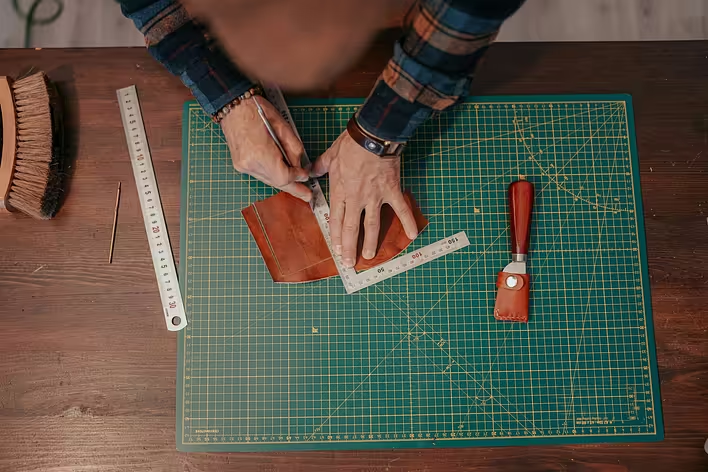

Skinning is always a moment of truth. There are no trifles here: every movement matters, every centimeter of the cut affects the quality of the result. An improperly selected tool forces you to press harder, correct the line, and lose rhythm. As a result, the work becomes slow, and your hands tire faster than necessary.
A good knife does not speed up the process by force — it relieves tension. When the blade enters the material smoothly, and the shape of the handle naturally fits in the palm, the movement becomes calm and precise. That’s why the choice of tool here is not about brand or appearance, but about the feeling of control. You should not fight with the material, but lead the line as if you are drawing.
The knife for this work is an extension of the hand. And if it is selected correctly, speed comes naturally, without haste.
The shape of the blade matters
Skinning knives have one common feature — they are designed for sliding. Unlike universal blades, here the cutting force is not important, but its cleanliness. The blade should be thin, with smooth geometry, without an aggressive "tooth".
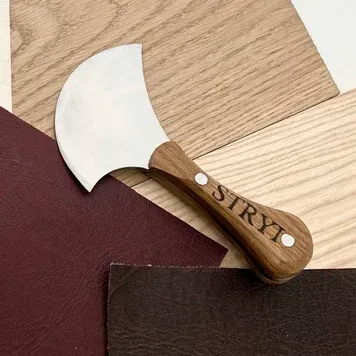
Typically, one chooses:
- blades with a rounded cutting line for controlled movements;
- thin taper that does not tear fibers;
- medium length — to maneuver without overloading the wrist.
An overly long knife complicates precision, while a short one forces more movements. Balance is critical here. That’s why a quality skinning knife always looks simple: without excessive mass, without decorative aggression, but with thoughtful geometry.
A handle that doesn't hinder
During work, the wrist constantly changes position. If the handle is slippery, too thin, or, conversely, massive, the hand begins to tense up. This is not noticeable at first, but after half an hour, the movements become sharp, and accuracy decreases.
A good handle:
- does not slip even in a damp palm;
- allows working with both a forward and reverse grip;
- does not press on the fingers during prolonged work;
- provides a feeling of control without force.
This is where the feeling of "your" tool is formed. You stop thinking about the knife and focus on the material. The line becomes straighter, the movement calm, and speed appears naturally.
Common mistakes when choosing
Beginners often focus on appearance or versatility. They take a massive knife "for all occasions," thinking it will handle fine work as well. As a result, they have to press, control excess weight, and constantly correct the trajectory.
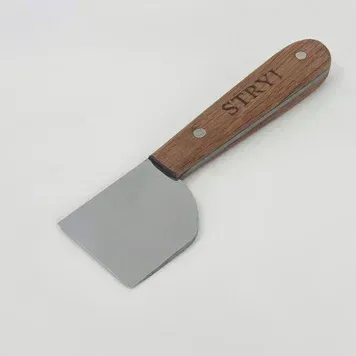
The most common mistakes:
- choosing too thick a blade;
- focusing only on brand or design;
- ignoring balance;
- trying to replace a specialized knife with a universal one.
Working with leather requires a different approach. Here, strength and mass are not important, but delicacy. A properly selected tool works almost silently, does not tear the edge, and does not require tension.
The tool as part of the process
Over time, there is a feeling that the knife does not just cut — it suggests. You begin to feel where the material gives way and where it requires caution. This is impossible with a rough tool. Precision is born where the hand trusts the blade.
A good knife does not force you to speed up. It takes away the excess: fear, tension, the need to control every millimeter. And then the work becomes even, calm, almost meditative.
Everything necessary for this approach can be found at stameski.com — there, tools are created not for show, but for real work, where every detail and every movement matters.