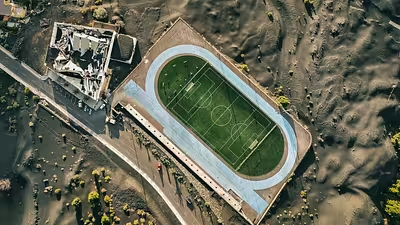


Have you ever wondered why some cities thrive while others do not? The secret to success is often hidden in something as simple yet complex as infrastructure. Infrastructure is, in simple terms, everything that makes our lives comfortable and convenient in the city. This includes roads, bridges, public transport, water supply, and even internet connectivity. Everything without which a city cannot function properly.
What is infrastructure?
Infrastructure is not just a collection of objects and systems. It is the heart of the city that ensures its viability. One could say that infrastructure is the “skeleton” of the city. Without it, no city can operate properly. Imagine a city without roads: cars cannot move, people cannot get to work. Or a city without plumbing: there is no water for drinking or cooking.
How does infrastructure change cities?
Infrastructure affects all aspects of life in the city. Here are a few key ways:
-
Improving quality of life: Developed infrastructure makes life more comfortable for residents. For example, fast and reliable public transport reduces commuting time.
-
Economic development: Investments in infrastructure promote business growth. Well-developed transport networks facilitate logistics and trade.
-
Environmental sustainability: Modern infrastructure can be environmentally friendly. For example, bike lanes and electric buses reduce air pollution.
-
Social integration: Infrastructure projects can connect different parts of the city, creating new opportunities for social interaction.
Why is it important to invest in infrastructure?
Investing in infrastructure is not just an expense, but a strategic investment in the future of the city. Here’s why it matters:
-
Increasing competitiveness: Cities with modern infrastructure become more attractive to businesses and tourists.
-
Reducing inequality: Access to quality infrastructure can reduce social and economic inequalities.
-
Preparing for the future: With the development of technology, there is a need for new types of infrastructure, such as charging stations for electric vehicles or high-speed internet.
Examples of successful cities
Let’s look at examples of cities that have become models to follow thanks to their infrastructure:
-
Copenhagen: This city is known for its cycling infrastructure. Bicycles have become the main mode of transport for many residents.
-
Singapore: Thanks to its well-thought-out transport system and environmental initiatives, Singapore has become one of the most developed cities in the world.
-
Tokyo: The high-speed “Shinkansen” trains have become a symbol of Japanese efficiency and speed.
How can you influence the development of your community?
You can start small — by participating in public hearings or signing petitions for the development of local infrastructure. It is important to be an active participant in the changes in your city.
In conclusion, it can be said that infrastructure is not just a collection of physical objects and systems. It is the foundation of our daily lives, determining the quality of life in the city and its future. So, the next time you find yourself waiting in line for a bus or waiting for the green light at a crosswalk, think about how much depends on these everyday things and how they shape our perception of the city and its possibilities.