In the modern world, we interact with media every day — even if we don't notice it. From the morning scroll through the news feed to the evening watching of a movie or listening to a podcast on the way to work — media constantly accompany us, shaping our thoughts, moods, and perceptions of the world. But what exactly is media and how do they really affect our lives?
What is “media”
The term media (from Latin medium — “intermediary”) encompasses all channels of information transmission. This can include television, radio, print, the internet, social networks, blogs, podcasts — everything through which we receive news, entertainment, education, and communication. And if earlier media were one-way — newspapers or televisions reported, and we just listened — today media have become interactive. Each of us can not only consume content but also create it: publish, comment, influence.
Types of media
Media can be divided into several main categories:
-
Traditional media:
- Print publications: newspapers, magazines
- Television and radio: broadcast transmissions
-
Digital media:
- Internet sites: news portals, blogs
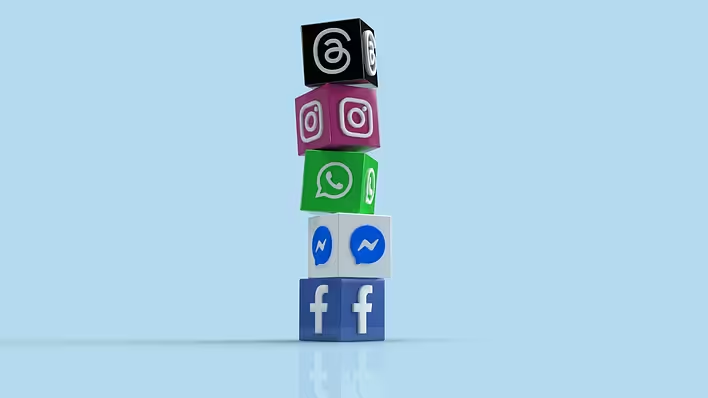
- Social networks: Facebook, Instagram
-
New media:
- Podcasts: audio programs for online listening
- Streaming platforms: YouTube, Netflix
Each of these types has its own characteristics and advantages. For example, print publications are often considered more reliable due to thorough fact-checking. Digital media provide speed and accessibility of information.
How do media affect our lives?
Media not only inform us about events in the world; they shape our thoughts and even behavior. For example:
- Shaping thoughts and views: Media have a huge influence on how we perceive events, people, and even ourselves. News, movies, social networks can highlight certain topics, silence others, or present information from a specific angle. This creates our picture of the world.
- Choosing a lifestyle: Trends, fashion, popular hobbies, or even diets — all of this often originates and spreads through media. We orient ourselves based on what we see on Instagram, TikTok, YouTube, or in our favorite series.
- Emotional state: The impact of media on mood and psyche cannot be underestimated. A constant stream of negative news can cause anxiety, while comparing ourselves to “ideal” images from social networks can lower self-esteem.
- Education and development: On the other hand, media open doors to knowledge: online courses, educational videos, scientific blogs help us learn in a convenient format. Information has become closer than ever before.
Media literacy — a new skill of the 21st century
In the conditions of information overload, it is especially important to learn how to filter content, verify sources, and think critically. Media can both help and manipulate — and it is up to us to decide what role they will play in our lives.
Interesting facts about media
- The term “media” first appeared in print publications in the 1920s.
- The first printed media — 1450. The first printed newspaper is considered to be Relation aller Fürnemmen und gedenckwürdigen Historien, published by Johann Carolus in 1605. But it all started with the invention of the printing press by Gutenberg in the 1450s.
- The first television broadcast — 1928. The television as we know it originated in 1928. The first broadcasts were experimental and transmitted only a few kilometers.
- Over 6000 tweets are created every second. Twitter (X) is one of the most dynamic media platforms. Over 350,000 tweets are published every minute, and this number is growing.
- A person spends over 7 hours a day on media. According to global statistics, the average user spends about 7–8 hours a day consuming media content — social networks, videos, music, news.
- The first viral video is considered to be the dancing baby from 1996. The so-called Dancing Baby became one of the first internet memes that spread across the network even before the YouTube era.
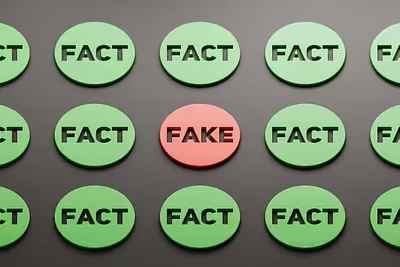
- Fake news spreads faster than true news. A study by MIT showed that fake news on Twitter spreads 6 times faster than credible information.
- Television still leads. Despite the boom in social networks, in many countries traditional television remains the main source of news — especially among the older generation.
- YouTube is the second most popular search engine in the world. After Google, YouTube is the platform where people most often search for information: recipes, news, how to do something, etc.
- The news feed format originated from newspapers. The concept of a “news feed,” which we see on Facebook, Instagram, or Twitter, has its roots in newspaper columns with short headlines.
- In the 2020s, news generated by artificial intelligence began to appear. Some media outlets are already using AI to write sports reports, financial news, or even weather forecasts.
Tips for media consumers
To avoid falling into the trap of fake news or manipulation:
- Check sources: Always learn more about the source of information.
- Be critical: Analyze information and question its credibility.
- Choose quality over quantity: It’s better to choose a few reliable sources instead of many dubious ones.
Media are not just means of communication. They are a mirror of the modern world that can both reflect the truth and distort it. Understanding how media work and a conscious attitude towards information is the key to remaining a free, informed, and independent person in the age of digital technologies.