Sarcofagi have long captivated the human imagination — not only as a place of final rest but also as silent witnesses of ancient epochs, filled with stories, mysteries, and legends. So what really lies behind this word, and what secrets may be hidden inside the stone coffin? Let's dive into this world together.
What is a sarcophagus?
A sarcophagus is a stone or wooden container for burial, in which the body of the deceased is kept. The very word “sarcophagus” comes from the Greek “sarx” (body) and “phagein” (to eat), which literally means “that which consumes the body.” Sounds a bit creepy, doesn’t it? But don’t be quick to be scared: it’s just a metaphor that emphasizes that sarcophagi serve to preserve bodies from decomposition.
History and evolution of sarcophagi
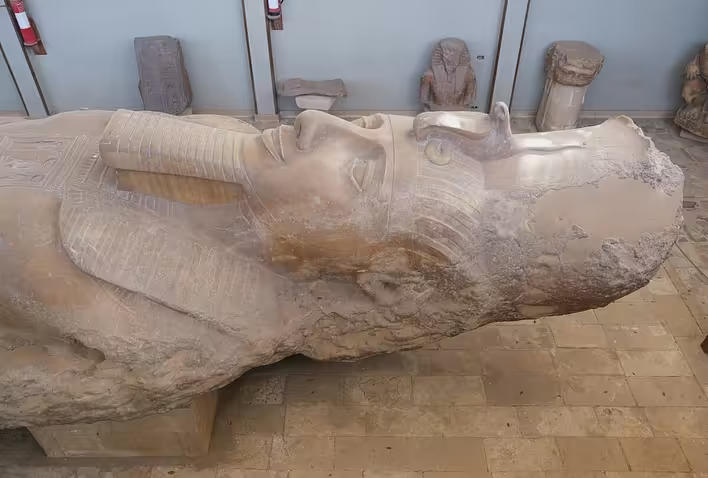
Sarcofagi have a long history that dates back to ancient Egypt. It was there that they gained particular popularity and luxurious appearance. Egyptian sarcophagi were true works of art: they were adorned with carvings, paintings, and inlays. They served not only to protect the bodies of pharaohs and nobles but also had religious significance, being considered a kind of “gate” to the afterlife.
- Ancient Egypt: Sarcophagi were made of stone or wood and decorated with hieroglyphs.
- Ancient Rome: Marble sarcophagi were used with reliefs on themes of mythology.
- Medieval Europe: Sarcophagi became part of the architecture of cathedrals and churches.
Why are sarcophagi important?
Sarcofagi served several functions at once:
- Preservation: Protected the body from decomposition and robbers.
- Rituality: Were an important part of funeral rites.
- Social status: Reflected the wealth and status of the deceased.
How was the material for the sarcophagus chosen?
The material for the sarcophagus was chosen depending on the social status of the deceased and the availability of resources. For example:
- Stone: The most durable material, used for pharaohs and high-ranking individuals.
- Wood: A more accessible option for the middle class.
- Metal: A rare and expensive material, used only in exceptional cases.
Interesting facts about sarcophagi
- In Egypt, sarcophagi often took the shape of a human body and were painted with portraits of the deceased.
- In Ancient Rome, sarcophagi were adorned with scenes from mythology that symbolized eternal life.
- The famous Egyptian pharaoh Tutankhamun had three sarcophagi: two wooden and one gold.
Thus, a sarcophagus is not just a container for a body. It is a true historical artifact that helps us understand the culture and traditions of the past. They preserve not only physical remains but also the spiritual heritage of peoples. I hope this article has helped you uncover some of the ancient mysteries of these mysterious objects.