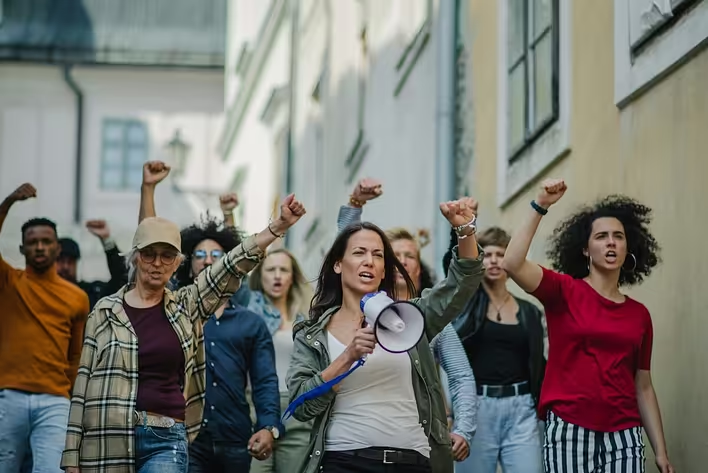


In a democratic society, citizens have the right to express their opinions, fight for their rights, and influence government decisions. One of the peaceful ways to convey a position is a picket.
But what is it really — a form of protest or just a symbolic action? How effective is a picket, and can it really change something in society?
Let's take a closer look.
What is a picket?
A picket is a peaceful public action during which individuals or groups stand with placards, slogans, or other symbols of protest near buildings, institutions, or in public places to draw attention to a specific issue.
Pickets can be:
- individual (one person with a placard);
- group (several people with a single demand);
- prolonged (for hours or even days);
- symbolic (even without words — a silent protest).
What is the purpose of a picket?
🔹 Draw attention to the problem; 🔹 Express disagreement with actions (of authorities, companies, organizations); 🔹 Create informational pressure; 🔹 Unite like-minded individuals; 🔹 Give a voice to those who are not heard.
Types of pickets
- Social and political pickets — against corruption, for human rights, in defense of the environment, etc.
- Labor pickets — organized by workers against layoffs, unpaid wages.
- Cultural pickets — against censorship, for freedom of creativity.
- Civil initiatives — for example, protests against the construction of parks, demolition of historical buildings.
Examples of pickets in Ukraine
- Picketing of developers in Kyiv by community activists;
- Peaceful pickets near embassies or the Office of the President — in support of LGBT+, victims of violence, or veterans.
Such actions are often covered in the media and spark public discussion.
How does a picket influence society?
1. Forms civil society
A picket is a manifestation of active civic position. People feel their power and responsibility for changes in their country.
2. Influences authorities and business
Even a small picket can force officials or companies to react, change decisions, or start a dialogue.
3. Draws media attention
The media can pick up the topic, give it exposure, involve experts, and bring the problem to a wider audience.
4. Unites people
Pickets often become the beginning of movements, initiatives, or campaigns. People see that they are not alone in their beliefs.
5. Protects freedom of speech
When society allows peaceful expression of disagreement — it indicates the level of democracy and human rights.
Is a picket always legal?
In Ukraine, according to Article 39 of the Constitution, citizens have the right to peaceful assemblies. However, the legislation does not clearly regulate the procedure for conducting pickets, so in practice, situations vary.
Local authorities may require prior notification of the action or attempt to ban it. It is also important to maintain public order, not interfere with the work of institutions, and not violate the rights of others.
A picket is a tool of influence available to everyone. It does not require large resources but can have a powerful effect — provoke discussion, increase pressure on authorities, unite the community.
In a democratic society, pickets are not a threat, but a signal: something is wrong, and people want to be heard.