
“Prepare your sled in summer” – this proverb is followed by many drivers who, without waiting for a sharp drop in temperature, decide to buy winter tires in advance. This approach is correct, as a sudden deterioration in weather in autumn or winter will not catch the driver off guard.
In Ukraine, winter tires are sold in a wide variety. Drivers have a choice of two types of tires, which differ in their functionality.
Studless Tires
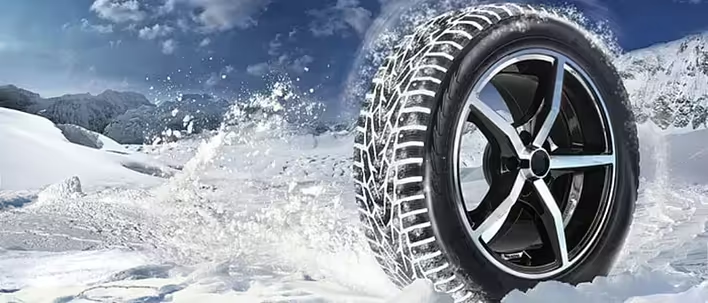
These are classic winter tires that do not have steel studs on the surface. The grip on a snowy road is provided by the components of the rubber compound, which create a sticking effect, and tightly arranged blocks sprinkled with sharp lamellas. The rubber composition is developed based on frost-resistant materials, which do not allow the tires to harden even in severe frost.
Studless winter tires can be purchased in two different types:
- European. The compounds are made from rubber materials of medium hardness. The blocks are smaller in size, compactly arranged with each other, and evenly distributed across the tread. The drainage system in European tires works excellently, consisting of deep grooves through which mud and moisture are quickly and effectively expelled.
The optimal operating conditions for European tires are a densely packed snow cover. Due to the medium hardness, the rubber behaves well on dry and wet roads. They can be used at temperatures from +7 to -10 degrees.
- Scandinavian. The treads are much stiffer, with larger blocks scattered across the surface. The sidewalls are equipped with gripping edges that break up the densely packed snow in front of the wheel. This improves the passability of heavily snow-covered roads.
The larger-sized blocks add overall weight to the tires. Under pressure, they can penetrate even thin ice films, ensuring reliable grip on slippery surfaces. However, in conditions of total ice, Scandinavian tires are powerless.
Scandinavian tires are recommended for drivers from regions where a lot of snow falls in winter, and the temperature rarely rises above freezing. These tires show optimal driving properties when the temperature is between 0 and -20 degrees.
Studded Tires
The main difference is the presence of metal studs scattered throughout the compound. These studs penetrate the hardest icy sections of the road, ensuring maximum contact with the road. In terms of composition, studded tires are no different from studless ones.
Studded tires are necessary for driving in the most severe winter conditions. In other cases, studded tires may not be useful – on cleared roads, problems can even arise:
- the braking distance increases;
- the studs often come out of the tread;
- wear accelerates;
- the risk of skidding (especially on wet roads) increases;
- noise from the wheels increases.
Studded tires are the most expensive type of winter tires sold in the Ukrainian market. At the same time, their average lifespan is much shorter than that of studless tires (about 3 seasons).
How to Choose Winter Tires
Drivers should consider three key factors:
- Size. It is essential to buy tires with the type and size specified by the vehicle manufacturer in the technical passport.
- Type. Studless models are suitable for driving in regions with a moderate winter climate, while studded tires are for harsher conditions.
- Brand. Do not skimp – winter tires from leading brands are better in many characteristics than tires produced by less prestigious companies.
Rims for Winter Tires
It is advisable to install steel rims on winter tires. Firstly, they have significantly better corrosion resistance and are sturdier, and secondly, they are much cheaper than alloy rims. Rims should be purchased with a diameter that matches the tire's hole – caps with different specifications cannot be mounted on the tires.