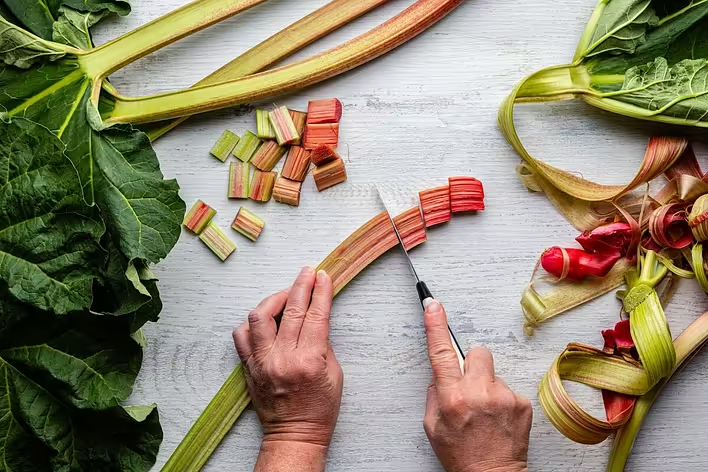

Rhubarb is a perennial herbaceous plant valued for its juicy tart red stalks. Although botanically rhubarb is a vegetable, in culinary terms it is often used as a fruit — especially in desserts. In many countries, spring and the beginning of summer are associated with rhubarb, as that is when its season is in full swing.
Origin and Distribution
Rhubarb originates from China, where it was used over 2,000 years ago as a medicinal plant. In Chinese medicine, its roots were valued for their laxative and cleansing properties. Rhubarb made its way to Europe via the Silk Road and began to be cultivated around the 16th-17th centuries.
In culinary terms, rhubarb stalks began to be widely used in Europe only in the late 18th to early 19th century, when sugar became more accessible. Rhubarb quickly became a popular ingredient in desserts due to its bright tartness, which pairs well with sweet products.
Today, rhubarb is grown all over the world, especially in regions with a cool climate — in Northern Europe, Canada, the USA, Ukraine, and Poland.
Culinary Uses
Only the stalks of rhubarb are used for food — they have a pleasant tartness that is balanced with sugar or honey. The leaves of rhubarb are not consumed, as they contain oxalic acid in high concentrations — which is toxic.
Dishes with Rhubarb:
- Rhubarb pie — a classic English or American dessert, sometimes with the addition of strawberries (strawberry rhubarb pie).
- Jams and preserves — rhubarb provides an excellent jelly-like consistency.
- Compotes and lemonades — rhubarb is very refreshing.
- Sauces for meat or cheese — for example, in German or Scandinavian cuisine.
- Crumble — a popular British pastry with rhubarb and a crunchy topping.
- Cookies, tarts, mousses — rhubarb adds zest and color.
Rhubarb in World Cuisines
- United Kingdom: rhubarb is considered a classic seasonal ingredient. Popular dishes include rhubarb pies, sauces, and even rhubarb wine.
- Germany: used in strudels, jellies, pies, and as a filling for pancakes.
- Scandinavian countries: rhubarb is often cooked with sugar and served with cream or ice cream. It is also added to dessert soups.
- Poland and Ukraine: traditional compotes, jellies, and pies with rhubarb.
- USA and Canada: popular combined with strawberries in pies, jams, and also in summer lemonade menus.
Interesting Facts
- Rhubarb was officially recognized as a fruit in the USA in 1947 — solely due to its culinary use.
- There are varieties of rhubarb with green or reddish stalks — red ones are considered sweeter and more attractive in desserts.
- Rhubarb is rich in vitamin K, fiber, and antioxidants.
Rhubarb is a vivid example of how a seemingly simple plant can become a sophisticated ingredient in the cuisines of various peoples. Its unique sour taste wonderfully complements sweet and even savory dishes. If you haven't tried rhubarb pie or homemade lemonade with rhubarb yet — now is the time to discover this delicious spring classic.