

Today, manufacturers of stove equipment compete not only in design but also in technical solutions that ensure maximum efficiency. The market offers models with varying power and additional features – for example, in the online store "Your Chimney", a wide range is collected, among which it is easy to choose a stove for specific operating conditions.
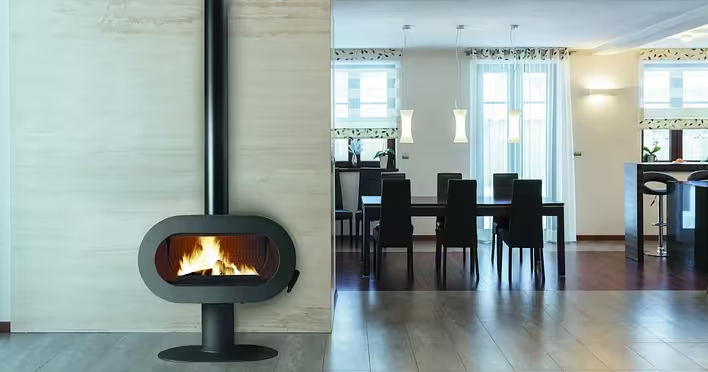
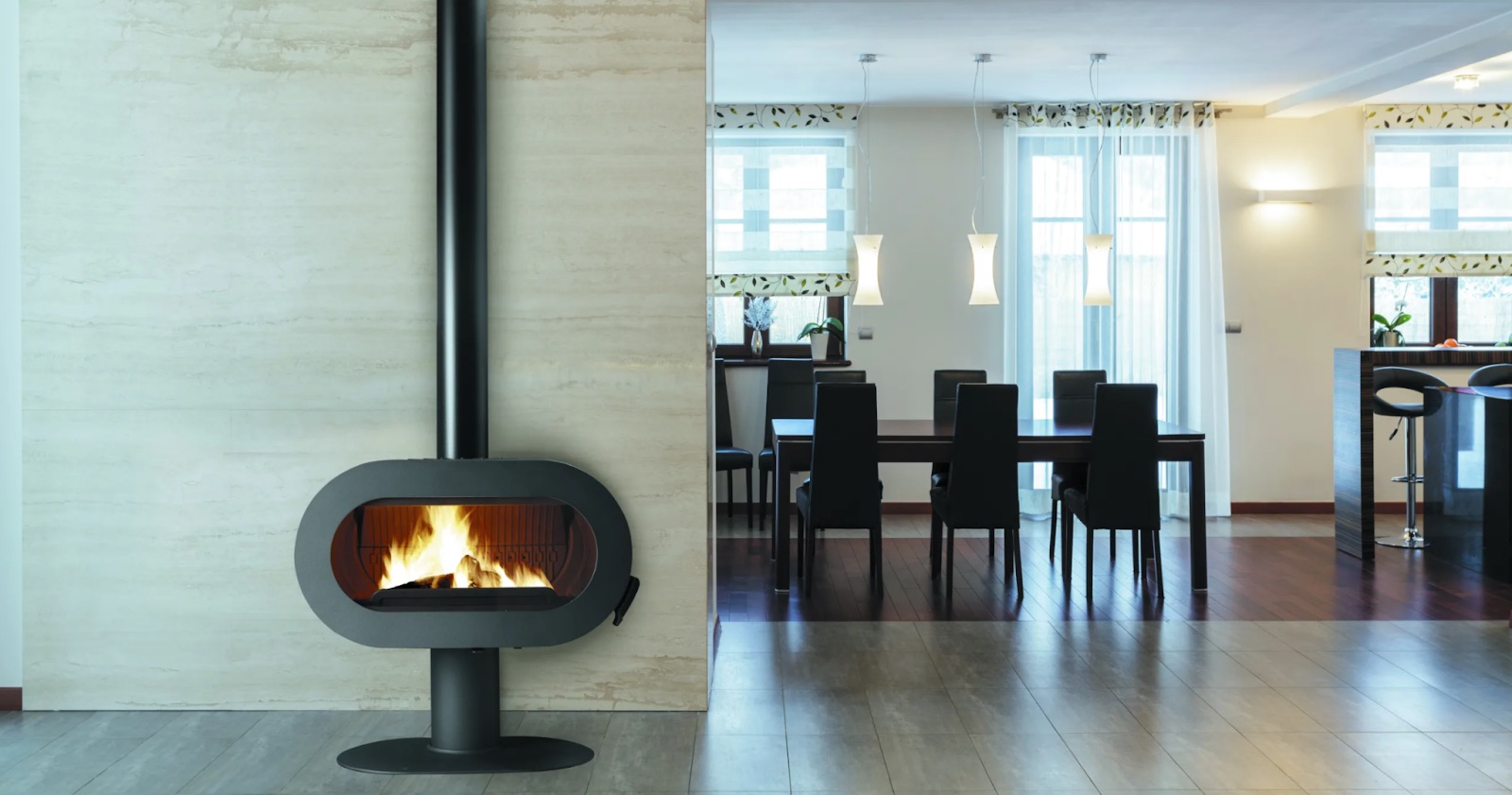
For those planning to use a cast iron stove as the main source of heat, it is worth paying attention to long-burning units. Their design allows maintaining a comfortable temperature in the home for 8–10 hours after one loading of firewood. This result is achieved thanks to several technical solutions:
- Double combustion chamber. In addition to the main firebox, there is a secondary combustion chamber for gases formed during smoldering. This ensures almost complete use of fuel energy and significantly reduces consumption.
- Increased firebox volume. Compared to regular models, the chamber volume is larger and can hold up to 10 kg of firewood per load.
- Sealed chamber. Tightly fitted doors and sealing elements allow maintaining a slow smoldering mode without excess air intake.
- Draft control. For precise regulation of the combustion process, damper valves are used, as well as air flow regulators located directly on the doors.
The body and fuel chambers in such stoves are traditionally made of cast iron. This is not a coincidence, but the result of decades of proven practice. Cast iron is resistant to extreme temperatures and does not deform even after prolonged heating. The material has high thermal mass: it accumulates heat and releases it gradually, which keeps the temperature in the room stable even after the flames go out.
For stove and fireplace equipment, it is one of the most optimal materials. It ensures the durability of the structure, stable operation, and efficient heating – which is why most manufacturers choose cast iron for creating modern long-burning stoves.
Principle of operation of a long-burning stove
In long-burning stoves, the process of heat production is based not only on the combustion of firewood but also on the afterburning of pyrolysis gases. First, a portion of well-dried firewood is loaded into the lower chamber. They should burn for about 10-20 minutes to create the necessary temperature and a layer of glowing coals in the firebox. After this, the air supply to the main chamber is reduced to a minimum by closing the channels. In this mode, the firewood does not burn with an active flame but smolders, releasing pyrolysis gas, which consists of carbon monoxide, methane, and other volatile compounds.
Next, this gas rises into the upper chamber, where secondary air is supplied – either naturally or forcibly. In an environment with high temperature and sufficient oxygen, the pyrolysis mixture ignites again and burns almost completely, generating additional thermal energy. Thanks to this two-stage combustion scheme, the efficiency of the unit significantly increases: more heat is obtained from one fuel load, and smoke emissions become cleaner.
For this technology to work most effectively, the firewood must be dry, with a moisture content of no more than 15%. Wet fuel lowers the temperature in the firebox, slows down the pyrolysis process, and contributes to the accumulation of soot in the chimney. That is why proper fuel preparation is a key condition for the long and safe operation of the stove.
Pros and cons of a cast iron stove with a secondary combustion function
Cast iron stoves equipped with a secondary combustion system are rightly considered one of the most economical and efficient solutions for wood heating. Thanks to the special design of the firebox and the supply of secondary air, the fuel burns almost completely, and the gases released also participate in the combustion process. This means that more thermal energy is obtained from each load of firewood, and the stove operates longer without the need for constant reloading of logs.
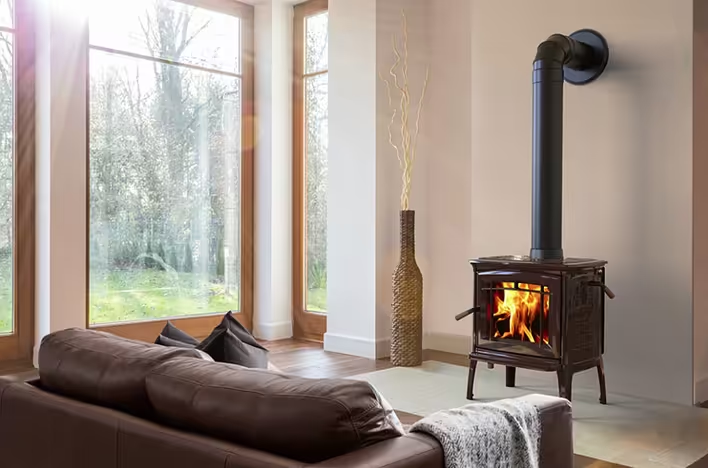
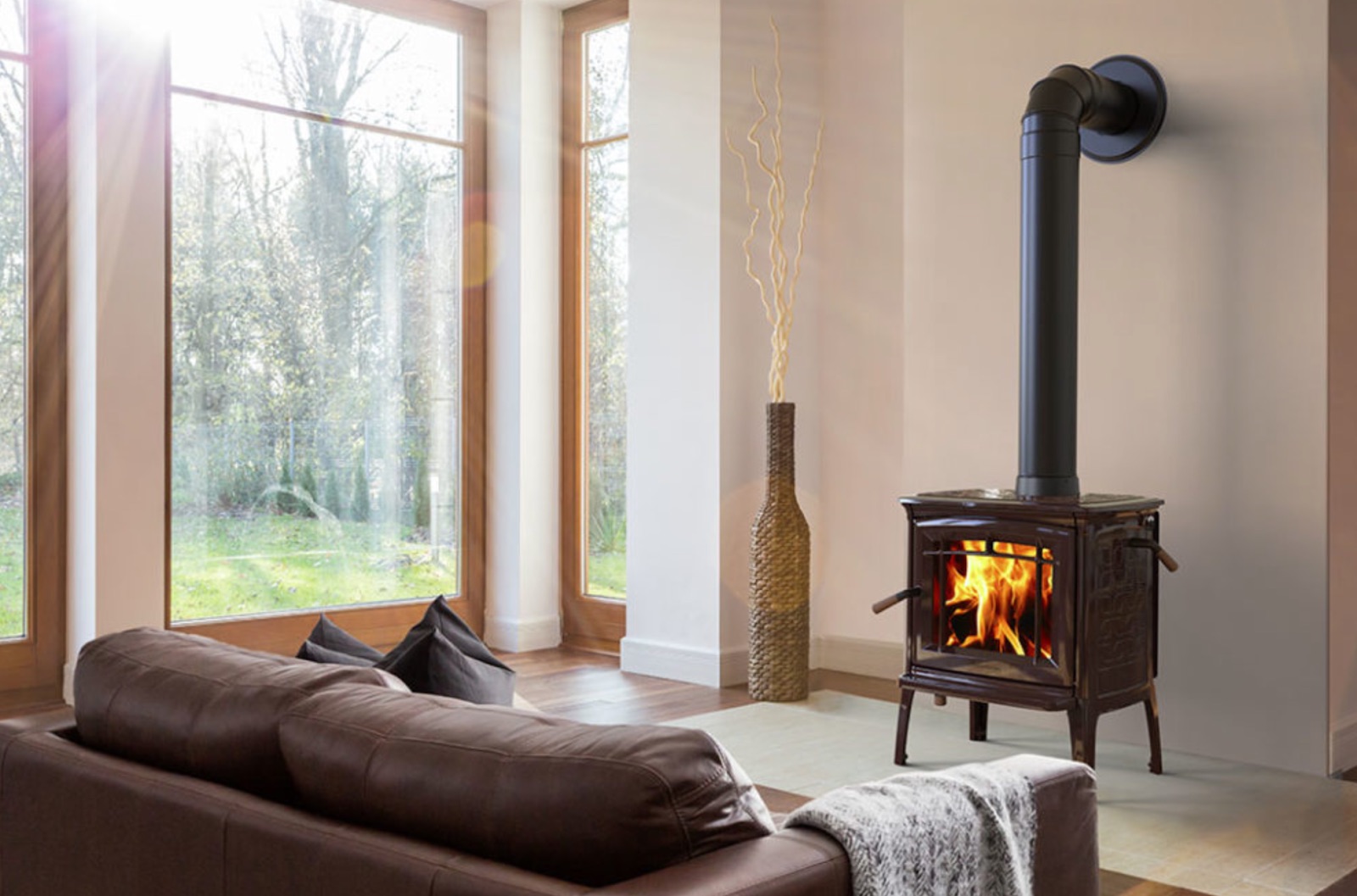
Key advantages of such models include:
- rational use of fuel, allowing maximum heat to be obtained from a minimal amount of firewood;
- rare loading of the firebox, which noticeably simplifies operation;
- high heat output and the ability to effectively heat even large spaces with the right power selection;
- increased efficiency, which reduces costs for purchasing firewood.
However, like any equipment, a stove with a secondary combustion function has its operational nuances. Due to the reduction of the dew point in the chimney during operation in long-burning mode, condensate forms inside the channel. Together with combustion products, this leads to the accumulation of creosote – a flammable resinous substance. It can ignite from sparks or embers that escape from the firebox and also gradually reduces the throughput of the chimney.
To avoid risks and maintain stable system operation, it is necessary to regularly check and clean the chimney. In the case of long-burning stoves, this should be done more frequently than usual – approximately two to four times during the heating season, depending on the intensity of use. Such preventive measures ensure safety and the longest possible lifespan of the unit.