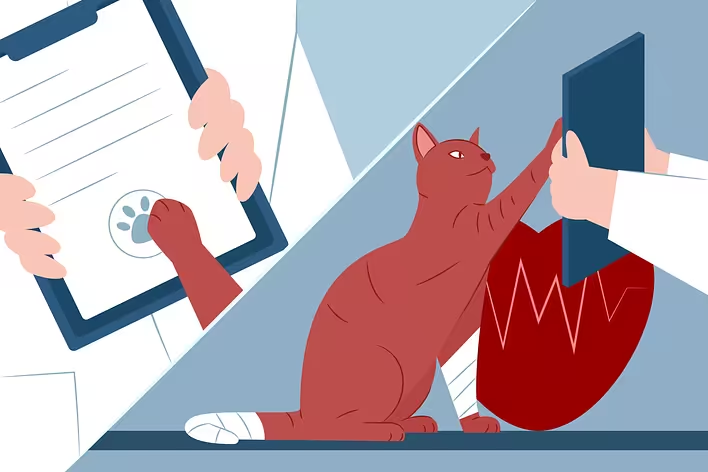


New veterinary clinics are opening in almost every city. And those that already exist are trying to expand their range of services and improve them to best meet the needs of clients in treating animals and conducting preventive measures.
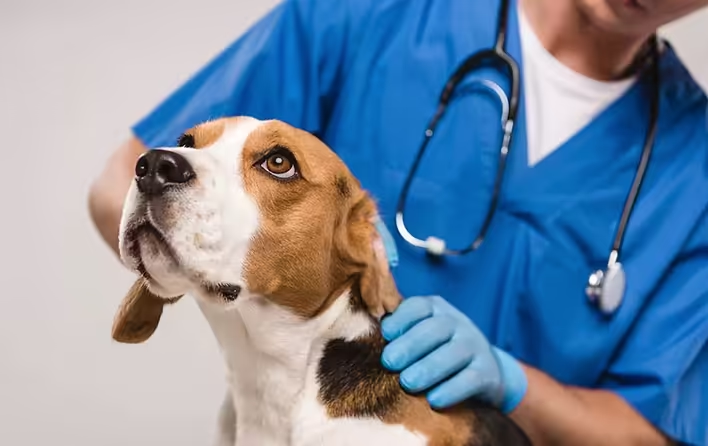
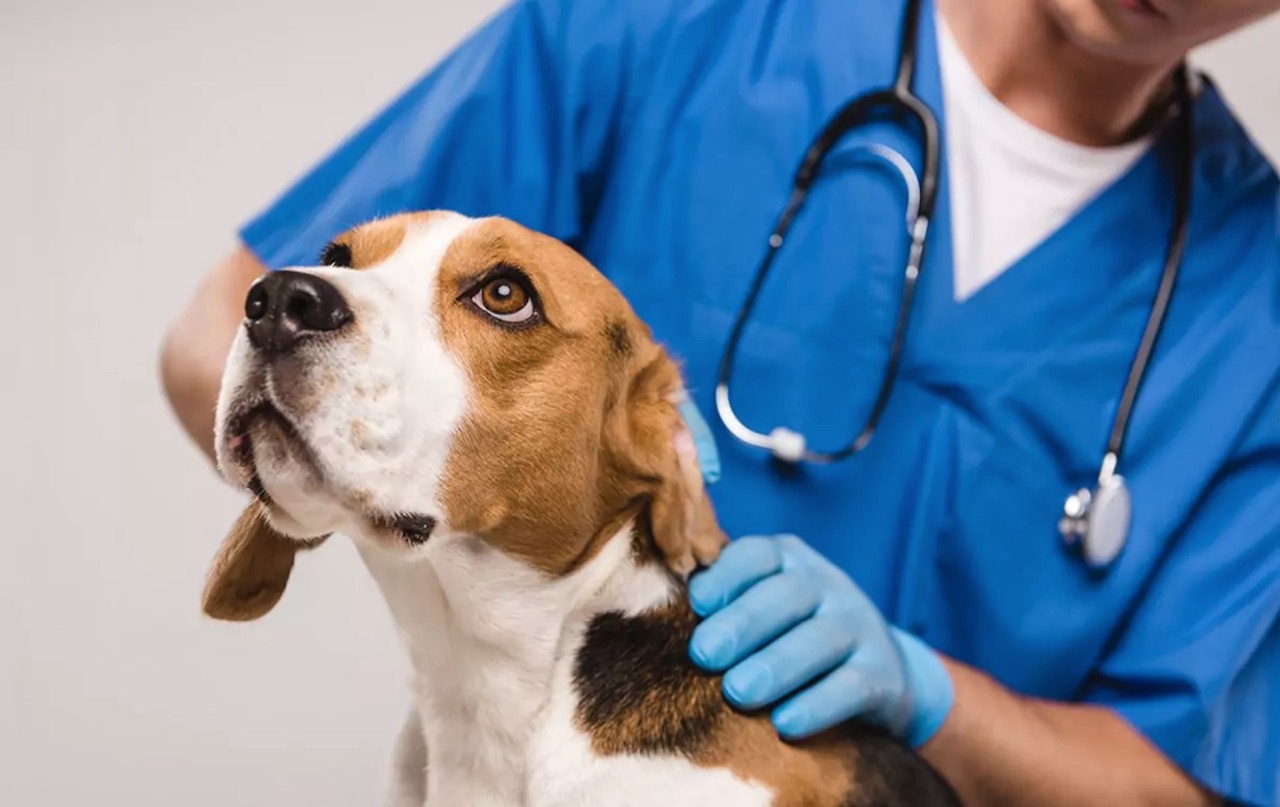
In conditions of high competition, effective organization of business processes is especially important. One of the effective tools that contribute to increasing staff efficiency is CRM for veterinary clinics. In veterinary clinics, they help speed up the execution of routine tasks, optimize the accounting of medical documentation, and simplify the daily duties of doctors and administrators. This is very significant, as the quality of service delivery depends on:
- The reputation of the institution and trust from clients. In the field of medicine, including veterinary medicine, reputation is extremely important. Owners take their animals to those clinics that have predominantly positive reviews, which indicates a responsible approach to the quality of service delivery.
- The ability to withstand competition. Automation of veterinary clinics puts them a step ahead of other institutions, as increasing competition requires constant improvement, enhancement of service, and streamlining of internal processes.
- Financial stability. Well-organized processes allow the clinic to use its resources more effectively, which reflects on the final profit.
For veterinary medicine institutions, it is optimal to choose a specialized system that is fully adapted to the specifics of this field of activity. For example, the program for veterinary clinics ENOTE has all the necessary functions, from online appointment scheduling and electronic medical record keeping to reports for management and analytical tools. With the application of the program, it will be possible to track all important indicators, including those regarding staff efficiency.
How does CRM help control the quality of work of employees in veterinary medicine institutions?
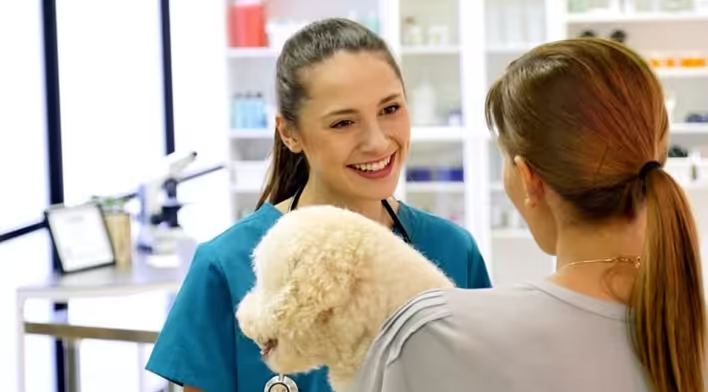
The program for veterinarians allows:
- Analyzing workload and redistributing tasks. In CRM, it is possible to manage the workload of each doctor, timely redistribute appointment hours to avoid queues and excessive specialist overload.
- Monitoring staff KPIs. The accounting program for veterinary clinics provides the manager with information about the number of consultations, total working time of each team member, client satisfaction levels, application processing speed, etc.
- Managing tasks and reminders. The relevant modules of the programs allow creating tasks for staff and tracking their completion, sending reminders about examinations and procedures.
- Using reporting to improve various processes. Thanks to regular reports, it is easier to identify "weak spots" and adjust strategies according to the situation.
The cloud service provides the ability to monitor necessary indicators at any moment – the program works from anywhere with internet access. Thus, unlike using stationary software, the manager can take measures to control and adjust various processes not only from the office but also outside of it, which contributes to greater freedom of action. At the same time, the data is protected from unauthorized access, as it is stored on reliable equipment.
The CRM system for a veterinary clinic is not just a technology, but a tool that unites all key aspects of managing a medical institution: from patient registration and communication with clients to staff control and performance analytics. Automation allows not only to optimize routine tasks but also to improve service quality, create more comfortable conditions for pet owners, and most importantly – ensure a high level of patient care.
In modern conditions, digital solutions are becoming the foundation for the sustainable development of veterinary practice. And CRM is one of the most effective investments in the future of any clinic.