Hanukkah is not just a holiday, but a true story of the victory of spirit over circumstances. If you have ever heard of the "Festival of Lights" or seen a menorah, then this is it! But what is Hanukkah really? Let's figure it out together.
What does the word Hanukkah mean?
The word "Hanukkah" comes from Hebrew and has a very interesting meaning. It translates to "dedication" or "renewal." This term reflects the main essence of the holiday – the celebration of the purification and rededication of the Jerusalem Temple after the victory of the Maccabees over the Syrian armies.
Hanukkah: history and traditions
-
Historical context: Hanukkah dates back to the 2nd century BCE. This was a time when the Jewish people were under the rule of the Seleucids, who tried to impose Hellenistic culture and religion on them. However, a group of rebels led by Judah Maccabee managed to achieve victory.
-
The miracle of the oil: After reclaiming the temple, the Maccabees found only one jar of oil, enough to last for one day of burning the menorah. However, this jar burned for eight days – just enough time to produce new oil. This became the basis for the eight-day celebration.
How is Hanukkah celebrated?
-
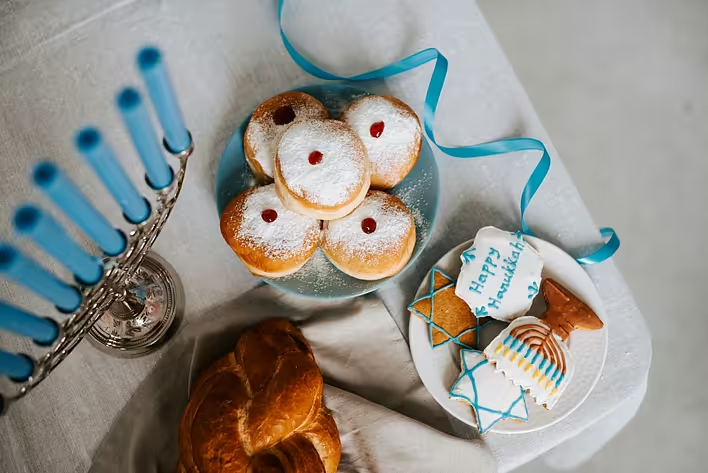
Lighting the candles: The main tradition is lighting the Hanukkah menorah (hanukkiah). Each evening, one additional candle is lit, starting with one on the first day and ending with eight on the last.
-
Playing dreidel: This is a small four-sided spinning top with letters that symbolize the phrase "A great miracle happened here." Children love this game as it is accompanied by receiving sweets or coins.
-
Traditional dishes: The festive table must include dishes prepared in oil – latkes (potato pancakes) and sufganiyot (doughnuts).
Why is Hanukkah important today?
-
Symbolism of light: The light of the menorah symbolizes the victory of good over evil, knowledge over ignorance. In today's world, this symbolism remains more relevant than ever.
-
Preservation of traditions: Hanukkah helps Jewish families maintain a connection to their roots and pass traditions on to future generations.
-
Community and joy: This holiday brings families and friends together in a warm atmosphere filled with joy and gratitude.
Hanukkah in the modern world
Although the roots of this holiday reach deep into the past, today Hanukkah takes on new forms. Many people around the world celebrate it not only as a religious holiday but also as a symbol of hope and resilience.
It is important to understand that every culture has its unique traditions and values. And while Hanukkah is part of Jewish culture, it carries universal values that can resonate with everyone.
So, if you are ever asked, "What is Hanukkah?", you already know the answer! It is not just a holiday – it is a whole story about faith, hope, and love for one's traditions. May the light of this holiday always be with you!