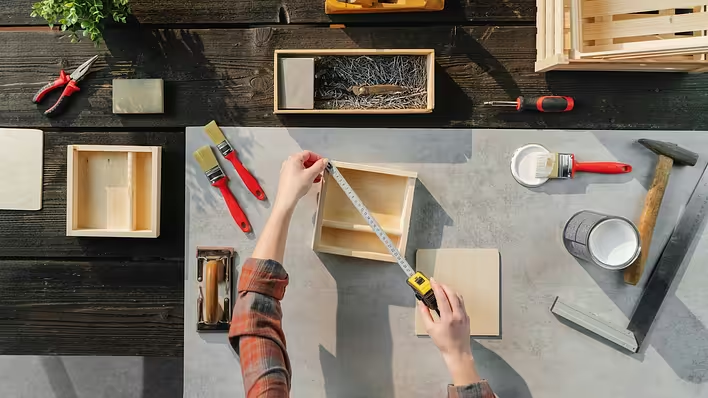

DIY is an abbreviation of the English Do It Yourself, which translates to "Do it yourself." The term describes an approach to creating, repairing, or modifying things on your own, without the involvement of professionals. DIY is not only about saving money but also a way of self-expression, creativity, and developing practical skills.
Origin of the term
The history of DIY began in the 20th century, although the practices of "do it yourself" existed long before that. The widespread use of the term occurred in the 1950s and 1960s in the USA and the UK, when the first magazines and books with advice for home craftsmen appeared: how to repair furniture, make household items, or even build small structures. Initially, DIY was associated with the necessity of saving, but over time it transformed into a hobby and a creative direction.
Where DIY is popular
DIY is especially popular in Western European and North American countries, where the handmade culture has a long-standing tradition. However, in recent years, this movement has been actively developing in Ukraine, with blogs, YouTube channels, and online platforms dedicated to DIY emerging in the country. In large cities, DIY is becoming a trend among young people who value unique items, eco-friendliness, and creativity.
Directions of DIY
DIY encompasses many areas, among which the following can be highlighted:
- Home repair and decor: creating furniture, painting walls, making decor by hand.
- Clothing and accessories: sewing, knitting, upgrading old clothes, creating jewelry.
- Cosmetics and care products: natural soaps, creams, masks.
- Hobbies and creativity: modeling, painting, working with wood or metal.
- Electronics and technology: assembling computers, robotics, Arduino projects.
Why people choose DIY
The main motives for DIY:
- Creativity and self-expression. You create something unique that cannot be bought in a store.
- Saving. Often, making things by hand is cheaper than buying a ready-made product.
- Eco-friendliness. Recycling old items and creating your own products reduces waste.
- Skills and satisfaction. The process of creation develops motor and intellectual abilities, and the result brings joy.
DIY today
Today, DIY is actively supported by social media, where people share their projects, life hacks, and workshops. Platforms like YouTube, TikTok, and Pinterest have become centers of inspiration for those who love to make things by hand. The DIY movement has long ceased to be just a way to save money — it has become a cultural phenomenon, a way of learning and creative self-expression.