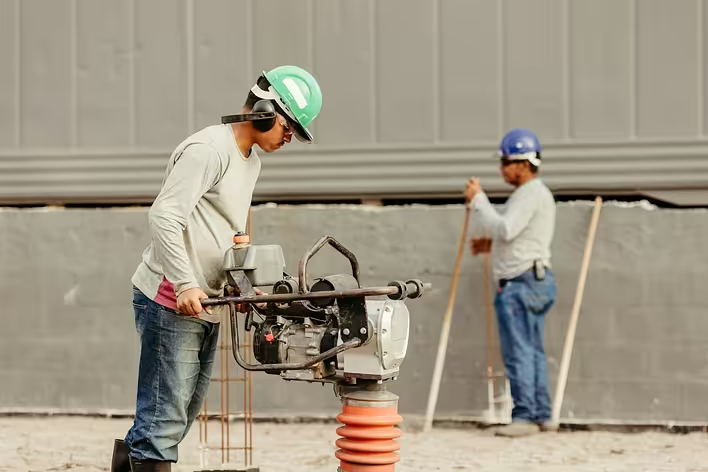

Guest worker – is a worker who temporarily moves to another country for work, most often in physical or low-skilled jobs. The term comes from the German word Gastarbeiter, which literally means "guest worker".
Origin of the term
The term "Gastarbeiter" appeared in Western Europe after World War II. In Germany, Austria, and Switzerland, there was a huge demand for labor to rebuild the devastated economy after the war. Countries signed bilateral agreements with other states, primarily Turkey, Italy, Yugoslavia, and Spain, to attract workers for temporary jobs. These workers came for a limited time, but many stayed in the country longer.
Over time, the term guest worker extended beyond Germany and became a general definition for labor migrants in many countries in Europe and the world.
Role of guest workers in the economy
Guest workers perform several important functions:
- Supplementing the labor market – they often work in sectors where there is a shortage of local workers: construction, agriculture, hospitality, logistics.
- Supporting economic growth – thanks to temporary labor migration, countries can restore infrastructure and production more quickly without excessive pressure on the wages of local workers.
- Remittances to the homeland – the money that guest workers send home supports the economy of their home countries. For many states, labor migrants become one of the sources of foreign currency inflows.
Challenges and aspects of guest workers' lives
Although guest workers are important for the economy, they face a number of problems:
- Temporary status – many countries provide short-term visas, which means workers lack stability and social guarantees.
- Low pay and difficult working conditions – because many guest workers perform physically demanding jobs, the risk of injuries and occupational diseases is high.
- Cultural and language adaptation – moving to a foreign country requires adaptation to new traditions and language environments.
Modern meaning of the term
Today, "guest worker" is used in both a neutral and somewhat derogatory sense. In Ukraine and other Eastern European countries, this term is often applied to those who go to work in Poland, the Czech Republic, or Germany for seasonal or temporary jobs.
Guest work is not only a way to earn money but also a part of the global economic system that demonstrates the interdependence of countries and the importance of a mobile workforce.