

Imagine a situation: you are walking down the street, and suddenly you hear a song that reminds you of old times. Instantly, emotions, memories, and perhaps even smells or tastes arise. This moment is a classic example of how a trigger works. So, what is a trigger and how does it affect our lives?
Trigger: what is it?
The word “trigger” comes from the English “trigger,” which means “a mechanism that releases something.” In psychology, a trigger is any stimulus that evokes a certain emotional reaction. It can be a sound, a smell, an image, or even a specific situation. Triggers can be positive or negative, and they often arise unexpectedly.
How do triggers work?
Triggers operate at a subconscious level. They activate certain memories or emotions stored in our memory. For example, the smell of vanilla may remind you of your grandmother's pastries from childhood, while the sound of a siren may evoke anxiety due to its association with danger.
Main types of triggers:
- Emotional triggers: evoke strong feelings such as joy or sadness.
- Cognitive triggers: stimulate thinking or remind you of certain information.
- Physical triggers: related to physical sensations, such as touch or temperature.
Why are triggers important?
Triggers play an important role in our lives. They help us react quickly to situations and make decisions. For example, if you once burned yourself on a hot stove, the next time a trigger in the form of heat will make you more cautious.
Positive and negative aspects:
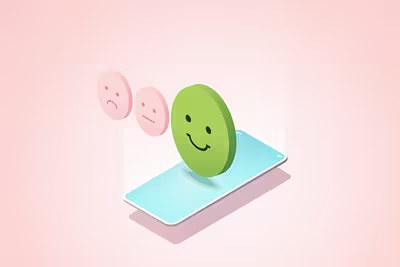
- Positive triggers can inspire and motivate. They help create pleasant memories and strengthen connections with people.
- Negative triggers can cause stress or anxiety. It is important to learn to recognize and control them.
What does the word trigger mean in different contexts?
In the modern world, the term “trigger” is used not only in psychology. It has also found its place in marketing, where it means a stimulus for purchasing a product or service. In programming, it is a condition or event that initiates a certain action in the system.
How to manage triggers?
Understanding your triggers is the first step to controlling them. Here are some tips:
- Identify your triggers: keep an emotion journal and record situations that provoke strong reactions.
- Practice mindfulness: meditation and breathing exercises can help reduce the impact of negative triggers.
- Replace negative associations: try to create new positive memories instead of old negative ones.
Interesting facts about triggers
- According to research, smells have the strongest influence on memory and can be powerful triggers.
- Music is one of the most common emotional triggers. It can instantly change our mood.
Triggers are the invisible threads that connect our past with the present. Understanding their nature allows us to better control our emotions and reactions. Use this knowledge to create harmony in your life and remember: each of us can become a master of our inner world!