Imagine you are sitting at your computer, working on an important project, and suddenly something goes wrong. The program freezes, data disappears, and you look at the screen in confusion. Does this situation sound familiar? It could be the result of bugs. But what are bugs and how can you avoid them? Let's figure it out together.
What are bugs?
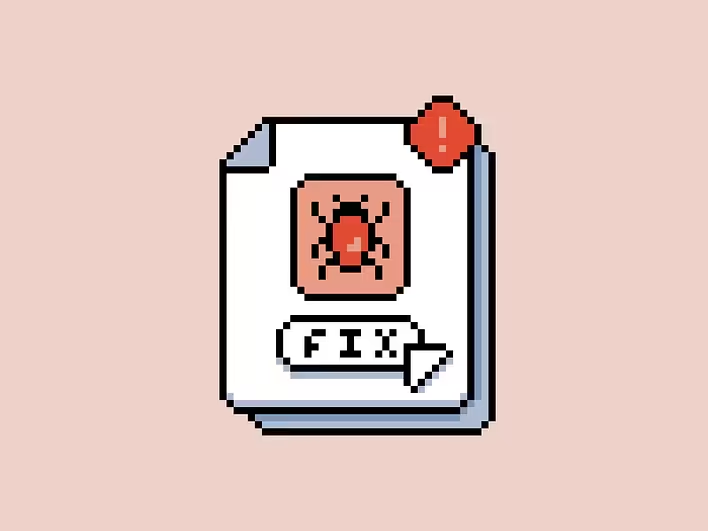
Bugs are an integral part of software that can create a lot of problems. In a broad sense, bugs are errors or defects in the program's code that lead to unpredictable behavior of the system. They can be minor inconveniences or serious security threats. Synonyms for the word “bug” include “error,” “defect,” “failure.”
Why do bugs occur?
The reasons for bugs are diverse:
-
Human factor: Even experienced programmers are not immune to mistakes. Human inattention or fatigue can lead to inaccuracies in the code.
-
Complexity of the system: The more complex the software, the greater the chances of bugs appearing. A large number of interacting components can create chaos.
-
Unforeseen circumstances: Sometimes a program encounters situations that developers simply could not foresee.
How to avoid bugs?
Now that we know what bugs are, let's look at some tips for avoiding them:
-
Test your code: Testing is a key stage in software development. Use automated tests to check your code for errors.
-
Conduct code reviews: Involve colleagues in reviewing your code. A fresh perspective can uncover mistakes you missed.
-
Use modern tools: There are many tools for code analysis that can help identify potential issues early on.
-
Follow standards: Using standard programming practices will help avoid common mistakes.
Examples of known bugs
Even large companies are not immune to bugs. For example, in 1999, NASA's Mars Climate Orbiter burned up in the Martian atmosphere due to a simple error in measurement units. This cost the agency over 125 million dollars.
Conclusion
Thus, bugs are errors in software code that can have serious consequences. To avoid them, it is important to test programs, adhere to standards, and involve colleagues in code review. Remember: it's better to prevent a problem than to deal with its consequences later. So let your code be clean and error-free!