Why the shoes are called "Mary Jane": the origin of the name and the history of the model
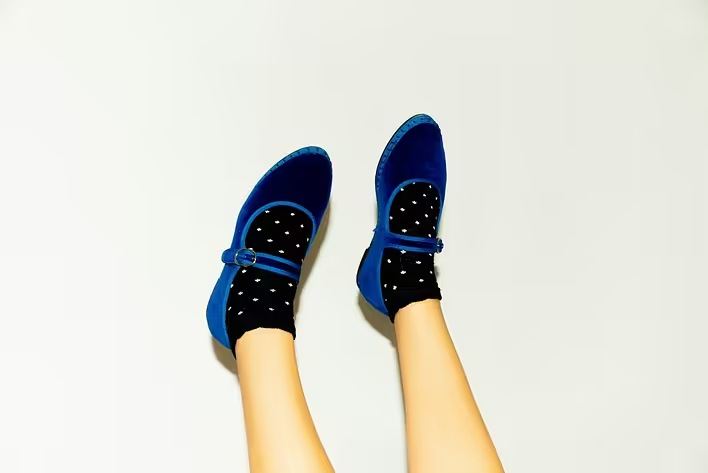
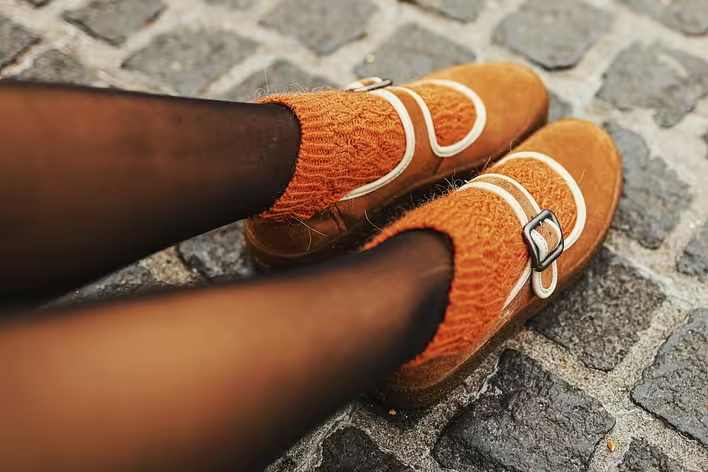
Footwear known as "Mary Jane" has long become a classic — simple, recognizable, and at the same time versatile. Its main feature is the closed toe and strap over the instep. But the very name sounds quite unusual for a fashion term. Where did it come from? ...
Footwear known as "Mary Jane" has long become a classic — simple, recognizable, and at the same time versatile. Its main feature is the closed toe and strap over the instep. But the very name sounds quite unusual for a fashion term. Where did it come from?
Origin of the Name
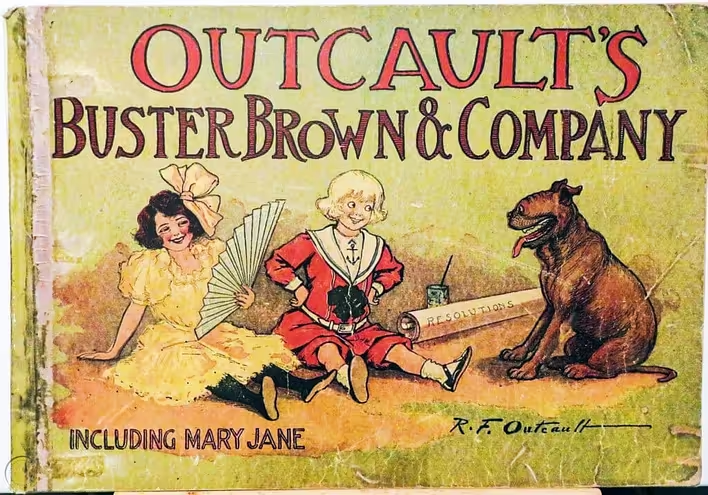
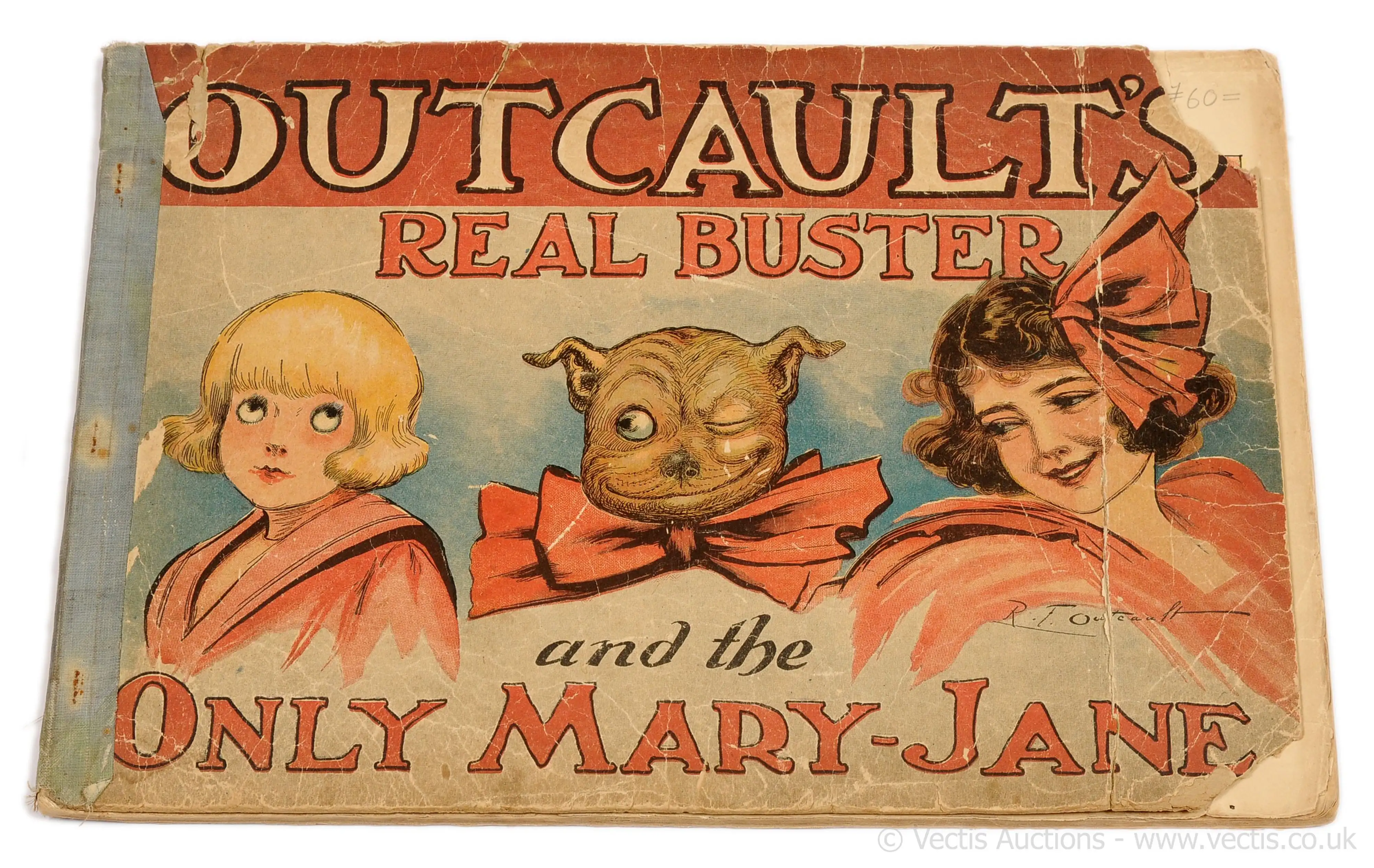
The name "Mary Jane" comes from popular culture of the early 20th century. It is associated with a comic book character — a girl named Mary Jane, who was the sister of the main character in the Buster Brown series.
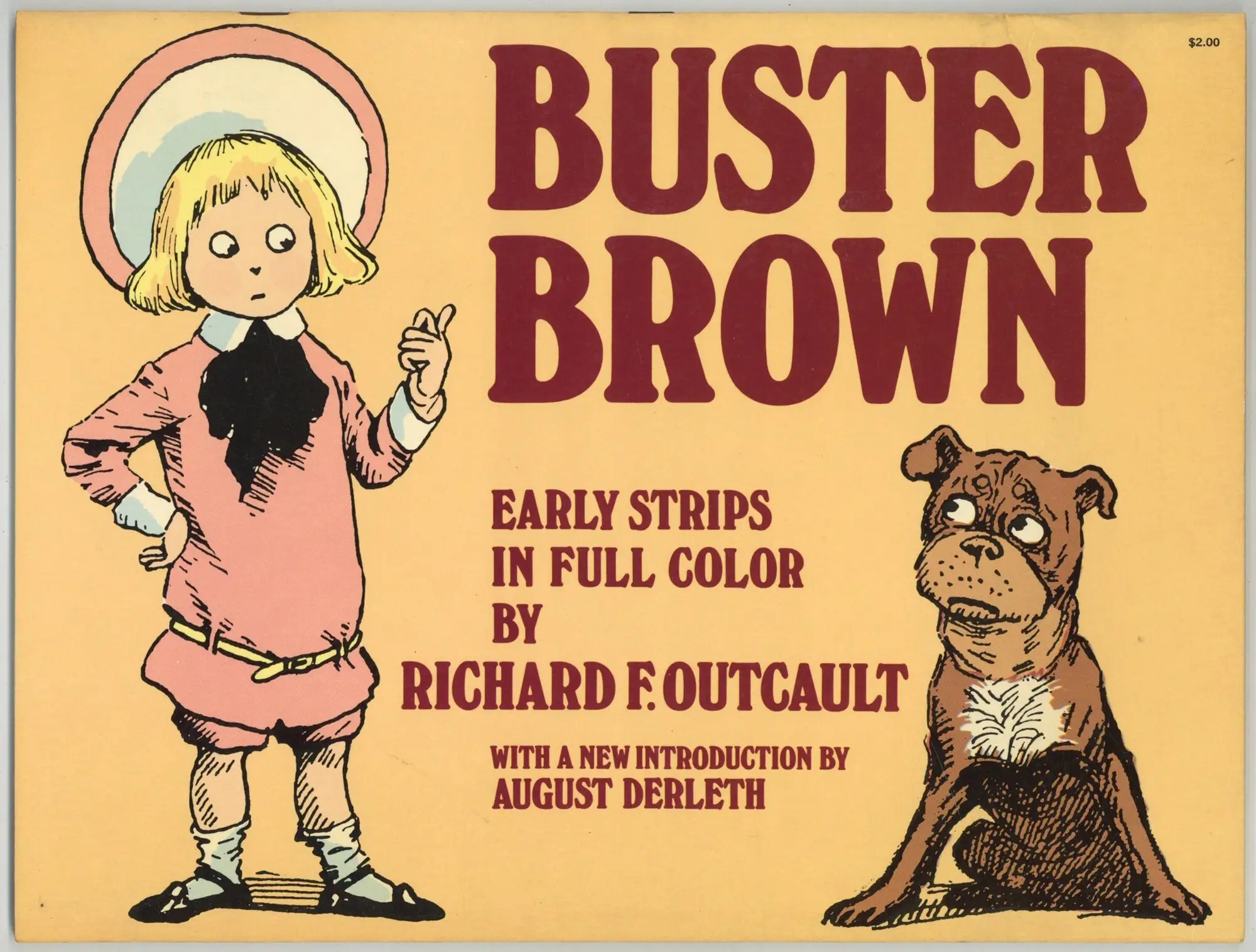
The comic was created by American artist Richard Felton Outcault in 1902. It quickly became popular in the USA, and the characters became recognizable symbols of their time. It is thanks to this image that the strap shoe received the name "Mary Jane".
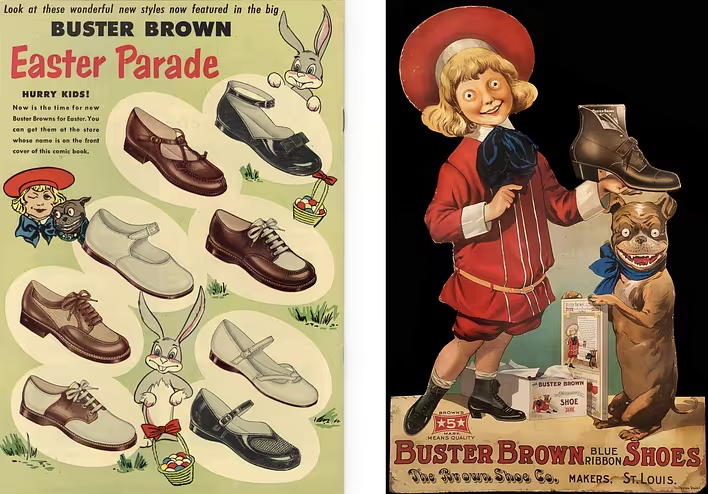
The popularity of Buster Brown extended far beyond the newspaper pages. The characters were actively used in advertising, especially in the field of children's clothing and footwear. One shoe company obtained a license to use the images and began selling children's strap shoes under the name "Mary Jane".
Thanks to this, the name quickly became established in language and fashion. Over time, it ceased to be associated exclusively with the character and became a general term for a certain type of footwear.
What the Comic "Buster Brown" Was About
Buster Brown is a humorous comic about the life of a wealthy American family and the adventures of a little boy named Buster. At first glance, the stories seemed like light children's antics, but they actually had a satirical subtext and mocked the behavior, manners, and social norms of the time.
The main character — Buster Brown — is a well-dressed boy with a "perfect" appearance: a suit, a neat hairstyle, a polite demeanor. However, behind this appearance lies a true troublemaker. He constantly gets into mischief, breaks rules, and behaves in ways that adults do not expect.
His sister, Mary Jane, on the contrary, embodies obedience and "correctness". She is more reserved, polite, and often acts as a contrast to Buster's behavior. Her image — a neat girl in a dress and strap shoes — became the basis for the name of the footwear.
Another important character is the dog Tige, who "speaks" only to the reader but not to other characters. He adds irony to the comic and acts as a sort of commentator on events.
The typical structure of the stories was quite simple: Buster comes up with some prank, the situation spirals out of control, and in the end, he receives punishment or a moral lesson. Often the last panel contained a humorous conclusion or caption with a moral.
The History of the Footwear Itself
Even in the 19th century, there were strap shoes over the instep in Europe. They did not have a specific name but were popular as practical children's footwear. The strap helped securely fasten the foot — this was important at a time when laces or complicated fastenings were not always convenient for children.
Such shoes were worn by both girls and boys. In many countries, they were paired with knee socks or stockings, and the silhouette itself was considered a sign of neatness and "proper" upbringing.
Early 20th Century: Standardization and Popularity
In the early 20th century, after the popularization of images from Buster Brown, the model received its name and began to be mass-produced. It quickly established itself as standard children's footwear in the USA and Europe.
During this period, "Mary Janes" were primarily made of leather, with a flat sole and a round toe.
1920s–1930s: Transition to Women's Fashion
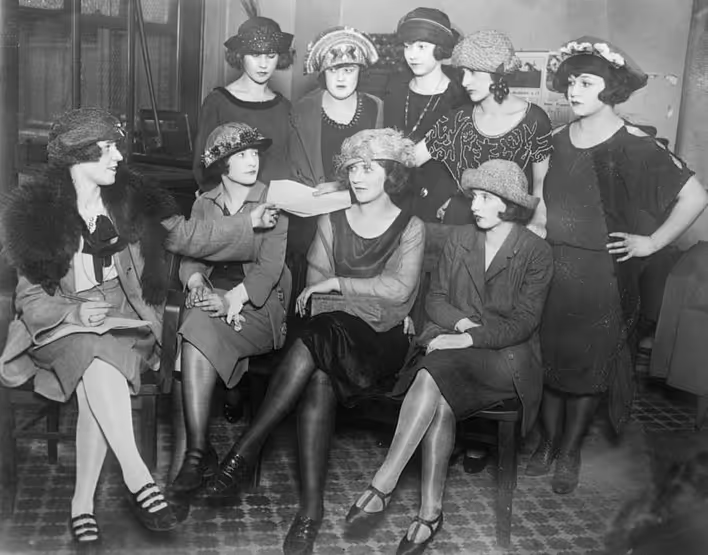
In the interwar period, the model begins to change its role. Women gradually borrow elements of children's clothing, and "Mary Janes" become part of women's wardrobes.
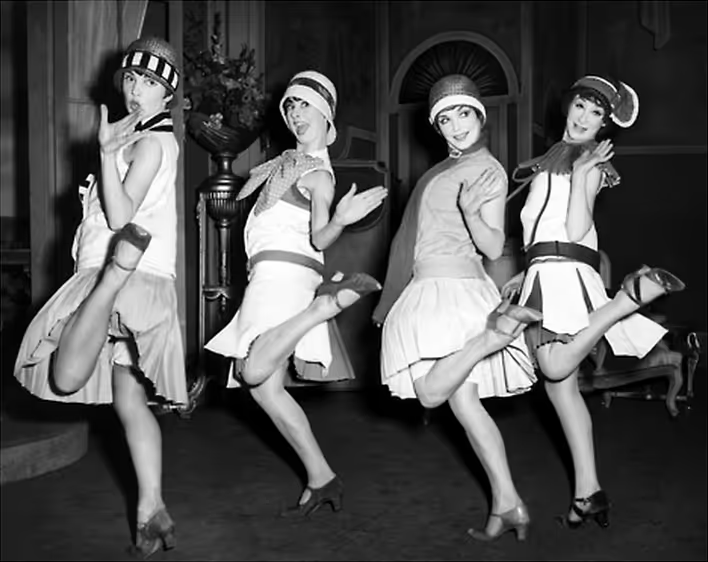
This is especially noticeable in the jazz era: strap shoes stayed well on the foot during dancing. Variants with low heels, more refined materials, and decorative elements began to appear.
Post-War Period: A Symbol of Innocence
In the 1940s–1950s, "Mary Janes" are once again associated with childhood and innocence. They are often worn by schoolgirls as well as young women who want to emphasize a gentle, modest image.
During this time, the model becomes part of uniforms and everyday clothing, especially in Europe.
1960s: A New Life in Fashion
In the 1960s, "Mary Janes" experience a true renaissance. They become a symbol of youth fashion and minimalism. Designers experiment with form — adding heels, bright colors, and patent leather.
This period cements the status of the footwear as stylish, not just practical.
1990s: Contrast and Subcultures
In the 1990s, "Mary Janes" take on a new, unexpected sound. They come into fashion alongside grunge aesthetics and alternative culture. Rougher platform models appear, often combined with dark clothing.
This contrast — "childlike" form and "adult" style — makes them particularly expressive.
Modernity: A Universal Wardrobe Element
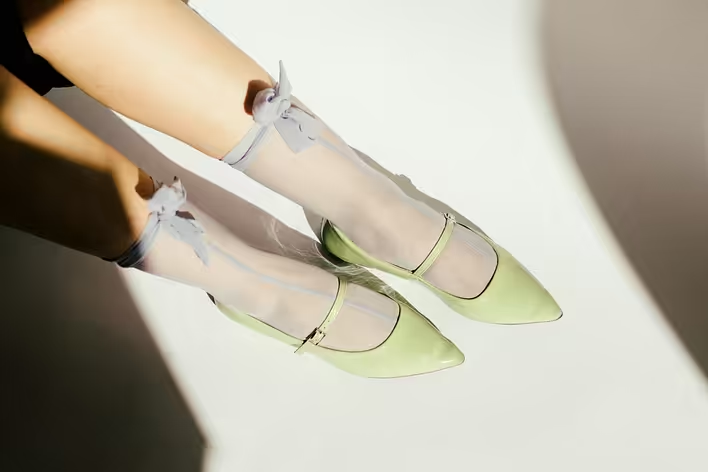
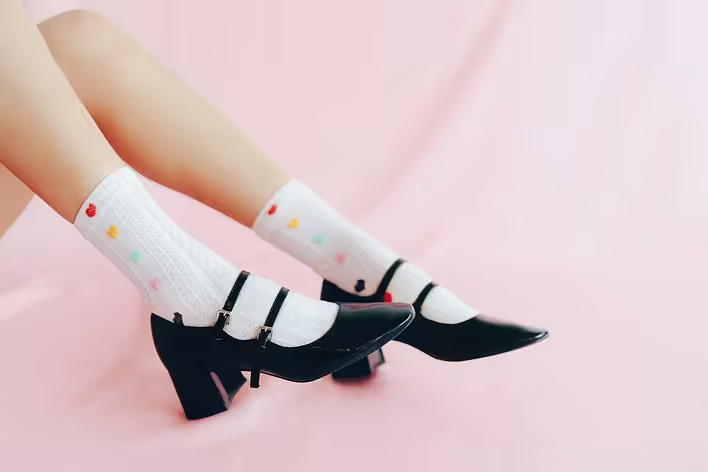
Today, "Mary Janes" are not just one specific type of footwear, but an entire category. They can be:
classic and understated,
on heels or platforms,
minimalist or decorative.
Designers constantly reinterpret the model, but its foundation remains unchanged — the strap over the instep.
The secret to the longevity of "Mary Janes" lies in the balance between form and function. They are comfortable, versatile, and easily adapt to different fashion eras.
A neat green lawn is one of the main signs of a well-maintained yard. However, it can be created in various ways, each with its own characteristics, time requirements, complexit...