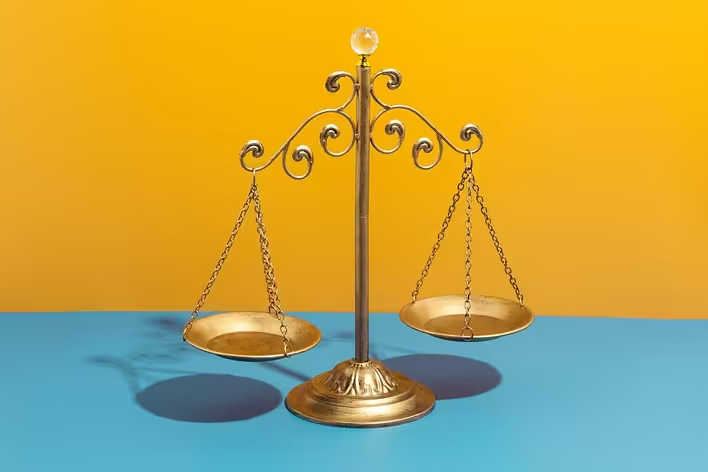


Parity is a word that often appears in various contexts, but it is not always clear what it means. Let's figure out together what parity is and how it affects different aspects of our existence.
What is parity?
Parity is a term that means equality or equivalence between two or more things. In different areas of life, parity can have different meanings. For example, in finance, it may refer to the exchange rate of currencies when two currencies have the same purchasing power. In politics, parity can mean equal representation or influence of different groups.
Parity in finance
Imagine a situation: you are planning a trip abroad and want to know how much money you need to exchange for the local currency. Here, purchasing power parity (PPP) comes into play. This indicator allows you to compare the cost of the same basket of goods in different countries. PPP helps to understand whether it is really worth exchanging hryvnias for another currency at the current rate or if it is better to wait.
Parity in politics and society
Parity is not just about money. Imagine a discussion between two political parties. Parity here means equal opportunities to express their opinions and influence decision-making. In society, this term can refer to gender equality, where women and men have equal rights and opportunities.
Synonyms and antonyms of parity
When we talk about parity, it is important to know its synonyms and antonyms. This will help to better understand the essence of the concept.
- Synonyms: equality, equivalence, balance.
- Antonyms: inequality, imbalance, asymmetry.
Examples of the application of parity
- Economics: The central bank of the country uses parity to determine the optimal exchange rate.
- Politics: Parties sign an agreement on parity representation in parliamentary committees.
- Society: The introduction of gender parity policies in the workplace.
Parity is more than just a word; it is a principle that helps create a fair and balanced world. Whether it is about economics, politics, or society in general, the pursuit of parity makes our lives better and more harmonious. So the next time you hear this word, remember: it means equality and equivalence—values that are worth nurturing in our modern world.