These two dishes have an ancient history and cultural significance, and they are often confused with each other. But don't worry, today we will reveal all the secrets of these mysterious treats.
Matzah: History and Meaning
So, what is matzah? It is a traditional Jewish bread made without yeast. Matzah is an integral part of the Passover holiday, symbolizing the liberation of the Jews from Egyptian slavery. According to legend, when the Jews hurriedly left Egypt, they had no time to leaven the dough, so they baked bread without yeast — and thus matzah was born.
Why specifically without yeast?
Matzah is a symbol of purity and freedom. Yeast is considered a symbol of pride and egoism, which is why it is avoided during Passover. The making of matzah is a process that requires special attention: from kneading the dough to baking, no more than 18 minutes should pass. This ensures the absence of natural fermentation.
Unleavened Bread: Simplicity and Universality
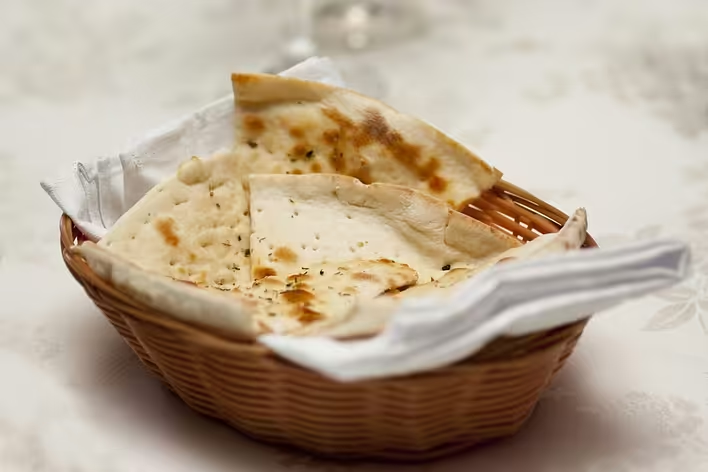
Now let's figure out what unleavened bread is. Unleavened bread is any bread or pastry made without yeast or leaven. It can be a simple flatbread or a more complex pastry. Unleavened bread is popular in many cultures around the world due to the simplicity of preparation and the availability of ingredients.
How is it prepared?
The recipe for unleavened bread is simple: flour and water — that's it! However, you can add salt or other spices for flavor. The dough is rolled into thin cakes and baked on a hot skillet or in the oven. The secret to success is speed and high temperature.
Difference Between Matzah and Unleavened Bread
At first glance, it may seem that matzah and unleavened bread are the same. But the difference lies in their cultural significance and the preparation process.
-
Cultural significance:
- Matzah has religious significance for Jews.
- Unleavened bread is not tied to any specific religion or culture.
-
Preparation process:
- Matzah is made under strict rules (up to 18 minutes).
- Unleavened bread can be made without such restrictions.
Practical Tips: How to Use Matzah and Unleavened Bread
You can use matzah as a base for canapés or crumble it for breading. Unleavened bread can be a great addition to soups or sauces.
Here are a few ideas:
- Use matzah instead of crackers for a cheese platter.
- Make a simple savory pie with a filling from unleavened bread.
- Instead of lavash, try wrapping vegetables or meat in unleavened bread.
So now you know what matzah and unleavened bread are, and even more! I hope this information has been useful to you and inspired you to culinary experiments. You can easily incorporate these dishes into your menu and enjoy their simplicity and versatility. Bon appétit!