The word “buffer” often comes up in the context of technology, but what does it actually mean? Imagine you are standing in line at the supermarket checkout. People in front of you are gradually moving forward, and you are waiting for your turn. A buffer in computer systems works the same way — it is a temporary storage area for data waiting to be processed. From loading web pages to streaming videos — the buffer plays an important role in many processes.
What is a buffer?
Buffer is a special area of memory that temporarily stores data while it is being transferred from one place to another. It acts as a “container” between two systems or components whose operating speeds differ. For example, when you watch a video online, the buffer preloads part of the data to avoid delays during playback.
How does a buffer work?
The operation of a buffer consists of three main stages:
- Data collection: Information is received in the buffer from a source.
- Temporary storage: It is stored there until the system is ready to process it.
- Transfer: As soon as the opportunity arises, the data is passed on.
This process helps smooth out delays and avoid data loss.
Where are buffers used?
Buffers are used in virtually every area of digital technology:
- Web browsers — preload the content of pages.
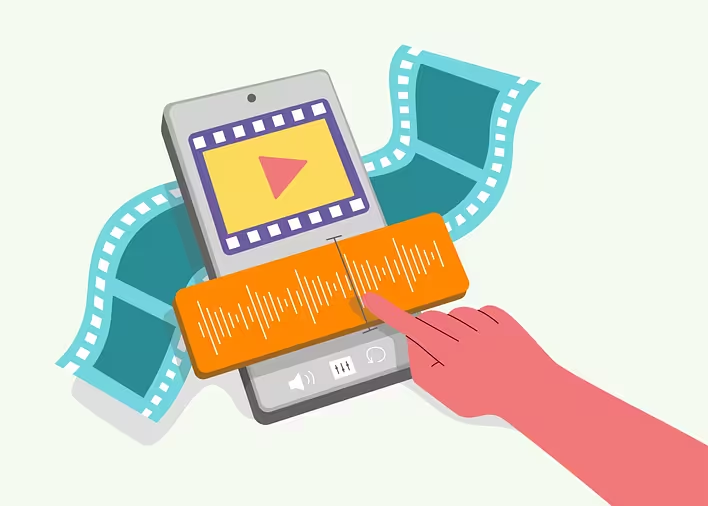
- Audio and video players — buffer streams for smooth playback.
- Printers — store data about print jobs before printing begins.
Why are buffers important?
Without buffers, the operation of many systems would be unstable. Their main purposes are:
- Avoid delays in data transmission.
- Ensure smooth operation of devices and applications.
- Compensate for speed differences between the data source and receiver.
This is especially critical for multimedia, online streaming, and real-time applications.
How to improve buffer performance?
- Update software — new versions have better buffering support.
- Monitor hardware — slow or outdated hardware can create bottlenecks.
- Ensure stable internet — an unstable connection causes buffer overflow.
Interesting facts
- Origin of the term: the word “buffer” comes from the French “buffet”, meaning a hit or push.
- Audio buffers are actively used in recording studios to avoid delays.
Buffer is an invisible but very important element of digital technology. It helps make our experience more convenient, stable, and faster. The next time your video loads instantly without interruptions — think of this invisible helper.