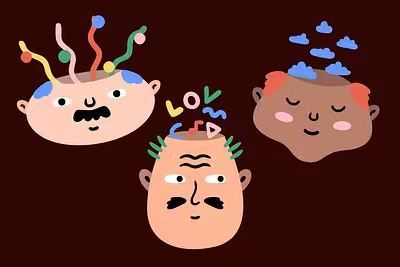


The world of medicine, like human life itself, often balances on the edge between salvation and danger. And few substances embody this boundary as vividly as opioids. Powerful, effective, and sometimes — fatal. What lies behind the word that simultaneously associates with pain relief and deep addiction?
What are opioids: saviors in white coats
Opioids originate from the opium poppy — a plant that humanity has used since the times of Ancient Egypt. Their main property is pain relief. Morphine, codeine, oxycodone — these names are familiar to doctors, patients, and even those who have never dealt with hospitals. They are not just chemical compounds — they are tools that daily alleviate the suffering of millions of people.
But every tool in unskilled hands can become a weapon.
How do opioids work?
Opioids are like the silence that envelops loud pain. Upon entering the body, they interact with receptors in the brain, "turning off" pain signals. Simultaneously, the release of dopamine is stimulated — a neurotransmitter that provides feelings of pleasure and even euphoria. It is this effect that becomes the beginning of a dangerous game.
The brain, as a creature with memory, remembers these sensations and begins to demand them again. Gradually, with each dose, pain relief transforms into addiction.
Why is addiction so insidious?
Opioid addiction develops slowly, sometimes — imperceptibly. At first, the drug simply helps to sleep after surgery. Then — it reduces back pain. And then — it becomes difficult to function without it. A person begins to seek not only relief but also the very feeling of calm that the first doses provided.
In the USA, according to the CDC, the opioid crisis claims tens of thousands of lives each year. And it often starts with a completely legal prescription.
The medical face of opioids
We must be honest: without opioids, modern medicine could not operate as effectively. They are indispensable in resuscitation, palliative care, and during major surgeries. Morphine saves lives on the battlefield. Codeine helps with painful coughs. Oxycodone is essential for cancer pain.
The key word here is control. Prescription, dosage, duration — everything must be within medical protocols. Any deviation — and benefit turns into a threat.
The price of relief: side effects and risks
Opioids are not mint lozenges. Along with pain relief, they can bring drowsiness, clouded consciousness, nausea, constipation. In case of overdose — serious respiratory and cardiac disturbances. It’s hard to believe, but sometimes one extra pill is the line between life and death.
How to avoid the trap?
The best protection is awareness. When taking opioids:
- always follow medical recommendations;
- report any changes in well-being;
- avoid combining with alcohol or other sedatives;
- do not hesitate to ask your doctor questions.
And remember: addiction does not always start with a "bad choice." Often — it begins with a careless prescription.
Is there an alternative?
Yes. For mild and moderate pain, medicine offers many alternatives:
- non-steroidal anti-inflammatory drugs (ibuprofen, naproxen);
- physical therapy;
- cognitive-behavioral therapy;
- local anesthetics.
Each case is individual. And the main thing is not to be afraid to seek safe solutions.