

Have you ever wondered what the word “fake” really means? It seems to be everywhere: in the news, on social media, even in everyday conversations. This word has become so popular that we can no longer imagine the modern information space without it. But do we really know what a fake is and how to recognize it? Let's figure it out together!
What is a “fake”?
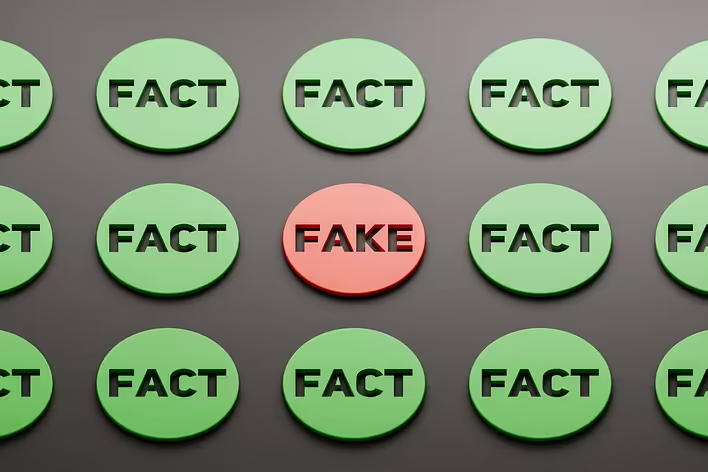
Let's start with the fact that the word “fake” comes from the English word “fake,” which means a forgery or deception. Today, a fake refers to any false information presented as true. This can include news, photographs, videos, or even entire stories. The main goal of a fake is to mislead or manipulate people's opinions.
How to recognize a fake?
In the age of digital technology, fakes have become a real problem. But not everything is hopeless! Here are some tips to help you distinguish truth from fiction:
-
Check the sources. If the news seems suspicious, try to find confirmation from other authoritative resources.
-
Pay attention to details. Often, fakes contain grammatical errors or illogical statements.
-
Be skeptical of overly sensational headlines. If a headline looks too shocking to be true, it probably is.
-
Check the publication date. Sometimes old news is presented as current events.
-
Research the author. Does he have a reputation as a reliable journalist? Could it be an anonymous user?
Why are fakes so dangerous?
Fakes can cause serious harm to society. They can influence public opinion, provoke panic, or even change the course of important events. For example, during elections, fakes can distort information about candidates and mislead voters.
Examples of fakes
Fakes come in various forms – from minor untruths to large-scale deceptions:
-
Political fakes: For example, false statements about government actions or political leaders.
-
Fake news: Publications about disasters or other events that never happened.
-
Social fakes: For example, rumors about celebrities or public figures.
How to protect yourself from fakes?
You can protect yourself from fakes! Here are some practical tips:
-
Develop critical thinking. Don't believe everything you see or read.
-
Use fact-checking platforms. They can help verify the truthfulness of information.
-
Be cautious about information sources. Trust only verified and reliable resources.
Synonyms and antonyms
To better understand the meaning of the word “fake,” let's look at its synonyms and antonyms:
-
Synonyms: forgery, deception, imitation.
-
Antonyms: truth, reality, fact.
In conclusion, it is important to be attentive and critical of the information around you. The world is filled with data, and it is essential to be able to distinguish truth from fiction. Remember: informed means armed! Protect yourself and your loved ones from information noise and remember the power of knowledge and critical thinking in the fight against fakes.