Have you ever wondered how religious movements influence our worldview? Sometimes it seems that religion is something unchanging and static. But in reality, like everything else, it is constantly evolving. One such movement that is actively changing the religious discourse in the Muslim world is Wahhabism. So what is Wahhabism and why does it provoke so much discussion? Let's figure it out together.
What is Wahhabism?
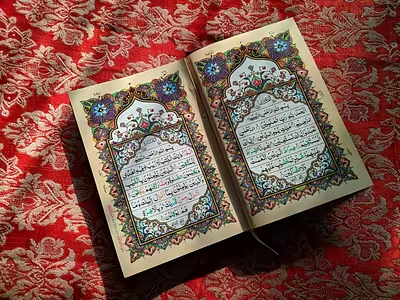
Wahhabism is a conservative movement in Islam, founded in the 18th century by Muhammad ibn Abd al-Wahhab. Its main goal was a return to "pure" Islam, as he saw it. Wahhabis strive for strict adherence to the Quran and Sunnah (traditions of the Prophet Muhammad), rejecting any innovations that appeared after the first three generations of Muslims. If you're curious why this is important, imagine someone trying to revert all your family's traditions to what they were a few centuries ago. It can be both interesting and challenging at the same time.
How does Wahhabism change the religious discourse?
-
Return to the sources: Wahhabism calls for a return to the primary texts of Islam. This means that many modern practices are criticized or even rejected. Such an approach can provoke conflicts between different groups of Muslims.
-
Conservatism: Wahhabis advocate for traditional values and codes of conduct. This can be a challenge for those who seek modernization and adaptation of religion to contemporary life.
-
Political influence: With support from Saudi Arabia, Wahhabism has gained significant political influence. Saudi Arabia finances the construction of mosques and madrasas (religious schools) around the world, spreading its ideas.
Why is this important?
It is important to understand that Wahhabism is not just a religious movement — it is a whole worldview complex that influences politics, society, and even the economy of many countries. Here are a few reasons why this matters:
- Social changes: The influence of Wahhabism can lead to changes in the roles of women in society, limiting their rights and opportunities.
- Cultural conflicts: The spread of Wahhabism can provoke cultural conflicts both within Muslim countries and beyond.
- Global security: Radical elements of Wahhabism can become a source of extremism and terrorism.
How to respond to these changes?
If you are interested in understanding and responding to these changes:
- Inform yourself: Read books and articles about different religious movements to have a fuller understanding of what is happening.
- Be open: Try to understand the position of others. This will help avoid stereotypes and prejudices.
- Communicate: Talk to people of different views and cultures. This will help you see the world in all its diversity.
Thus, Wahhabism is not just another religious movement. It is a powerful influencing factor in the modern world order and culture. Understanding its essence and impact will help you navigate the complex world of contemporary religious politics more effectively.