The tape recorder is a device that, as they say, turned the music world upside down. Imagine: back in the mid-20th century, people listened to music only live or from records. And then the tape recorder appeared, allowing sound to be recorded and played back! It was a true marvel of technology that changed not only music but also our everyday lives.
How the tape recorder changed music?
Revolution in sound recording
The tape recorder became the first device that allowed sound to be recorded on magnetic tape. It was a real revolution! Before its appearance, musicians could only dream of recording their music and reaching a wide audience. Of course, records could be used, but the process was complicated and expensive. The tape recorder made everything much simpler and more accessible.
Impact on the studio process
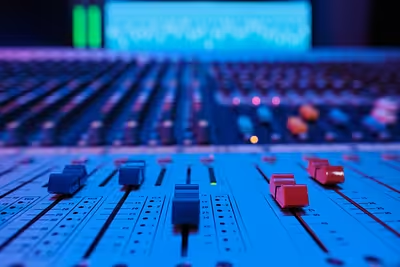
The tape recorder radically changed the recording process in the studio. If earlier musicians had to play everything “live” and without mistakes, now it was possible to make several takes, edit them, and even layer sounds on top of each other. This allowed for experimentation with sound and the creation of new music genres.
Tape recorder in every home
Accessibility for everyone
With the advent of portable tape recorders, music became closer to people. Now everyone could have their own “music center” at home. You could listen to your favorite songs anytime, even if the performer was thousands of kilometers away from you.
Creating home collections
Tape recorders allowed people to create their own music collections. You could record songs from the radio or exchange tapes with friends. It was a kind of social phenomenon: discussing new albums, exchanging tapes, and compiling playlists became part of our lives.
Interesting facts about tape recorders
-
First commercial model: The first commercial tape recorder was released in Germany in 1935.
-
Inventor: The magnetic tape was invented by Fritz Pfleumer back in 1928.
-
Music genres: Thanks to the tape recorder, new music genres such as electronic and hip-hop emerged.
-
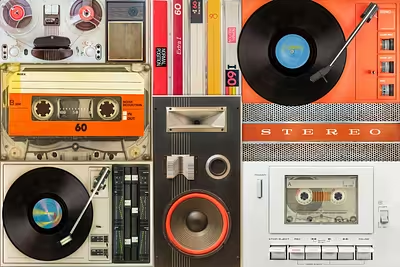
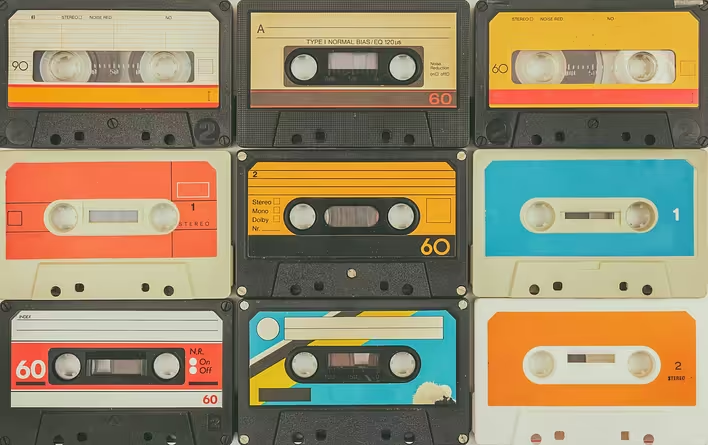
Tapes: Compact cassettes became popular in the 1960s and remained so until the early 2000s.
Although modern technology offers many digital solutions for listening to music, tape recorders are still popular among audiophiles and collectors:
-
Vintage style: Some people love to use old tape recorders as a stylish element of interior design.
-
Collecting: Collecting tapes can become an interesting hobby for those who appreciate retro music.
-
Analog sound: Many music lovers claim that the analog sound on a tape has a special warmth and depth.
The tape recorder is not just a device for playing sound. It represents an entire era in the history of music that changed our approach to listening and creating songs. It gave us the opportunity to enjoy music at home, opened new horizons for artists, and became a symbol of an entire generation of music lovers. Despite the advancement of technology, the tape recorder remains a part of our culture and history.