This content has been automatically translated from Ukrainian.
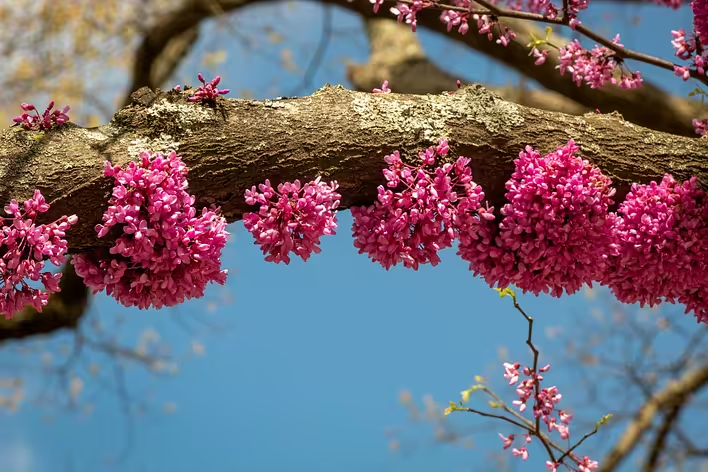
In the world of plants, there are many unusual phenomena, but cauliflory is among those that impress even people far removed from botany. Imagine a tree on which flowers and fruits grow not on thin branches or crowns, but directly from the trunk — sometimes even near the ground. From the outside, it looks almost fantastical: the trunk is covered with flowers or fruits as if the tree were manually decorated.
The term itself comes from the Greek word caulos — "stem" and the Latin flos — "flower." Literally, cauliflory can be translated as "stem-flowering" or "flowering on the trunk." It is not a separate plant or a genus of trees, but a botanical phenomenon that occurs in many species in tropical and subtropical regions of the world.
What is cauliflory
Cauliflory refers to the phenomenon when flowers, and later fruits, form directly on the main trunk or on old thick branches of a tree. For most plants, this is atypical: usually, flowers appear on young shoots or at the ends of branches.
In cauliflorous plants, flower buds can "sleep" under the bark for years and then suddenly activate. As a result, the tree seems to bloom from within. Some species form such dense clusters of flowers that the trunk becomes almost invisible.
This looks especially spectacular during fruiting. Large fruits, which are difficult to hold on thin branches, hang directly on the trunk. In some cases, these fruits weigh several kilograms.
People have noticed trees with "strange" flowering since ancient times, especially in the tropical regions of Africa, South America, and Southeast Asia. Local peoples have long known such plants and actively used their fruits.
However, the scientific description of the phenomenon appeared much later — during the active development of botany in the 17th to 19th centuries. European naturalists traveling through the tropics were literally astonished by trees that "bloomed from the trunk."
The term cauliflory formed in the botanical literature of the 19th century when scientists began to systematize types of flowering in plants. The phenomenon was described by various botanists who studied the tropical forests of Brazil, India, and Indonesia.
One of the important stages was the realization that cauliflory is not an accidental anomaly, but an evolutionary adaptation. Scientists noticed that this type of flowering often occurs in humid tropical forests, where pollination and seed dispersal have their peculiarities.
Why do plants flower directly on the trunk
At first glance, this seems like a wonder of nature, but cauliflory has quite practical significance.
Facilitating access for pollinators
In tropical forests, there are many large pollinators — bats, rodents, monkeys, large beetles. It is much easier for them to reach flowers on the trunk than on thin branches high in the canopy.
Some cauliflorous trees even flower at night and have a strong scent — these are signs of adaptation for pollination by bats.
Supporting heavy fruits
Large fruits can simply break branches. If they grow directly from the trunk, the tree can support their weight much better.
This is especially noticeable in jackfruit, whose fruits can weigh dozens of kilograms.
Convenience for animals
Many tropical animals feed on fruits while also dispersing seeds. Fruits on the trunk are easier to find and pick.
Advantage in dense forests
In dense tropical thickets, the lower part of the tree may be more accessible to pollinators than the crown, which is covered by other trees.
Most famous examples of cauliflory
Cocoa — the tree from which chocolate comes
One of the most famous cauliflorous trees is cocoa — chocolate is made from its seeds.
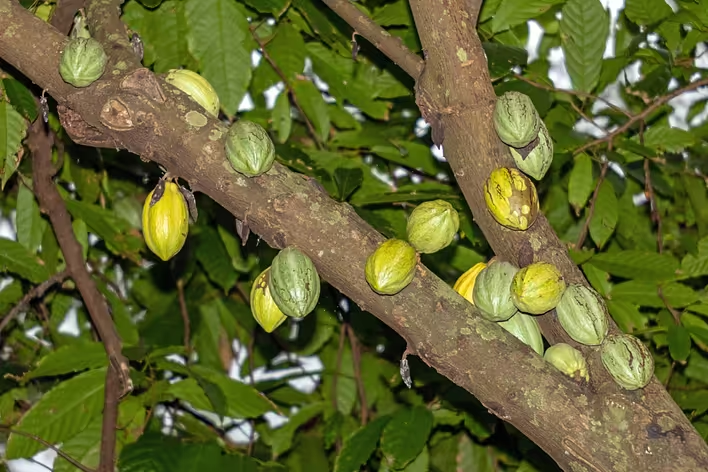
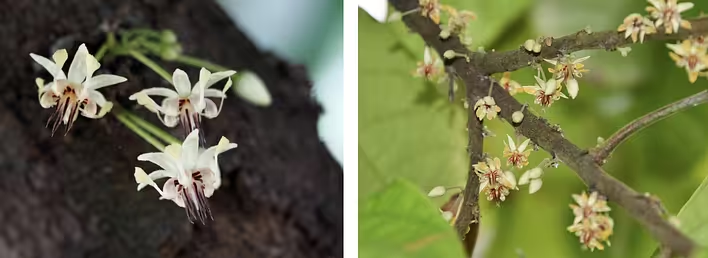
The cocoa tree produces small pinkish-white flowers directly on the trunk. Over time, large ribbed fruits form from them, containing cocoa beans inside.
Interestingly, cocoa flowers are very small, and they are pollinated by tiny flies. At the same time, the tree can have both flowers and ripe fruits simultaneously.
Jabuticaba — the "grape tree" of Brazil
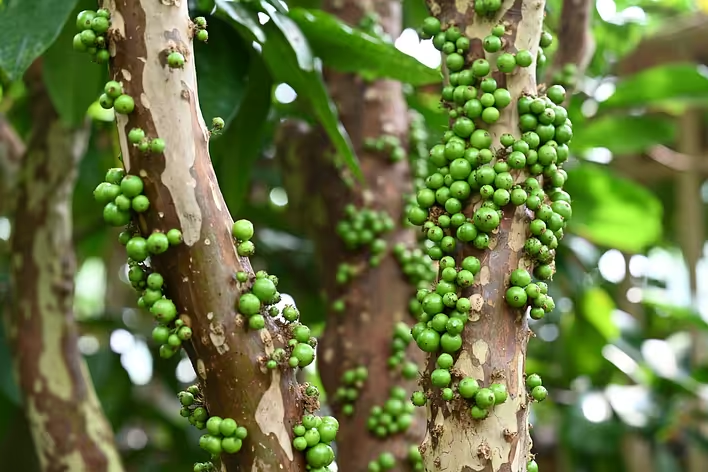
Jabuticaba is one of the most fantastic cauliflorous plants in the world.
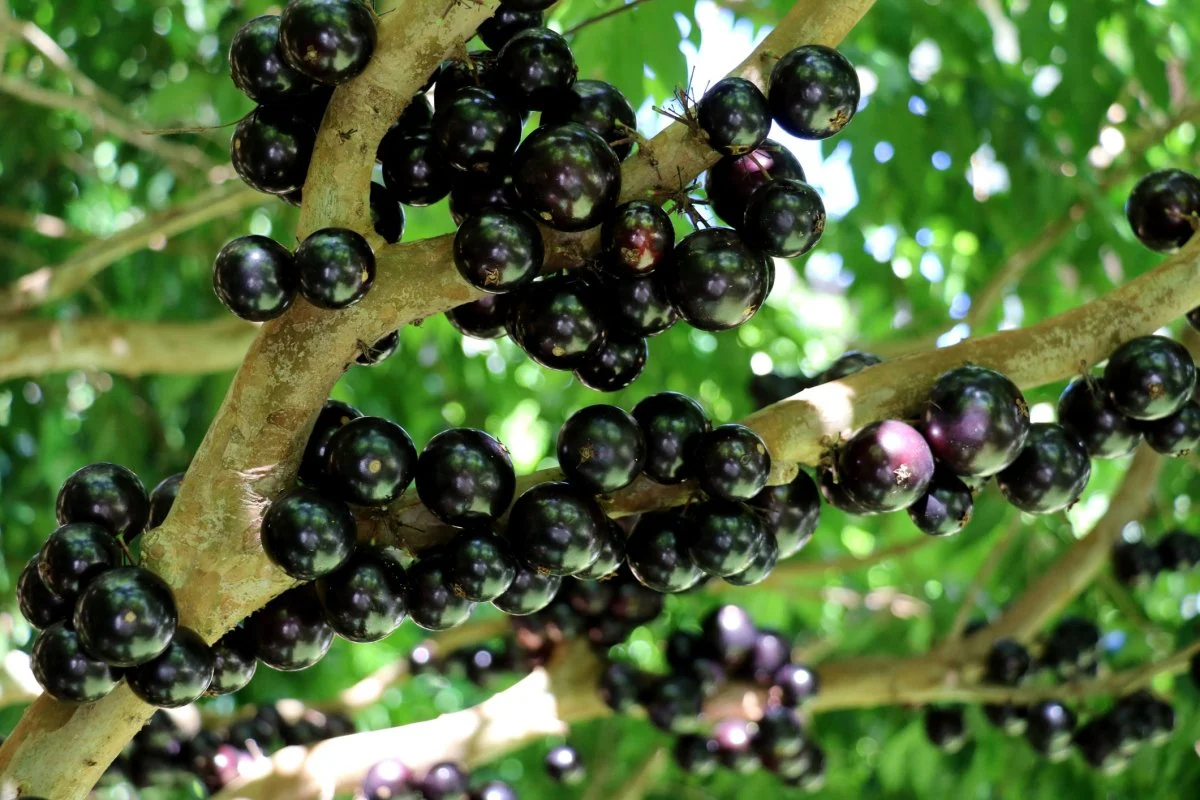
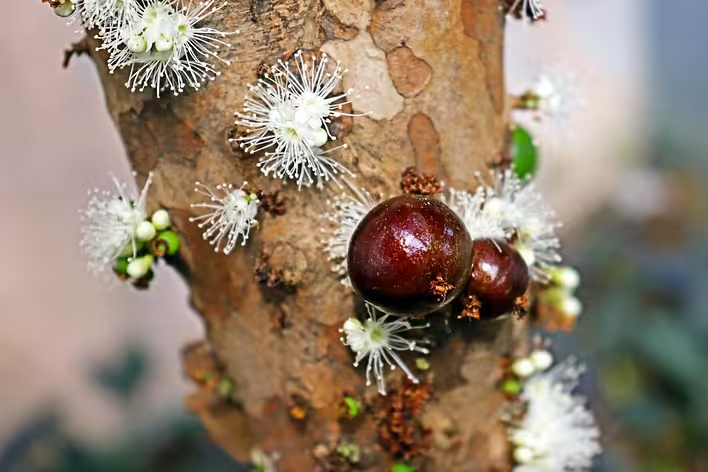
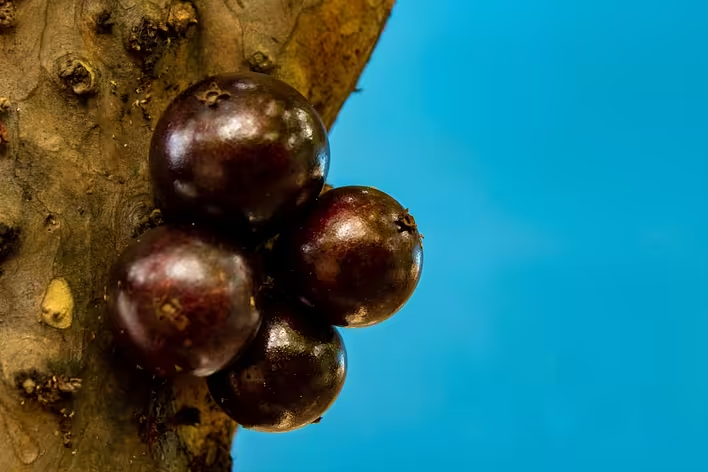
Its dark round fruits literally cover the trunk. From a distance, it seems as if the tree is covered with black grapes or even large beetles.
The fruits of jabuticaba are eaten fresh, and juices, wines, and jams are made from them. Due to its unusual appearance, the tree is often grown as an ornamental.
Jackfruit — a giant among fruits
Jackfruit is another classic example of cauliflory.
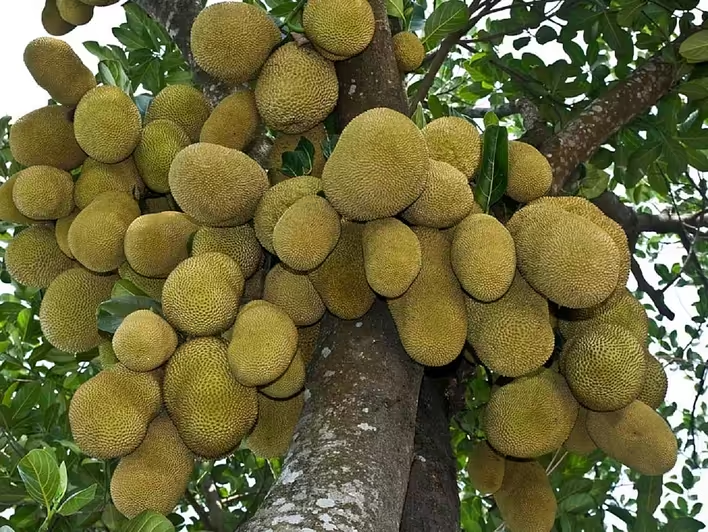
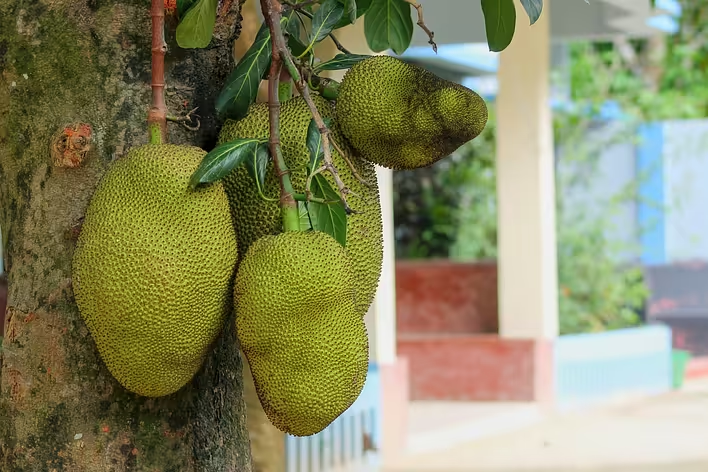
Its fruits are among the largest in the world among those that grow on trees. Sometimes they weigh over 30–40 kilograms. If such fruits hung on thin branches, the tree might not withstand the load.
Therefore, the fruits form on thick branches or directly on the trunk.
Durian — the legendary fruit with a strong smell
Durian also demonstrates cauliflory.
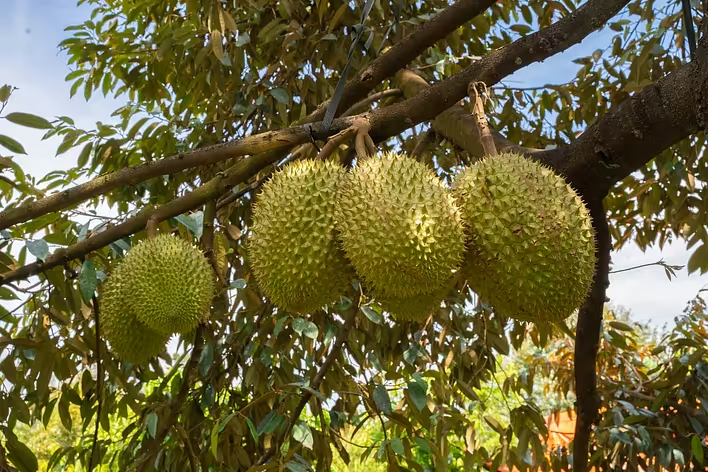
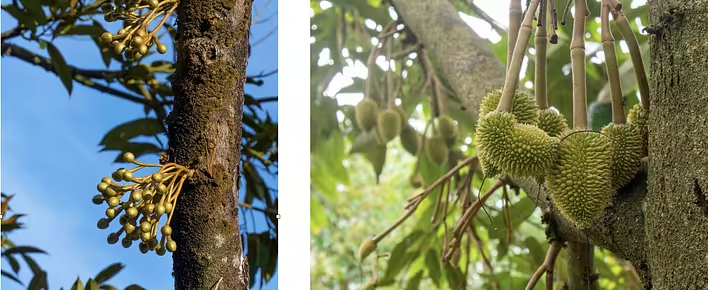
Fig trees and other representatives
Cauliflory also occurs in some species of figs, tropical myrtles, legumes, and even certain palms.
Among the lesser-known examples:
- Garcinia;
- Rambutan;
- Some species of breadfruit;
- Tropical species of Eugenia;
- Curcuma tree;
- Several species of ceiba.
In total, scientists have described hundreds of cauliflorous species.
Cauliflory and evolution
Botanists believe that cauliflory arose independently in different groups of plants. This is an example of so-called convergent evolution — when different species arrive at similar solutions due to similar environmental conditions.
This occurred particularly often in humid tropical forests. There:
- High competition for light;
- Complex forest structure;
- A large number of pollinator animals;
- Extremely high biodiversity.
In such conditions, flowering on the trunk turned out to be a beneficial strategy.
In temperate latitudes, this phenomenon occurs much less frequently. Most cauliflorous plants originate from the tropics.
However, sometimes similar phenomena can be observed in gardens of the temperate zone. Some trees may form flowers or fruits on old wood, although this will not be "pure" cauliflory.
Therefore, botanists distinguish between:
- True cauliflory;
- Ramiflorous — flowering on old branches;
- Other transitional forms.