Food Fermentation: How People Learned to Preserve Products and Discovered New Flavors
Fermentation is one of the oldest methods of food transformation. Simply put, it is a process in which microorganisms change a product: bacteria, yeast, or mold break down sugars and other substances, producing acids, gases, alcohols, and aromatic compounds...
Fermentation is one of the oldest methods of food transformation. Simply put, it is a process in which microorganisms change a product: bacteria, yeast, or mold break down sugars and other substances, producing acids, gases, alcohols, and aromatic compounds. This is how milk becomes kefir or yogurt, cabbage becomes sauerkraut, grape juice becomes wine, and flour mixed with water becomes a living sourdough for bread.
For modern people, fermentation often sounds like a trendy word from café menus and health food stores. In reality, it is not a new trend, but a technology that existed long before refrigerators, preservatives, and sterile factories. People fermented products not because they knew about probiotics or the microbiome, but because food needed to be preserved longer, made safer, more nutritious, and tastier.
It is impossible to name the exact date of the emergence of fermentation, as it arose independently in different places. Archaeologists find traces of ancient brewing, winemaking, dairy products, and fermented grains in various regions of the world. People may have noticed the process by accident: leftover milk soured but did not always spoil; a grain mixture began to ferment; vegetables in brine changed flavor and lasted longer. Gradually, this accidental observation became culinary knowledge.
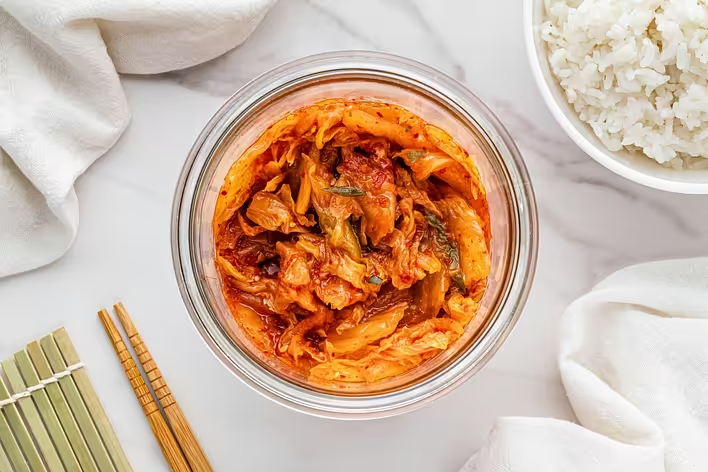
кімчі
In China and Korea, fermentation has become the basis for many everyday products. Soy sauce, miso, tempeh, fermented beans, rice wine, kimchi — all examples of how microorganisms can create deep flavors that are hard to achieve through simple boiling or frying. Kimchi, for example, is not just spicy cabbage. In Korean cuisine, there are dozens of kimchi variations made from different vegetables, with varying degrees of spiciness, acidity, and aging.
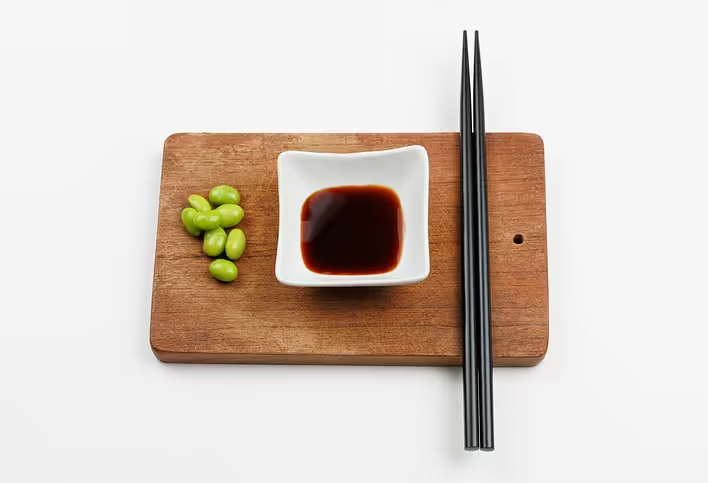
In Japan, fermentation is also of great importance. Miso paste, soy sauce, sake, rice vinegar, natto — products with very different characters, but all related to the controlled work of microorganisms. Koji, the culture of the mold Aspergillus oryzae, plays a particularly important role in Japanese tradition, used for fermenting rice, soy, and grains. It helps create the complex sweet-salty flavor of miso and soy sauce.
соєвий соус
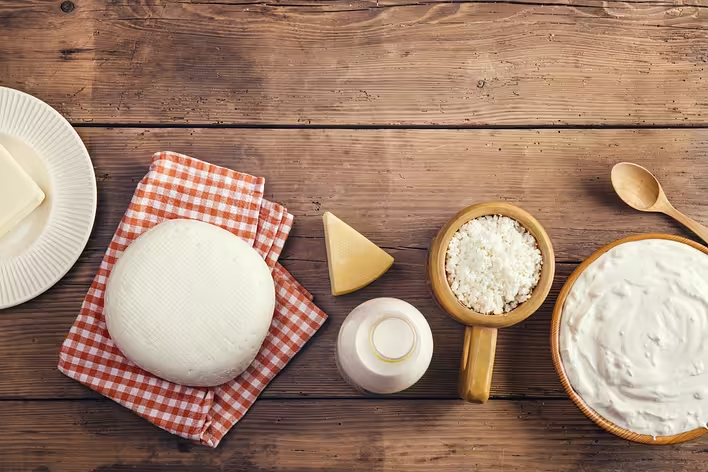
European cuisines are also unimaginable without fermentation. Cheese, yogurt, kefir, fermented dairy drinks, wine, beer, cider, sourdough bread, sauerkraut, pickles — all different forms of one principle. In France, fermentation has given the world cheeses with noble mold, in Germany and Central Europe, sauerkraut holds a special place, in Scandinavia, fish was preserved through salting and fermentation, while in the Balkans, fermented dairy products and vegetables are common.
The Ukrainian cuisine also knows fermentation very well, even if the word has not been used in everyday life for a long time. Sauerkraut, pickles, fermented tomatoes, soaked apples, beet kvass, bread starter, sour milk, ryazhenka, sour cream, homemade cheese — all part of the tradition. For the Ukrainian village, fermentation was not an exotic practice but a way to survive the winter, preserve the harvest, and have something sour, nutritious, and familiar on the table.
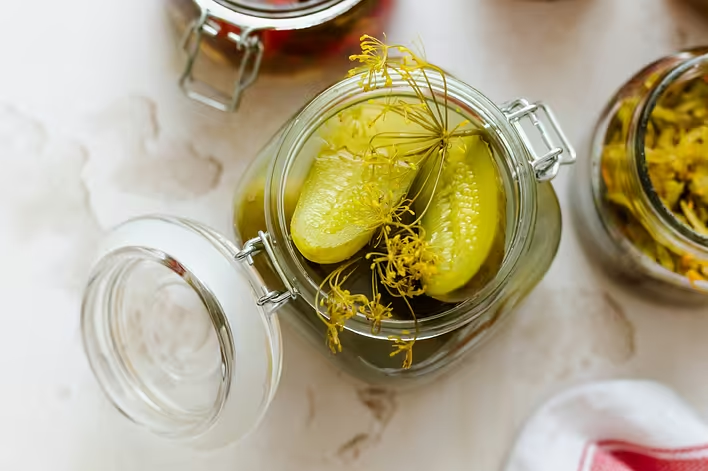
солоні огірки
Sauerkraut is one of the most vivid examples. It is made without vinegar: cabbage is shredded, salted, sometimes carrots, cranberries, cumin, or other additives are added, and then lactic acid bacteria get to work. They convert the sugars from the cabbage into lactic acid. This gives the characteristic sour taste and helps the product to be preserved. Cucumbers and tomatoes are fermented in brine in a similar way.
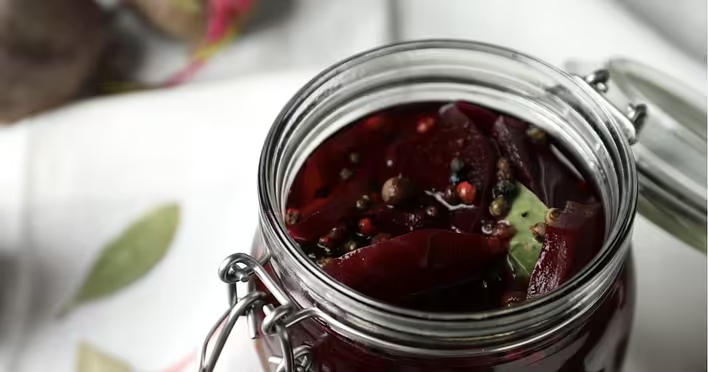
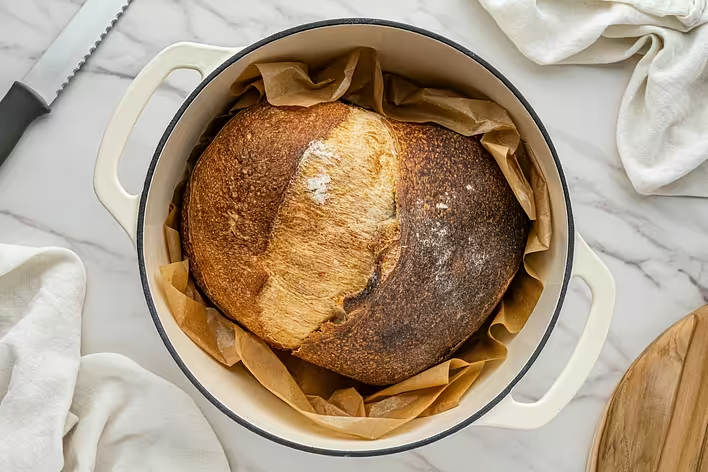
Beet kvass is another interesting Ukrainian product. It was used as a drink and as a base for dishes, including borscht. It has a sour taste, a rich color, and demonstrates that fermentation can be about not just vegetables in a jar, but also liquid products. Another topic is sourdough bread. Before the spread of industrial yeast, dough often rose thanks to natural sourdough, where wild yeast and lactic acid bacteria work together.
буряковий квас
The benefits of fermented products depend on the specific product and method of preparation, but generally, they have several important advantages. First, fermentation can facilitate the digestion of food: some substances are already partially broken down by microorganisms. Second, organic acids and other compounds that affect the flavor and preservation of the product may be formed during the process. Third, some unpasteurized fermented products contain live beneficial bacteria that can support the diversity of gut microbiota.
At the same time, fermented products should not be perceived as medicine or a magical remedy for everyone. They can be a useful part of the diet but do not replace a balanced diet. Additionally, pickled and salted products often contain a lot of salt, so people with certain dietary restrictions should be cautious. It is also important to distinguish fermentation from spoilage: a pleasant sourness, characteristic smell, and firm texture are one thing, while slime, mold where it shouldn't be, a sharp rotten smell, or uncontrolled gas production are entirely different.
Fermentation is also interesting because it changes the flavor of products more deeply than many ordinary culinary techniques. It adds acidity, umami, a slight spiciness, complex aroma, sometimes a barely noticeable sweetness or piquancy. Therefore, fermented products often serve as an accent in a dish: a spoonful of sauerkraut makes simple porridge or potatoes more expressive, a few drops of soy sauce deepen the flavor of broth, and sourdough bread has a more complex aroma than regular quick bread.
хліб на заквасці
Today, fermentation is returning to urban kitchens not just as a method of preservation but as a culinary tool. People are making kimchi at home, growing starters, making kombucha, experimenting with fermented sauces, vegetables, and drinks. But at the core of it all remains the same ancient observation: if you create the right conditions, invisible microorganisms can make food tastier, more resilient, and more interesting.
Fermentation shows that cooking is not just about fire, knives, and spices. It also involves time, temperature, salt, water, air or its absence, patience, and trust in the process. There is something very human in this: we have not just preserved food but learned to collaborate with the invisible living world that has been alongside us long before modern science emerged.
When a person sees a fallen tree in the forest, the first thought is often very simple: it needs to be removed. It seems like a sign of neglect, an obstacle on the path, or mate...