When a person sees a fallen tree in the forest, the first thought is often very simple: it needs to be removed. It seems like a sign of neglect, an obstacle on the path, or material that can be used as firewood. But for the forest itself, such a tree is not...
When a person sees a fallen tree in the forest, the first thought is often very simple: it needs to be removed. It seems like a sign of neglect, an obstacle on the path, or material that can be used as firewood. But for the forest itself, such a tree is not superfluous. On the contrary, dead wood is one of the foundations of a healthy forest ecosystem.
A fallen tree continues to work for many years after it has stopped growing. It becomes a home for fungi, insects, mosses, lichens, small mammals, amphibians, and birds. It slowly decomposes, returning nutrients to the soil and creating conditions for new life to emerge.
In a natural forest, dead wood comes in various forms: fresh trunks after a storm, old rotten logs, dry branches, stumps, trees with hollows, trunks in water or on slopes. Each such element has its role. It is the diversity of forms and stages of decomposition that makes the forest more complex.
Dead wood nourishes the soil
Wood accumulates carbon, minerals, and organic matter over decades. When it falls, this reserve does not disappear. Fungi, bacteria, and countless small organisms gradually decompose the wood, turning it into part of the forest soil.
This process is not quick, and this is precisely its value. A fallen log does not give everything at once but slowly nourishes the soil for years. Thanks to this, the forest receives a stable source of organic matter, and the land becomes more loose, moist, and suitable for seed germination.
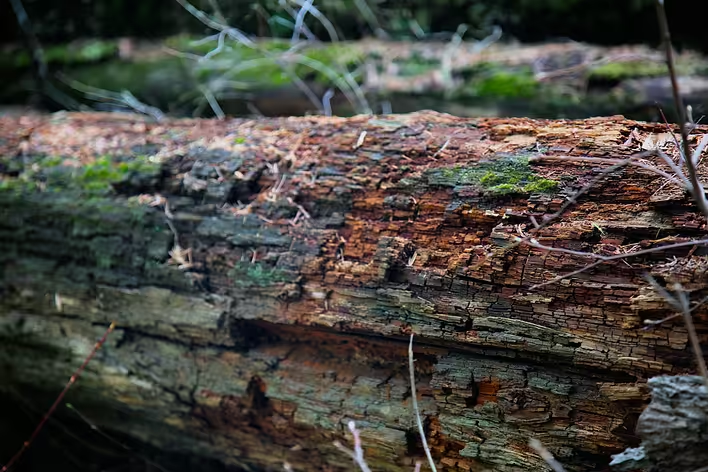
Wood that has been decomposing for a long time is especially important. It no longer resembles a solid trunk: it can be easily pressed with fingers, it absorbs water, mixes with leaves, and gradually turns into humus. In such material, microorganisms develop, and the roots of young plants find moisture and nutrients.
Fallen trees retain moisture
In a natural forest, fallen wood acts almost like a sponge. It absorbs rainwater, retains it after downpours, and slowly releases it during drier periods. This is especially important in summer when the top layer of soil dries out quickly.
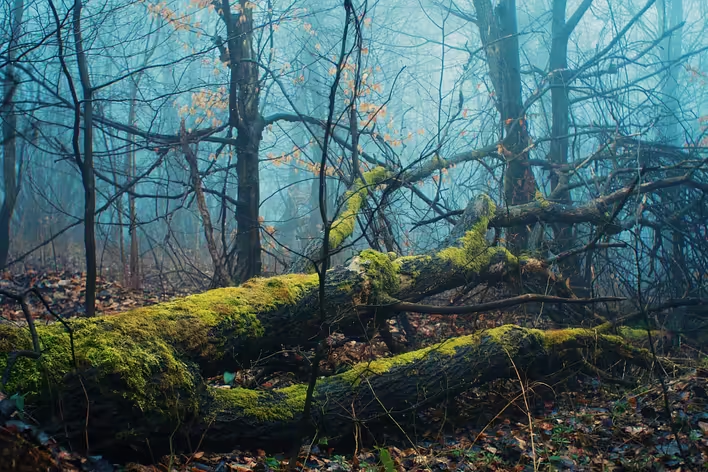
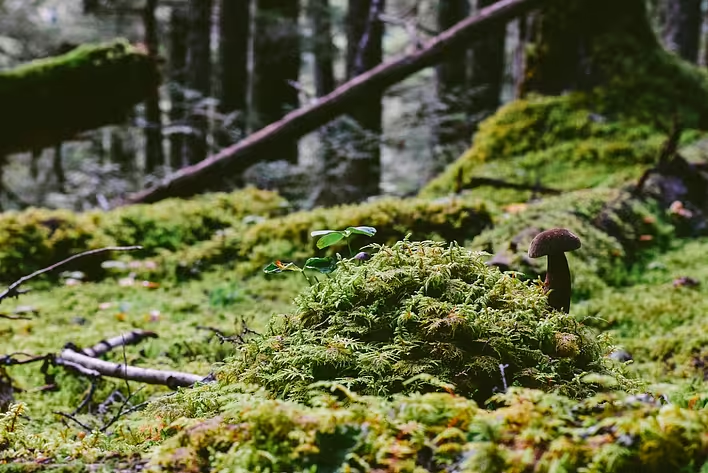
Around old logs, one can often see moss, ferns, and young plants. It is cooler, wetter, and more stable there than in an open area. For many small organisms, such a microzone becomes a place of survival during heat or drought.
On slopes, fallen trunks also slow down the flow of water. After heavy rain, water does not immediately wash away leaves, soil, and seeds downwards but is retained near the wood. This reduces erosion and helps the forest floor stay in place.
This is a home for fungi, insects, and small animals
Without dead wood, there would be much less life in the forest. In fallen trees live beetle larvae, ants, centipedes, woodlice, and other invertebrates. To humans, they may seem inconspicuous, but they initiate important decomposition processes and become food for birds and other animals.
Fungi also play a key role. Some species decompose hard wood, while others form complex relationships with the roots of living trees. In the forest, fungi are not just the fruiting bodies we see after rain, but a vast network of mycelium in the soil and wood that participates in the nutrient cycle.
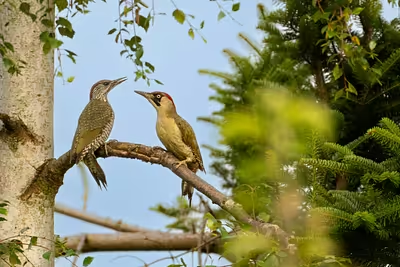
Hollows in old trunks and logs can be used by amphibians, small mammals, reptiles, and birds. For salamanders, frogs, lizards, or mouse-like animals, this is shelter from heat, cold, predators, and drying out.
Many species directly depend on dead wood. Some need fresh wood under the bark, others need a rotten log, and still others need a hollow or mycelium inside the trunk. If all fallen trees are removed from the forest, it is not just a few logs that disappear, but an entire network of habitats.
A log can become the birthplace of a new tree
In moist forests, young trees sometimes sprout directly on old fallen trunks. Such a log gradually becomes covered with moss, accumulates dust, leaves, small soil particles, and becomes a kind of natural bed.
For a seed, this can be a better start than dense shaded soil below. On the log, there is less competition from grasses, more moisture, and enough organic matter. Over time, the old trunk decomposes, and the young tree takes root in the ground. Thus, the forest literally grows from the remnants of previous generations.
Such logs can serve as a natural foundation for young seedlings. They provide a nutrient substrate and slightly elevate the seedling above the layer of fallen leaves, where seeds can rot or lose competition to grasses.
Wood in streams and ravines is also important
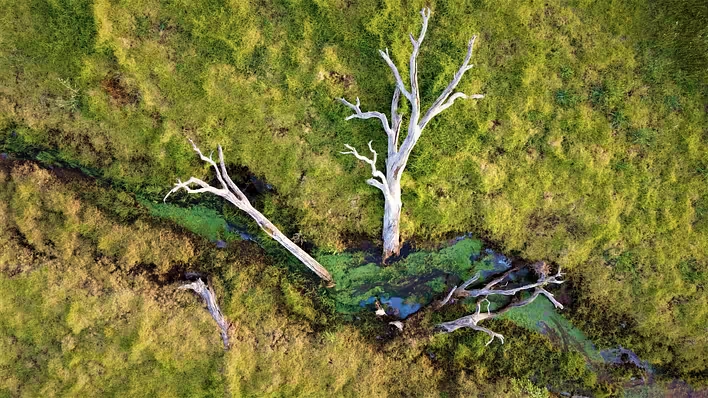
If a tree falls into a forest stream, it is not always an obstacle that needs to be removed immediately. In natural conditions, trunks and branches change the flow of water: they create small dams, retain leaves, sand, and small organic debris. This forms habitats for aquatic invertebrates, insect larvae, and small fish if they live in such a stream.
In ravines and wet hollows, wood helps slow down soil erosion. It does not replace the roots of living trees, but works alongside them: it retains material, reduces the force of the flow after downpours, and supports a moist microclimate.
Fallen trees make the forest more resilient
A forest with trees of various ages, dead standing trees, stumps, logs, and dead wood at different stages of decomposition usually has a more complex structure. And a complex structure means more places for life, more ways to retain moisture, and better ability to recover after storms, droughts, or other stresses.
If all fallen trees are removed from the forest, it may look tidier, but it will become poorer. Places for many insects, fungi, and small animals will disappear, the soil will dry out faster, and natural regeneration will become weaker.
That is why the quantity and diversity of dead wood are often considered one of the indicators of the naturalness of the forest. In old forests, it is always present: some trees fall, others die, and others have been decomposing for decades. Such a forest does not look "cleaned," but it has more ecological niches.
When fallen trees are still removed
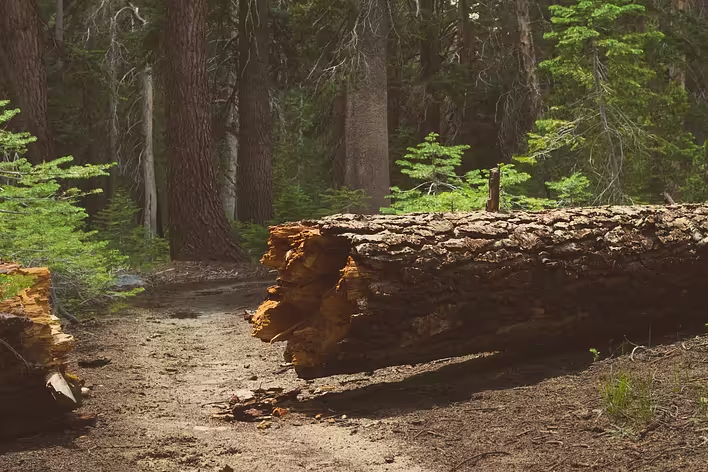
Of course, not every fallen tree can be left where it fell. If a trunk blocks a road, a hiking trail, a streambed, or poses a danger near a dwelling, it may be removed or relocated. In managed forests, there are also specific rules for using wood.
But in natural forests, reserves, and areas where the main goal is to preserve the ecosystem, it is important to leave some dead wood. It does not spoil the forest but helps it to be alive, diverse, and resilient.
Finding the right balance is important. Near human infrastructure, safety truly matters. But deep in the forest, excessive "cleaning" often does more harm than good. The forest should not look like a park: its strength lies in its unevenness, age diversity, old trunks, rotten wood, and processes that are not visible at first glance.
A fallen tree is not the end of the story. For one tree, life has indeed come to an end, but for the forest, a new stage begins: fungi settle in the wood, insects move under the bark, and seeds germinate in the moist moss. This is how a natural forest works — slowly, imperceptibly, and very precisely.
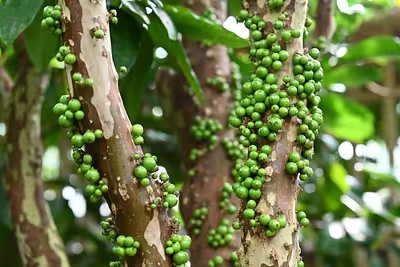
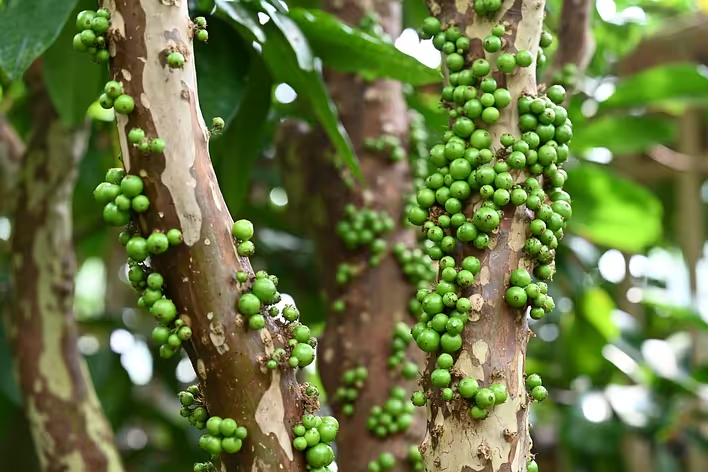
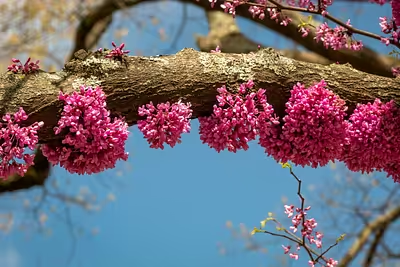
In the world of plants, there are many unusual phenomena, but cauliflory is among those that impress even people far removed from botany. Imagine a tree on which flowers and fru...