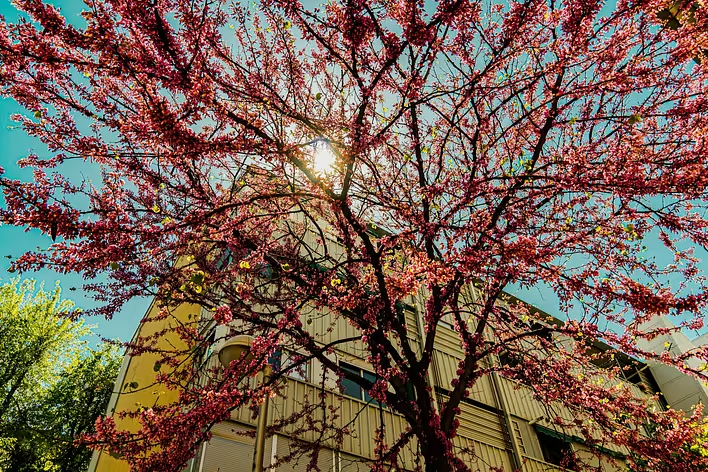
The crimson tree is a tree that in spring is covered with flowers directly on the trunk.
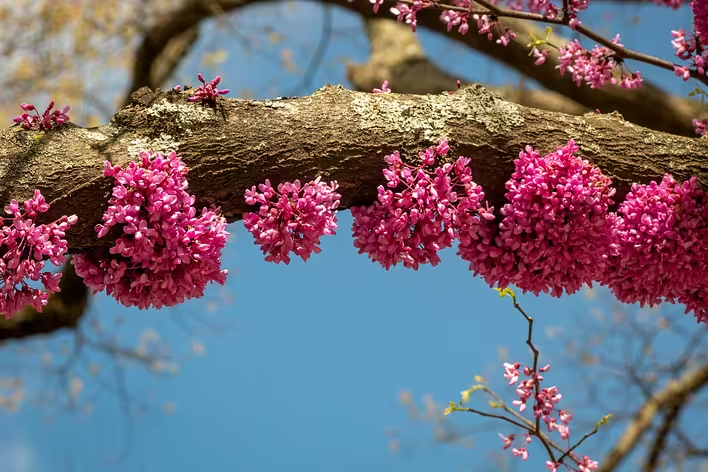
Among decorative trees, the redbud holds a special place. Even people who are far from botany often stop by it in spring, not immediately realizing what they are seeing. Its trunk and old branches suddenly become covered with dense pink-purple flowers, as i...
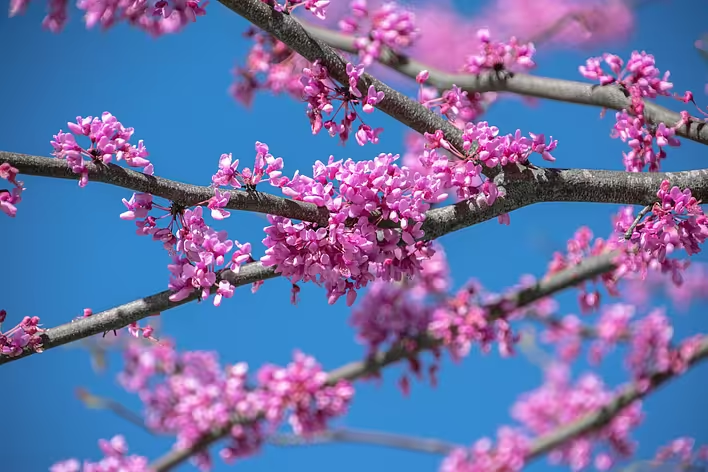
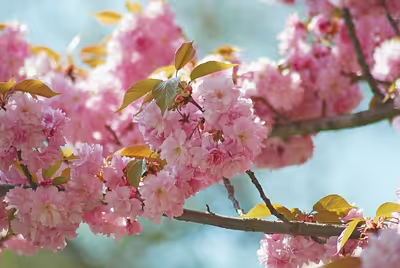
Among decorative trees, the redbud holds a special place. Even people who are far from botany often stop by it in spring, not immediately realizing what they are seeing. Its trunk and old branches suddenly become covered with dense pink-purple flowers, as if the tree has blossomed from within. This looks especially strange because the blossoms appear before the leaves. On the dark bark, it seems as if hundreds of bright butterflies are flashing.
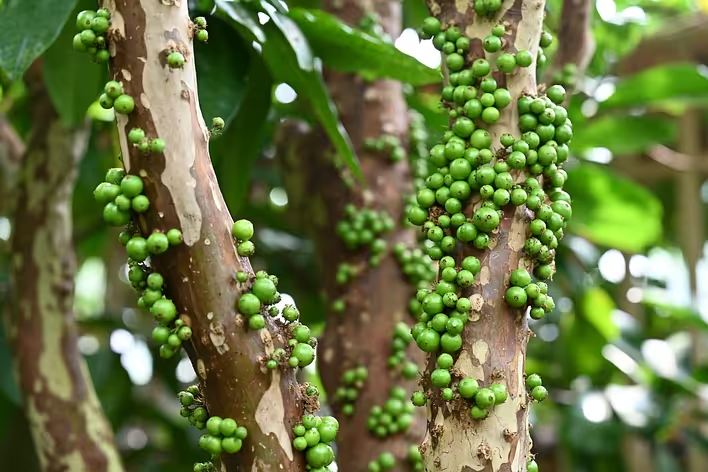
It is precisely because of this feature that the redbud is often mentioned in the context of cauliflorism — a botanical phenomenon where flowers grow directly from the trunk or old wood. For tropical plants, this is not so rare, but in a temperate climate, it looks almost exotic. Therefore, the redbud has long become one of the most famous decorative trees in Europe and North America.
The Latin name of the plant is Cercis. It is believed to derive from the Greek word for a weaving shuttle, as the flat pods of the tree reminded people of this object. The Ukrainian name is much more poetic: "redbud" is associated with the crimson color of its flowers. Indeed, during flowering, the tree seems to be enveloped in a purple cloud.
In nature, redbuds grow in warm regions of Europe, Asia, and North America. They can be seen particularly often in the Mediterranean — on the rocky slopes of Greece, Turkey, or Italy. There, in spring, entire hills can blush from blooming trees. Some species occur in China and the Caucasus, while the Canadian redbud feels great even in cooler climates.
The most well-known species is the Eastern redbud, which is also called the "Judas tree." An ancient legend is associated with it. According to Christian tradition, it was on this tree that Judas Iscariot hanged himself after betraying Christ. Allegedly, the flowers of the tree were once white, but after this event, they turned crimson-pink. Historians, of course, regard this only as a legend, but it has become so entrenched in culture that the English name Judas tree is still used today.
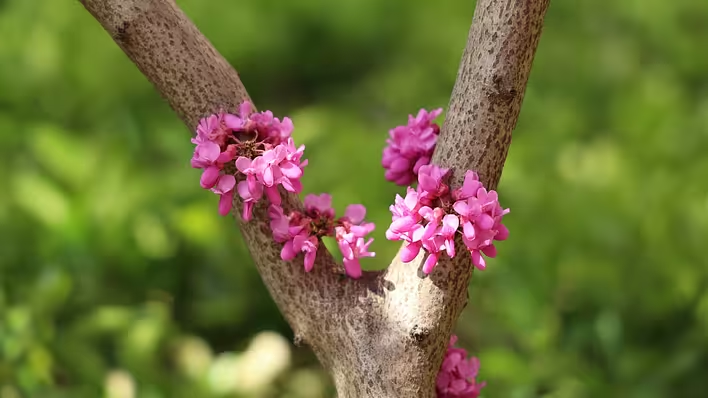
Botanists are primarily interested in the redbud because of its unusual type of flowering. In most trees, flowers form on young shoots or thin branches. In the redbud, however, flower buds can develop directly on the old bark. In spring, they burst forth in small clusters of flowers, making the tree look as if it is blooming straight from the trunk.
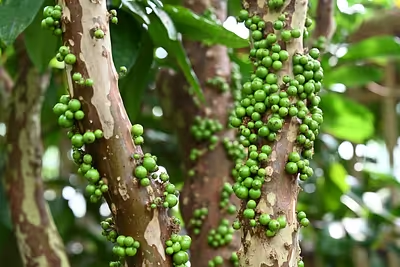
However, scientists clarify that the redbud is not a "classic" example of cauliflorism, like cocoa or jaboticaba. It is more often classified as ramiflory — flowering on old wood. But for the ordinary observer, the difference is almost imperceptible. The impression remains magical.
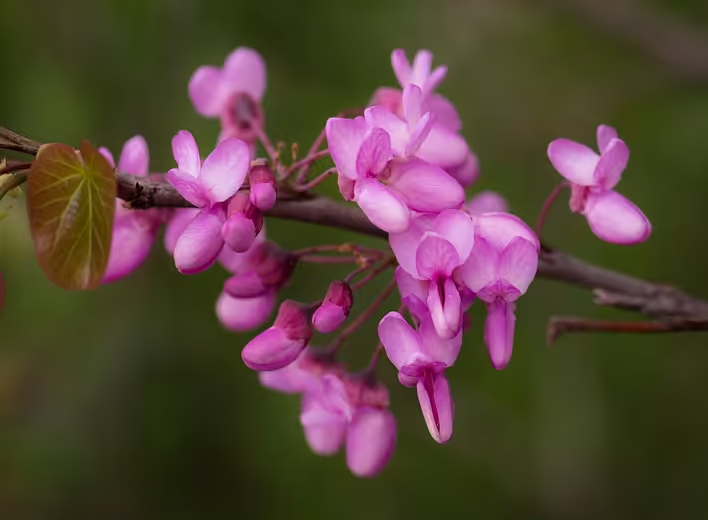
The flowers of the redbud are small but very numerous. They belong to the legume family, so their shape somewhat resembles the flowers of acacia or peas. They are actively visited by bees and other insects. On warm spring days, the tree literally buzzes with pollinators.
After flowering, heart-shaped leaves appear on the branches. It is these leaves that make the redbud decorative even in summer. Some varieties have dark purple or bronze-tinted leaves, which turn golden in autumn. Because of this, the tree looks beautiful almost all year round.
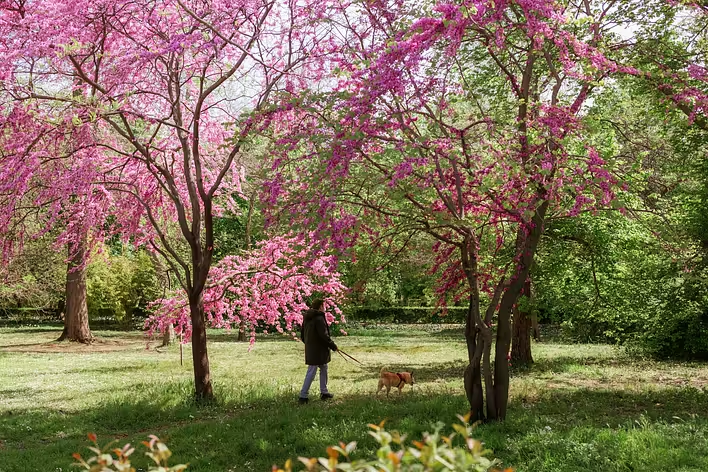
The redbud has gained special popularity in ornamental gardening. It is often planted in parks, botanical gardens, and private yards as an accent tree. Even one redbud can completely change the appearance of a garden in spring. It looks especially striking against the backdrop of dark coniferous plants or stone walls.
For Ukraine, the redbud is no longer a rarity. In the southern regions and Transcarpathia, it has been cultivated for a long time, but in recent years, the tree has increasingly appeared in central regions as well. The Canadian redbud performs best, as it withstands frosts better. Young trees may suffer from frost in harsh winters, but with age, they become more resilient.
Interestingly, the redbud is valued not only for its beauty. In some countries, its flowers are used in cooking — added to salads or used to decorate desserts. They have a slightly sour taste and are considered edible.
Today, the redbud remains one of those trees that combine botanical unusualness and decorative beauty. It serves as a reminder that nature does not always adhere to conventional rules. After all, a tree that blooms right from its trunk continues to look almost miraculous even in the modern world.
In the world of plants, there are many unusual phenomena, but cauliflory is among those that impress even people far removed from botany. Imagine a tree on which flowers and fru...