What is a look in fashion: exploring fashion slang and its origins
In the Ukrainian language, the word "лук" means a weapon used for shooting — and nothing more. (The vegetable, by the way, is called "цибуля" — "лук" in the meaning of "onion" is already a Russianism). But now another, completely different word "лук" has en...
In the Ukrainian language, the word "лук" means a weapon used for shooting — and nothing more. (The vegetable, by the way, is called "цибуля" — "лук" in the meaning of "onion" is already a Russianism). But now another, completely different word "лук" has entered the language — borrowed from English, and it is about this that people talk when they write "today's лук" under a photo on Instagram.
What is "лук" in clothing?
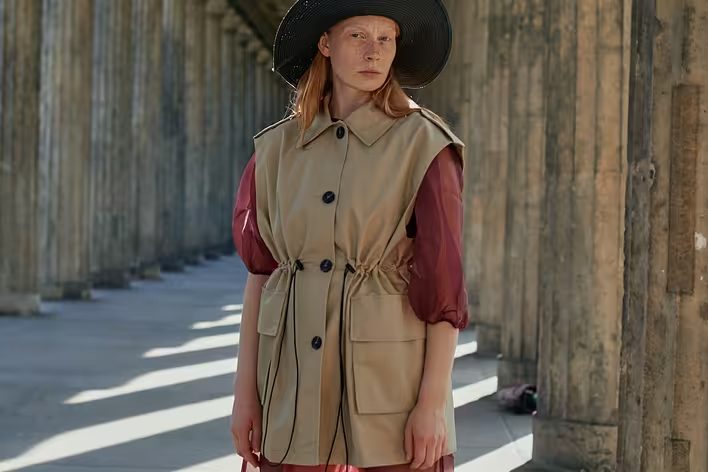
Лук (from English look — "appearance") — is a slang word that denotes a person's complete image: clothing, shoes, accessories, and sometimes makeup or hairstyle, gathered together in one cohesive style for a specific day or event.
What does the word "лук" mean in simple terms?
In simple terms: лук = how you are dressed today, all together. Not just "t-shirt" or "sneakers" separately, but the whole combination — "today's лук: jeans, t-shirt, and sneakers".
Where does the word "лук" come from?
The word comes directly from the English look, which in the fashion industry means "image, style of clothing". It spread not through dictionaries, but through fashion bloggers and influencers who regularly post "outfit of the day" (лук дня) on social media — that's where the word transitioned into colloquial language, especially among young people who follow fashion on Instagram and TikTok.
Is it the same "лук" as the weapon?
No, these are two completely different words that just sound and are written the same. Лук-weapon — is an ancient word common to many languages. And лук-image — is a new borrowing from English that appeared only in the last 10–15 years along with the culture of fashion blogs. This is a coincidental homonymous coincidence, not a common origin.
Confusion often arises also due to the Russian language: there the word "лук" simultaneously means both a weapon and onion. In the Ukrainian language, these are two separate words — "лук" (weapon) and "цибуля" (vegetable). If one is used to thinking in Russian equivalents, it is easy to mechanically transfer this confusion to Ukrainian, although it does not exist in it.
Where is the word "лук" used?
In social media
The word is most often found in captions to photos: "лук дня", "my лук for the wedding", "what do you think of this лук?". This is the main environment where the word lives.
In fashion blogging
Bloggers and stylists use the word professionally — "лукбук" (lookbook, a collection of images from a brand or stylist), "create a лук", "choose a лук for the event".
In everyday speech
Young people use the word in regular conversations, not just online: "cool лук you have", "put together a лук for me for the date".
Should the word "лук" be used? The Ukrainian language already has equivalents
Here our position is clear: the word is completely unnecessary. On the platform "Словотвір" — a project where the community finds Ukrainian equivalents for borrowings — the most popular option for the word "лук" is "образ" (received the most votes), followed by "вигляд" and "стрій". All three are living, understandable Ukrainian words that perfectly convey the very meaning that people are trying to express with "лук".
Unlike words that are truly hard to replace with one word, here the replacement is not only possible — it is obvious and already exists in the language. "My today's образ" sounds no worse than "my today's лук", and at the same time does not create confusion with the weapon.
Examples of usage
"I showed my лук for my birthday in the stories."
"This лукбук of the brand is just inspiration for the wardrobe."
"Put together a cool лук for me for the interview."
Frequently asked questions
Is "лук" in clothing and "лук" (weapon) the same word?
No, this is a coincidental homonymous coincidence. "Лук"-weapon is an ancient word, "лук"-image is a new borrowing from the English look. There is no common origin.
Why is "лук" sometimes associated with onion?
This is the influence of the Russian language, where "лук" means both a weapon and onion with one word. In the Ukrainian language, onion is a separate word, and confusion arises only in those who are used to thinking in Russian equivalents.
What is "лукбук"?
This is the Ukrainianized form of the English lookbook — a collection of photographs with images presented by a brand, stylist, or blogger, usually for a season or collection.
What Ukrainian word is better to use instead of "лук"?
According to the voting results on "Словотворі", the most popular option is "образ", "вигляд" or "стрій" can also be suitable depending on the context.
Is this word used only in fashion?
Mostly yes — in the context of clothing, style, and appearance. In other meanings ("лук" as a strategy or move, for example) the word is not common in the Ukrainian language.
We have already written about "look" — and it might seem that "outfit" means the same thing. But there is a specific difference between them that is rarely explained: one word e...