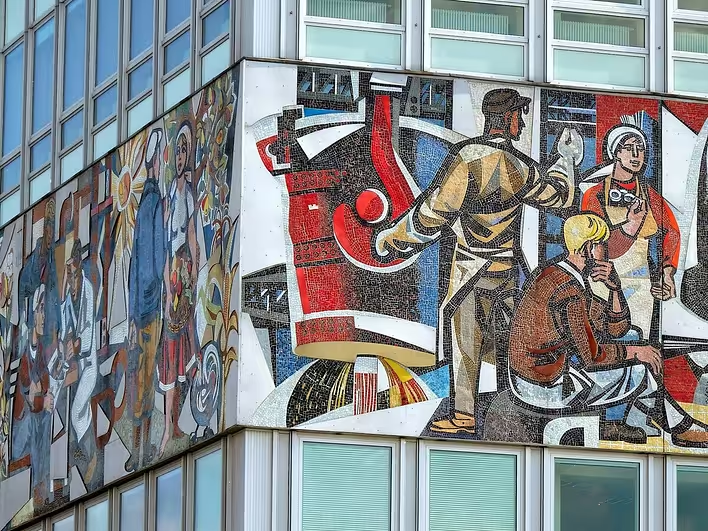


Socialism is a word that often sparks controversy. Some consider it a panacea for all ills, while others see it as a threat to freedom. But what is socialism in simple terms? Let's try to figure it out together.
What is socialism?
Socialism is a political and economic system that seeks equality and justice in society. The main idea is that resources and means of production should belong to all citizens, not just a privileged minority. Socialists believe that such a distribution of wealth will reduce inequality and provide a better life for everyone.
Main principles of socialism
-
Collective ownership: In a socialist society, factories, plants, and other means of production are owned by the state or cooperatives. This means that the profits from their activities should benefit all citizens.
-
Economic planning: Instead of a market economy where prices are determined by supply and demand, socialist systems often use centralized planning. This helps avoid economic crises and ensures stable development.
-
Social justice: Socialism aims to achieve equality of opportunity for all people, regardless of their background or wealth. This may include free education, healthcare, and other social guarantees.
Examples of socialist countries
There are many varieties of socialism, and not all countries apply it in the same way. Here are a few examples:
-
Sweden: Although Sweden is not a purely socialist country, it has a strong social protection system and a high level of income redistribution.
-
Cuba: This island nation adheres to a classical version of socialism with a centralized economy.
-
China: China combines elements of socialism with a market economy, which has allowed it to become one of the largest economies in the world.
Developed socialism
Developed socialism is a term commonly used to describe a stage of maturity in a socialist system. This is when the main principles have already been implemented and the system operates effectively. For example, in the Soviet Union, this term referred to achieving a certain level of economic development and prosperity.
Why do people support socialism?
There are several reasons why people may support this ideology:
-
Fighting inequality: Socialism offers solutions to reduce the gap between the rich and the poor.
-
Social protection: Guarantees in the form of free healthcare and education make life more stable.
-
Stability: Centralized planning can prevent economic crises.
Criticism of socialism
Not everything is as rosy as it may seem at first glance:
-
Economic inefficiency: Centralized management can lead to bureaucracy and loss of efficiency.
-
Restrictions on freedoms: Some models of socialism limit personal initiative and entrepreneurship.
-
Dependence on the state: People may become too dependent on state benefits and lose motivation for self-improvement.
Socialism is a complex topic with many nuances. It has its pros and cons, but the main goal is to attempt to create a more just society. Regardless of whether you support this ideology or not, understanding its basics will help you navigate the modern world better.