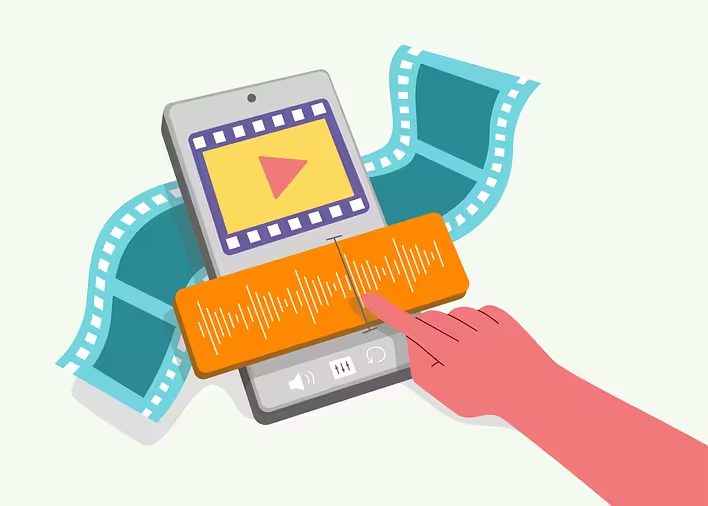

Codecs are the magic that allows us to enjoy video and audio in the digital world. But what are codecs really, and why are they so important? Let's figure it out together! If you've ever watched a movie on a computer or listened to music online, you've already encountered codecs. These are the magical tools that compress and decompress multimedia data so we can enjoy it without delays and with high quality.
What are codecs?
A codec is software or an algorithm that encodes and decodes audio and video data. The word "codec" comes from the English words "coder" and "decoder." Codecs compress large files into more manageable sizes for storage or transmission, and then restore them to their original form for playback. It's like a magic box: you put something big in, and you get a compact version out.
Why are codecs important?
Imagine a world without codecs. Downloading a single movie would take as long as assembling a thousand-piece puzzle. Without data compression, we would waste enormous amounts of memory on our devices and wait an eternity for video to load. Codecs make multimedia accessible and easy to use.
Types of codecs
There are many codecs, each with its own features and purposes. Here are a few popular ones:
- H.264: The most widely used video codec in the world. Used in streaming video, such as on YouTube.
- AAC (Advanced Audio Codec): A popular audio codec that provides high sound quality at a smaller file size.
- MP3: A well-known audio codec for music that became the standard in the 90s.
- FLAC (Free Lossless Audio Codec): Provides lossless audio compression, making it popular among audiophiles.
How do codecs work?
Codecs work on the principle of data compression. They analyze the multimedia file and remove unnecessary data or duplicates. For example, a video may have many similar frames; the codec keeps only the difference between them, significantly reducing the file size.
How to choose the right codec?
The choice of codec depends on your needs:
- If you need high-quality video without loss – choose H.265 or VP9.
- For high-quality music, FLAC will do.
- If compatibility with various devices is important – MP3 and AAC will come in handy.
Interesting facts about codecs
- H.265, also known as HEVC (High Efficiency Video Coding), can compress video to half the size of H.264 at the same quality.
- The Opus codec is considered one of the best for transmitting voice over the internet due to its low latency and high sound quality.
In conclusion, codecs are the invisible heroes of the digital world. They make our lives easier by allowing us to quickly and enjoyably consume multimedia content. The next time you watch a movie or listen to music online, think of these little magicians that make it possible.
I hope you now have a better understanding of what codecs are and why they are so important in today's digital world!