
Sanctions are a word we hear more and more often, especially in the context of international politics and economics. But what is a sanction really? The answer to this question may not be as obvious as it seems at first glance. Let's figure it out together!
What is a sanction?
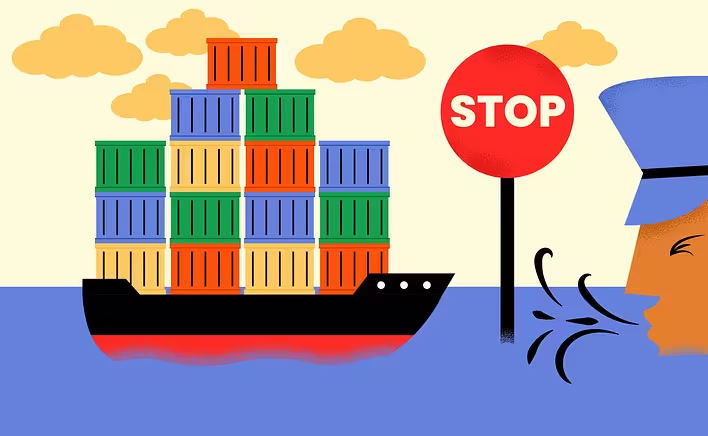
A sanction is a tool of influence used by states or international organizations to compel a country or group of countries to change their behavior. It's somewhat like a "whip" in the political world: if you don't listen, you'll get "hit." Sanctions are usually imposed for violations of international law, aggression, or other unacceptable actions.
Types of sanctions
Sanctions can vary in their nature and impact. Here are a few main types:
-
Economic sanctions: The most common type. They include restrictions on trade, financial transactions, and investments. For example, a ban on oil exports or the import of technologies.
-
Diplomatic sanctions: These are restrictions in diplomatic relations. For example, recalling ambassadors or suspending negotiations.
-
Personal sanctions: Targeted against specific individuals. This can include a ban on entering a certain country or freezing assets.
-
Military sanctions: Include an embargo on the supply of weapons and military technologies.
Why are sanctions applied?
The main goal of sanctions is to force a country to change its policy without using military force. It's a way to press on the "pain points" of a state's economy or politics. Sanctions can also serve as a signal to other countries that certain behavior is unacceptable.
How do sanctions work?
Sanctions can have a significant impact on the economy of the targeted country. For example, export restrictions can lead to a loss of revenue from selling goods abroad. This, in turn, can cause inflation and unemployment.
However, the effectiveness of sanctions often depends on the support of the international community. If only one country imposes sanctions, it may not have a significant effect. But when many states join in, the situation changes dramatically.
Examples of sanctions application
Let's recall a few examples from history:
-
Sanctions against North Korea: The UN imposed numerous economic and military sanctions due to this country's nuclear tests.
-
Embargo against Cuba: The US imposed an economic embargo against Cuba back in the 1960s due to the communist regime.
-
Sanctions against Russia: After the annexation of Crimea in 2014, many countries imposed economic and personal sanctions against Russia.
Are sanctions always effective?
Interestingly, sanctions do not always achieve the desired results. Sometimes they can even strengthen the position of the targeted country's government by uniting the population around the leader in the face of an "external threat." There is also a risk that the population of the country will suffer, rather than its leadership.
What to do in conditions of sanctions?
If you live in a country under sanctions or have business ties with such a country, it is important to understand the possible consequences and plan your actions accordingly:
-
Diversification of markets: Look for new partners and markets for your business.
-
Cost optimization: Reduce expenses and look for ways to increase efficiency.
-
Innovation: Invest in new technologies and solutions to adapt to new conditions.
Thus, a sanction is a complex and multifaceted tool of influence in international politics. It can take various forms and have different consequences, depending on how it is applied and who supports it. But regardless of whether you are a politician, a businessman, or just an interested person, understanding this concept can be useful for navigating the modern world of global politics and economics.