

This content has been automatically translated from Ukrainian.
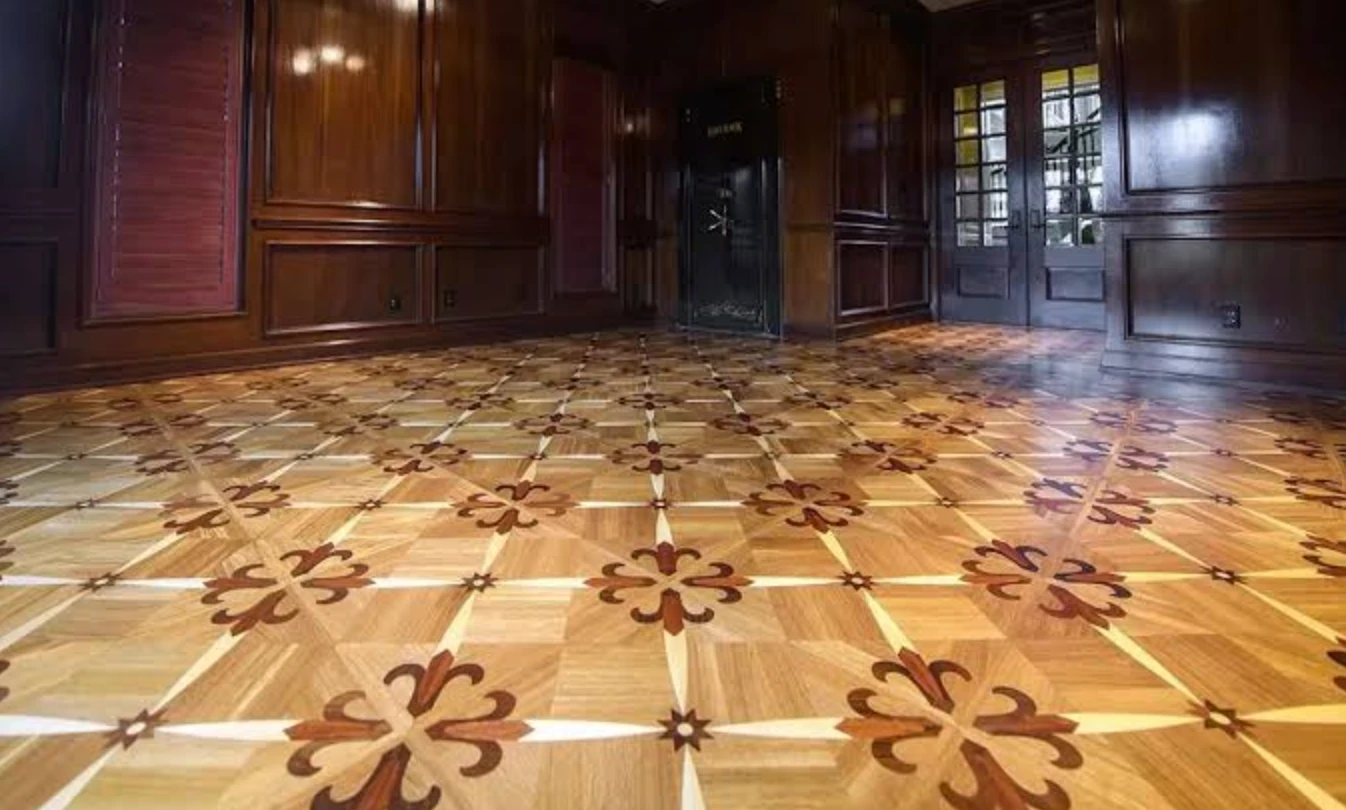
Parquet flooring can be not only a practical covering but also a complex composition of individual wooden elements. Depending on the manufacturing technology and installation method, several types of parquet are distinguished, among which artistic and modular have a similar external effect but differ significantly in construction. On the floor, artistic parquet forms a pattern directly from individual pieces, while modular elements are manufactured in advance.
Both options use natural wood; however, differences manifest in the geometry of the pieces, the complexity of assembly, design possibilities, and the requirements for the base. Therefore, when choosing flooring, it is evaluated not only for its decorative qualities but also for its operational conditions, installation method, and the specific characteristics of the room.
How is artistic parquet arranged?
Artistic parquet consists of small wooden elements of various shapes, species, and shades. From these, a pattern is formed directly on-site: geometric, floral, combined, or complex compositional design. Oak, ash, maple, walnut, merbau, and other species with appropriate hardness and stability indicators can be used for manufacturing.
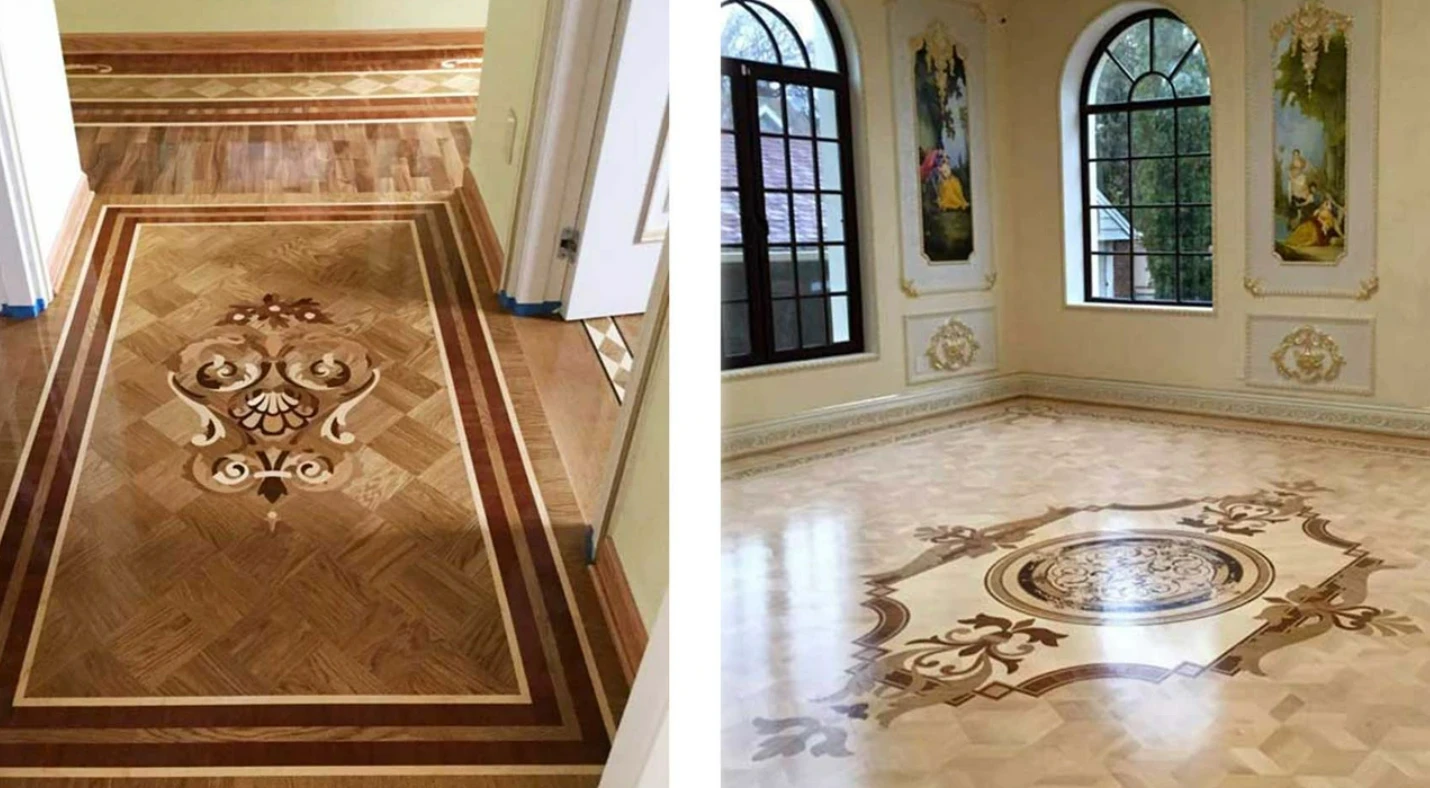
Unlike regular engineered parquet, where the strips predominantly have the same geometry and are laid according to a certain scheme, the artistic variant involves a significantly greater number of pieces. Their mutual arrangement determines the accuracy of the pattern, so even a small error during installation can disrupt the symmetry of the entire composition.
Characteristic features of such covering include:
- the use of elements with complex geometric shapes;
- the combination of several species or grades of wood;
- the formation of the pattern directly during installation;
- high requirements for cutting accuracy and base preparation;
- the possibility of creating an individual pattern according to the project.
Installing artistic parquet requires careful preliminary marking. The master determines the central axes of the room, the placement of the main pattern, borders, and decorative inserts. The base must be even, dry, and stable, as height differences or residual moisture can lead to deformation of individual pieces and disrupt the integrity of the composition.
What does the modular variant represent?
Modular parquet is manufactured in the form of ready-made panels or cassettes, within which individual wooden strips are already assembled into a specific geometric pattern. Square modules are most commonly used, although the shape and size of the elements can vary depending on the design solution.
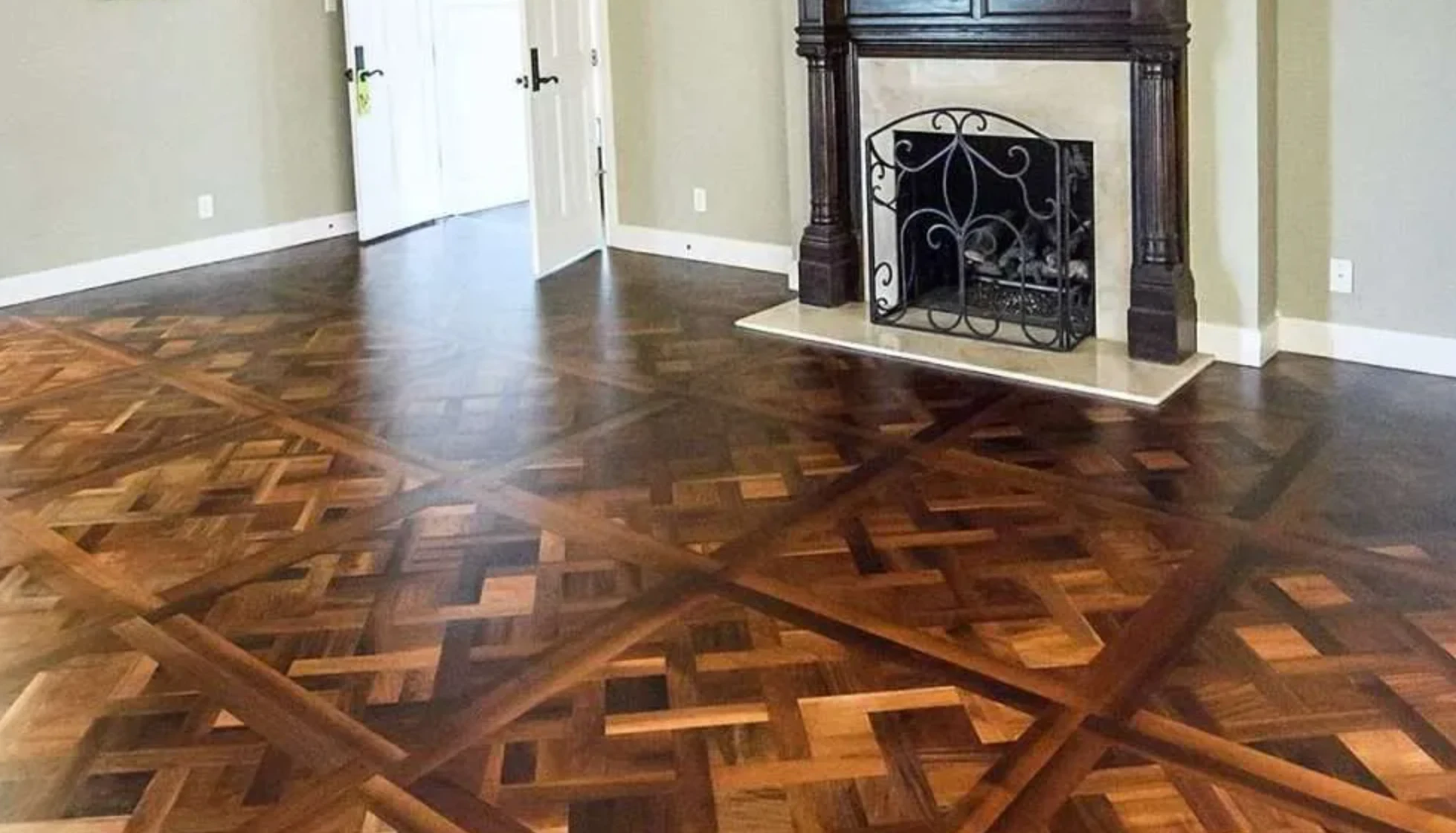
The main difference is that a significant part of the work is done at the production stage. Instead of assembling dozens of small pieces on-site, the master installs already formed sections. This reduces the duration of the work and simplifies the control of geometry. Modular flooring is characterized by the following features:
- The pattern is formed within the ready-made module.
- The dimensions of the sections are predetermined by the manufacturer or project.
- The installation is faster than assembling a complex pattern from individual pieces.
- The design can be combined by varying the direction of module installation.
- Base preparation remains critically important for achieving an even wooden floor.
In terms of construction, modular parquet can resemble a large-format composition of engineered elements, but the technology of its manufacturing and installation is fundamentally different. In the finished floor, the boundaries of individual sections can be virtually invisible if the modules are precisely fitted and correctly oriented.
The choice between the two solutions primarily depends on the complexity of the design and installation requirements. Artistic parquet offers more freedom in forming a unique pattern, while the modular construction allows for a quicker achievement of a repeatable decorative design with controlled geometry.