

This content has been automatically translated from Ukrainian.
What does Sold Out mean?
Sold Out (or sold out) is an English phrase that means “all sold”, “sold out”, or “the item or tickets are completely gone due to sales”.
This phrase is most often seen on ticket sales websites, online stores, concert posters, or during the sale of limited collections of goods. It indicates that there are no more available seats or units because everything has already been purchased.
For example:
- The concert is sold out. — All tickets have been sold.
- The t-shirt is already sold out. — All copies have been bought.
- The new collection was sold out in a few hours.
- The festival was sold out a month before it started.
In the Ukrainian language, both the English spelling Sold Out and the transliterated form sold out are commonly used. It is especially often heard in conversations about concerts, festivals, fashion, collectible items, and other popular events.
Origin of the phrase Sold Out
The phrase sold out comes from the English verb sell out, which literally means “to sell everything” or “to completely sell the available stock”.
The construction consists of two parts:
- sold — the past tense form and participle of sell (“to sell”);
- out — an adverb that in this case emphasizes the completion of the action, meaning that the stock of goods or tickets has been exhausted.
Literally, sold out can be translated as “all sold” or “completely sold out”.
Initially, this phrase was widely used in the retail sector. Over time, it became common in the concert industry, theaters, sporting events, and other occasions where it is necessary to quickly inform that there are no more tickets left.
Today, the phrase Sold Out is understood in most countries around the world regardless of the interface language. That is why it is often left in English even on Ukrainian websites or promotional materials.
When is the phrase “Sold Out” used?
Today, the phrase Sold Out can be found in a variety of fields. In all cases, it means the same thing: all available seats, tickets, or goods have already been sold.
Tickets for concerts, festivals, and sporting events
This is the context in which the phrase Sold Out is most often encountered.
If all tickets for a concert, performance, match, or festival have already been purchased, the organizers may label the event as Sold Out.
For example:
- “The concert was sold out in two days.”
- “The festival announced sold out even before summer began.”
In such cases, it is often perceived as an indicator of the event's great popularity.
Clothing, shoes, and other goods
Online stores also use the phrase Sold Out when a certain item is no longer available because the entire stock has been sold out.
This particularly applies to:
- limited collections;
- sneakers;
- designer clothing;
- collectible items;
- cosmetics.
For example:
- “The new model of sneakers sold out in a few minutes.”
- “The entire collection is already sold out.”
Restaurants, venues, and reservations
Sometimes Sold Out is also used to indicate fully booked places.
For example:
- all tables for a certain evening are already occupied;
- there are no more places for the master class;
- all rooms in the hotel for a specific date are booked.
Although in such situations you are more likely to see signs like Fully Booked or No Availability, the use of Sold Out also occurs, especially when it comes to an event with a limited number of seats.
Does Sold Out mean that the item will no longer be sold?
Not necessarily.
The phrase Sold Out simply informs that at this moment all available goods or tickets have already been sold.
The further development of events depends on the situation.
For example:
- the store may receive a new batch of goods;
- the organizers may open additional ticket sales;
- the manufacturer may release another batch of products.
At the same time, for limited collections or exclusive models, Sold Out sometimes means that there will be no new supplies.
That is why many brands use this phrase not only as information about the absence of goods but also as a way to emphasize its popularity and limited availability.
How does Sold Out differ from Out of Stock?
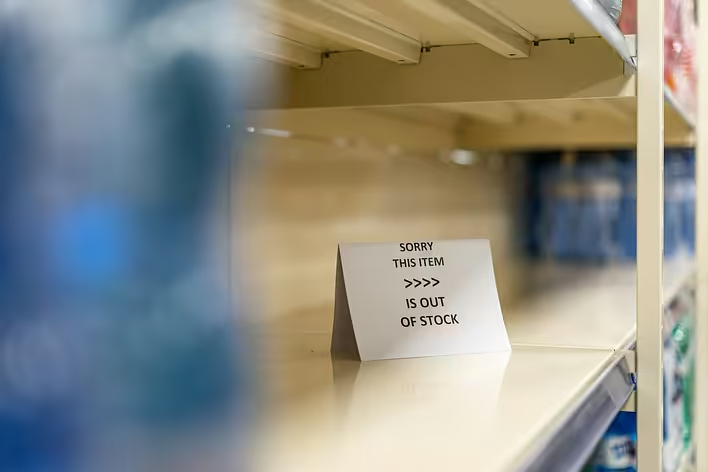
Both phrases inform that the item is currently unavailable, but there is a difference between them.