
This content has been automatically translated from Ukrainian.
What is grotesque in simple words
Grotesque is a way of artistic representation in which real phenomena are deliberately exaggerated, distorted, or combined with fantastic and unnatural elements. Grotesque is characterized by sharp contrasts: the funny coexists with the terrifying, the beautiful with the ugly, and the mundane with the incredible.
The main feature of grotesque is that it violates the usual logic of the world. People can acquire animal traits, objects can come to life, and social rules can be taken to such absurd extremes that their absurdity becomes obvious.
For example, a writer wants to depict a society in which a person's status is determined solely by their position. They could simply tell a story about officials obsessed with their careers. But instead, they create a story where a human nose receives a high rank and becomes a more respected figure than its own master.
This is grotesque: an impossible situation helps to see a completely real problem.
At the same time, grotesque does not necessarily have to be funny. It can evoke disgust, anxiety, sympathy, or a feeling that something is fundamentally wrong with the familiar world.
The origin of the word "grotesque"
The history of the term began not in literature, but in visual arts.
The word grotesque comes from the French grotesque, which is related to the Italian grottesco, derived from grotta — "cave".
At the end of the 15th century, underground chambers of the ancient palace of Emperor Nero — the Golden House (Domus Aurea) — began to be explored in Rome. Its remains had been buried under later buildings and layers of soil for centuries, so researchers found them reminiscent of caves.
Unusual frescoes have been preserved on the walls and vaults: human figures intertwined with plants, fantastic creatures combining traits of different animals, and decorative compositions violating the laws of nature.
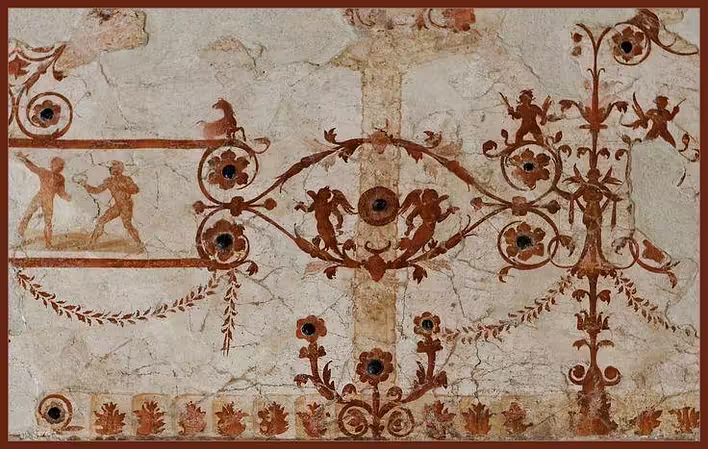
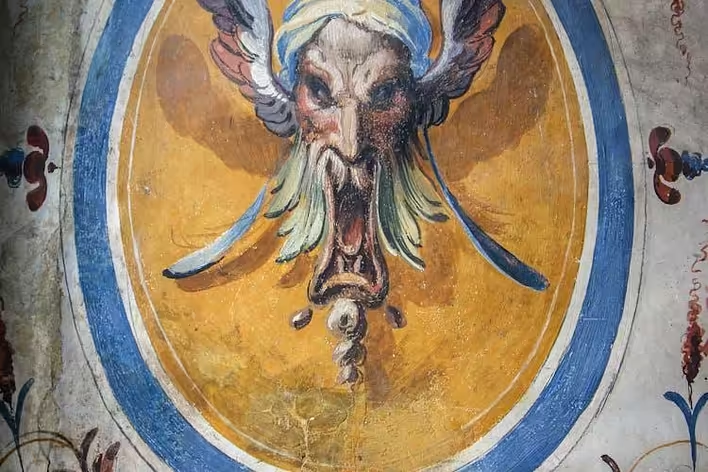
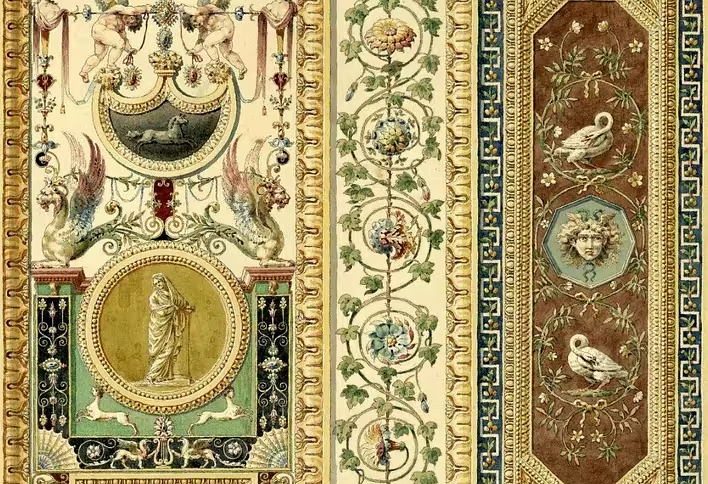
Artists of the Renaissance were fascinated by these images and began to imitate them. The decorative style was named grottesche — associated with the underground chambers where ancient frescoes were found.
Over time, the meaning of the word expanded. Grotesque began to refer not only to bizarre ornaments but also to any artistic images in which incompatible things are unnaturally combined.
Grotesque in literature
In literature, grotesque gives the writer the opportunity to abandon realistic representation of events and push a certain situation to an incredible extreme.
At the same time, the fantastic element does not necessarily require explanation. The author can describe completely impossible things as if they are entirely natural.
Grotesque works particularly well when characters do not react to strange events. The reader sees something incredible, but the heroes continue to live by familiar rules. This contrast makes the world of the work even more disturbing or comical.
Examples of grotesque in famous works
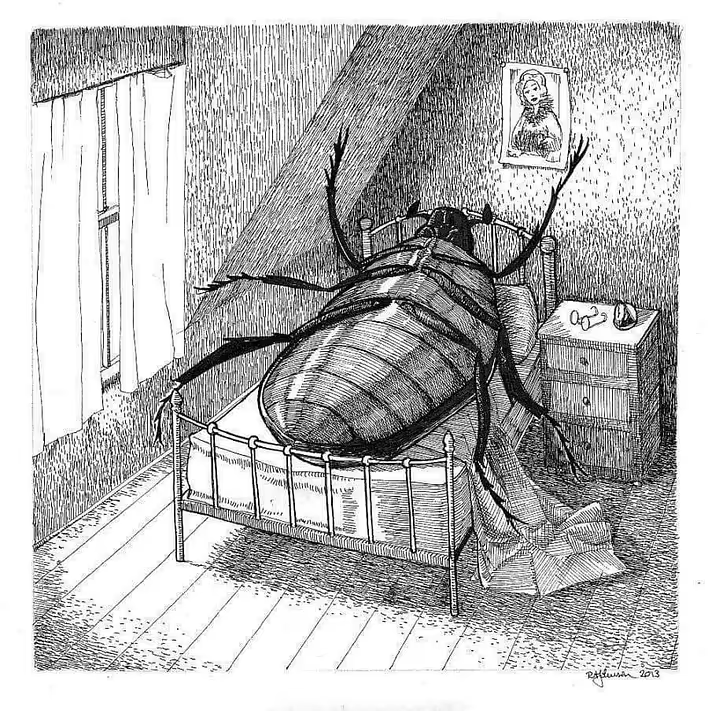
"Metamorphosis" — Franz Kafka
Gregor Samsa wakes up to find that he has transformed into a huge insect-like creature. But his thoughts are initially occupied with work and responsibilities to his family. The grotesque emphasizes the alienation of the individual, their helplessness, and dependence on societal expectations.
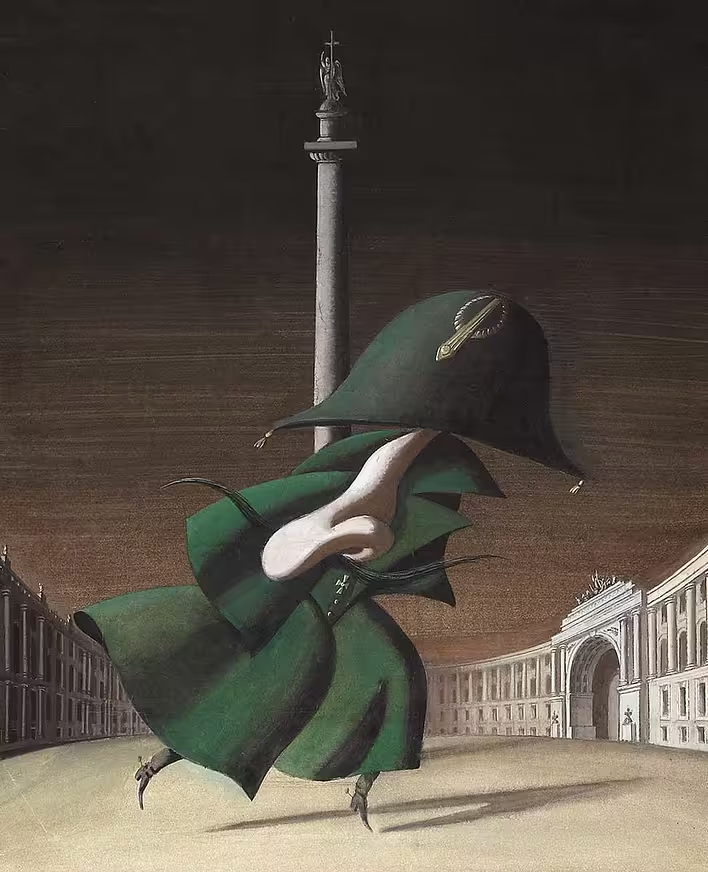
"The Nose" — Nikolai Gogol
The nose of Major Kovalyov disappears from his face and begins to live independently. The greatest absurdity lies not so much in the separation of the nose itself, but in the fact that social status turns out to be more important than common sense.
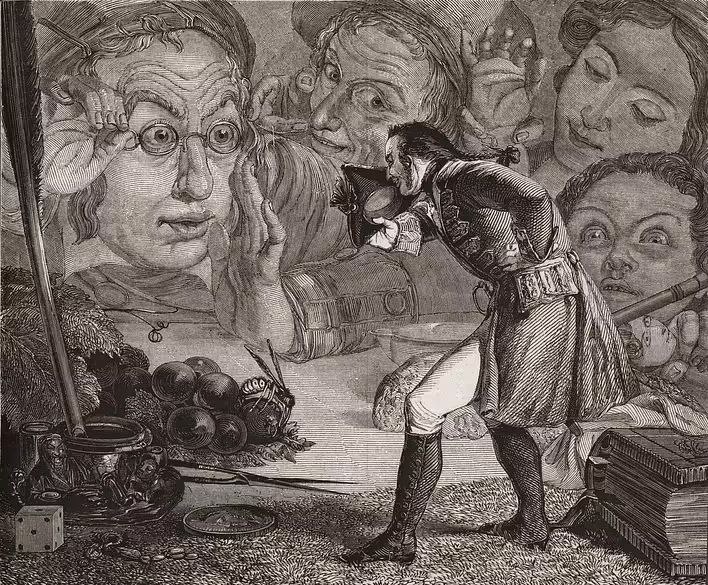
"Gulliver's Travels" — Jonathan Swift
Journeys to the lands of Lilliputians, giants, and other amazing peoples allow for a depiction of human flaws in exaggerated form. The change of scale and fantastic social orders become tools of political and social satire.
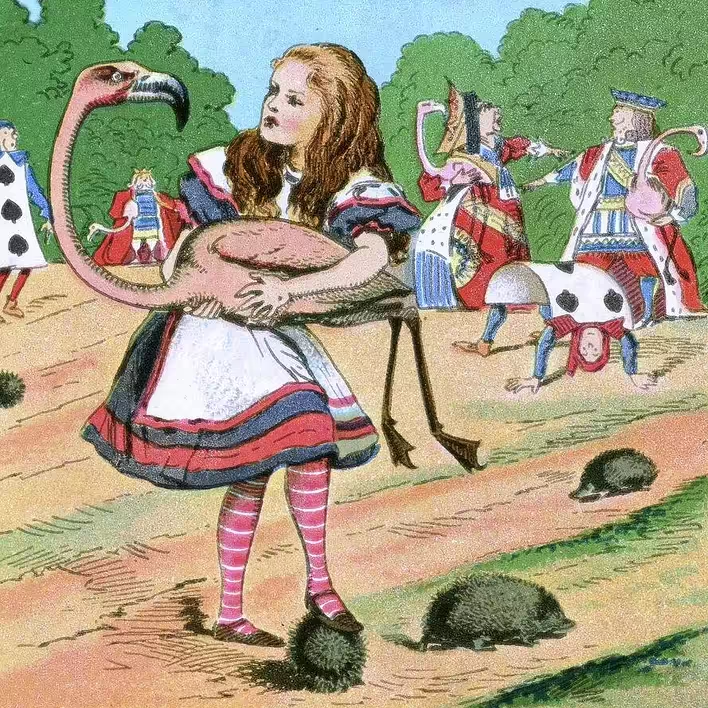
"Alice in Wonderland" — Lewis Carroll
In this work, grotesque images arise from bizarre transformations, disproportionate bodies, and strange rules of behavior. In particular, the Queen of Hearts turns arbitrary power into an almost caricatured image.
Not every fantastic event is automatically grotesque. For example, a dragon in fantasy can be a normal part of an imaginary world. Grotesque arises when an unusual image creates a vivid distortion, contrast, or collision of the incompatible.
Grotesque in painting and visual arts
In painting, grotesque often manifests through the deformation of the human body, unnatural proportions, and the mixing of living beings and objects.
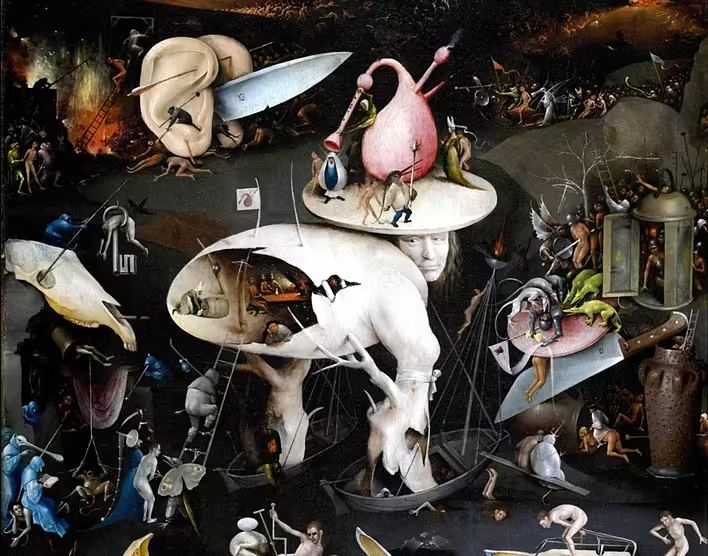
One of the most famous artists associated with grotesque imagery is Hieronymus Bosch. His paintings are populated with fantastic creatures, grotesque beings, and strange mechanisms where the organic merges with the inanimate.
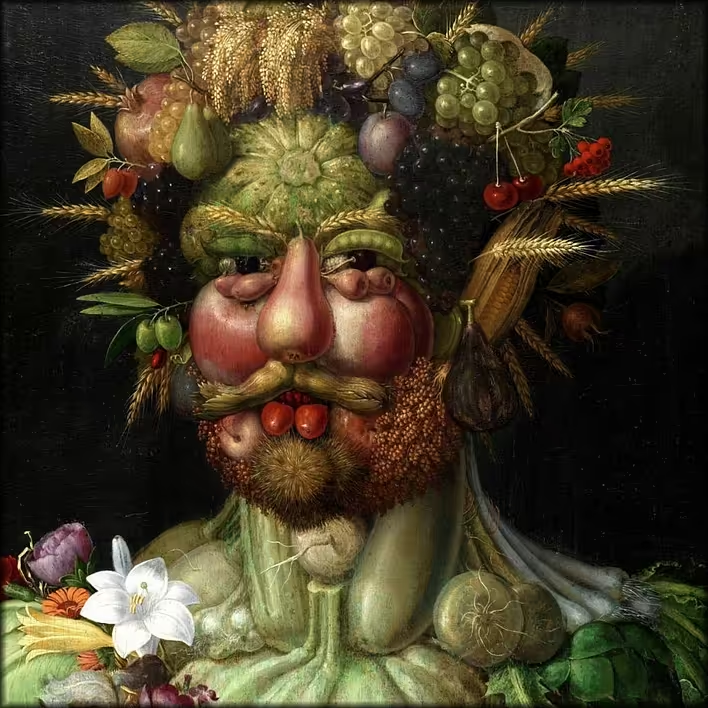
Grotesque features are also noticeable in the works of Francisco Goya, especially in his dark fantastic images. Here, the distorted reality no longer entertains so much as it generates fear and a sense of danger.
How grotesque differs from satire, caricature, and absurdity
These concepts are often used interchangeably, as they can all violate conventional notions of reality. However, there is a difference between them.
In satire, his behavior can be mocked through dialogues and situations. In caricature — drawn with huge eyes that watch everyone. Hyperbole allows one to say that he sees everything even through walls.
And grotesque can turn the director into a giant eye hanging from the ceiling of the office, continuously watching the employees. This is not just an exaggeration, but a fantastic embodiment of his character.
In an absurdist work, the situation could develop differently: employees report daily to the eye, although no one knows whether it sees anything at all and why it exists.
Of course, these techniques can be combined. One work can be simultaneously satirical, absurd, and grotesque.
Grotesque in cinema
Cinema is particularly well-suited for grotesque, as it allows for a literal depiction of what exists only in the reader's imagination in literature.
In films, grotesque can manifest through exaggerated appearances of characters, strange proportions of decorations, unnatural behavior, or contrasts between terrifying events and the comedic manner of their depiction.
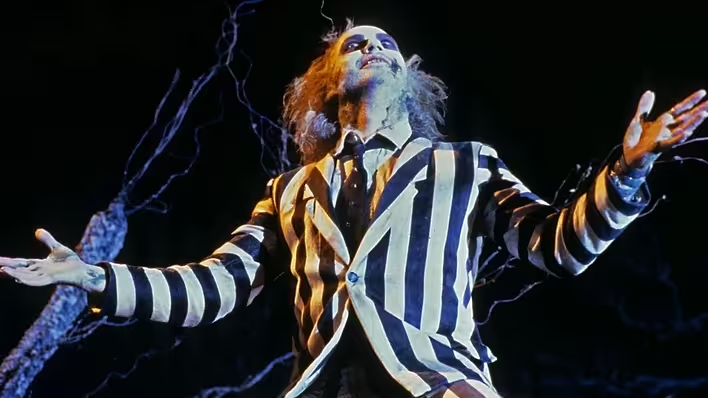
For example, in the film "Beetlejuice," the afterlife is populated with bizarre characters, and death and horrifying transformations are presented through dark humor. The terrifying is constantly mixed with the funny.
In "Brazil," the bureaucratic world is taken to absurd extremes. Huge mechanisms, clumsy administrative procedures, and fantastic images emphasize the helplessness of a person before the system.
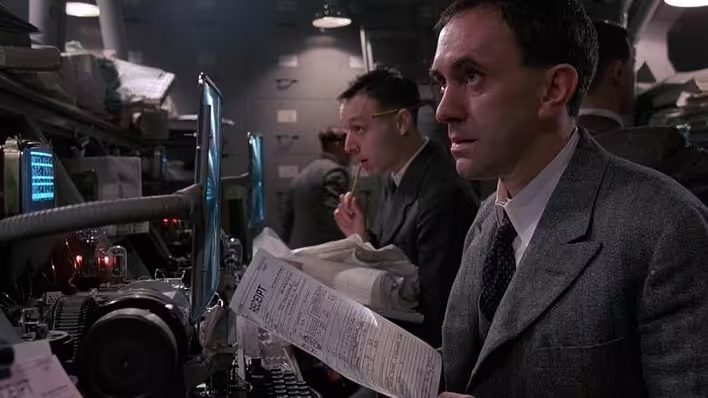
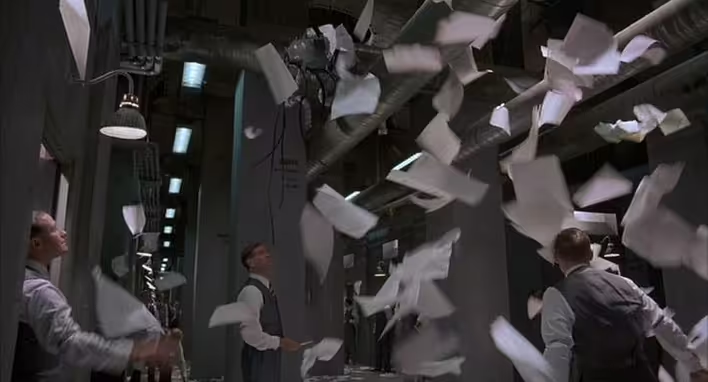
Grotesque is also often found in black comedies, surreal films, animation, and body horror — a horror genre built on gruesome bodily transformations. However, not every depiction of a deformed body or strange creature is grotesque: what matters is the artistic effect created by this deformation.
What the word "grotesque" means in everyday language
Outside of art, the word grotesque is often used to describe something unnaturally exaggerated, bizarre, nonsensical, or even ugly.
For example:
- Grotesque behavior — so exaggerated and unnatural that it resembles a caricature.
- Grotesque situation — strange, absurd, or built on striking contradictions.
- Grotesque image — a character with deliberately distorted traits of appearance or character.
- Grotesque humor — humor in which the comic is combined with the eerie, ugly, or absurd.
For instance, the phrase "This is already some kind of grotesque" can mean that the real situation has become so nonsensical that it resembles an invented satirical story.
At the same time, calling everything unusual grotesque is not entirely correct. A bright costume, an eccentric person, or a fantastic landscape does not necessarily exhibit grotesque features. For this, a vivid element of distortion, unnatural combination, or sharp contrast is needed.
Why grotesque remains popular
Grotesque allows for discussing unpleasant things without direct moralizing. Instead of explaining how cruel bureaucracy is, the author can create an official who gradually transforms into a part of a huge machine. Instead of reflections on human vanity — to show a character whose head literally swells from compliments.
Such images are often remembered better than ordinary explanations, as they simultaneously evoke several contradictory emotions.
That is why grotesque works well not only in classical literature but also in modern comics, animation, video games, political caricatures, and internet memes.
Its main strength lies in the paradox: the more the artist distorts reality, the more clearly they sometimes manage to show its true essence.