This content has been automatically translated from Ukrainian.
“Starting life with a clean slate” is a familiar image: leaving behind old mistakes, changing habits, or trying something new. The Latin phrase tabula rasa is often used in a similar sense. However, in philosophy, it refers to a different question: where do our ideas come from in our consciousness, and do we have any ideas from birth?
How tabula rasa is translated
Tabula rasa is usually translated into English as “clean slate” or “blank slate”. Literally, it means “scraped,” “erased tablet”: the Latin tabula means a board or tablet, and rasa comes from the verb radere — “to scrape,” “to scratch off.”
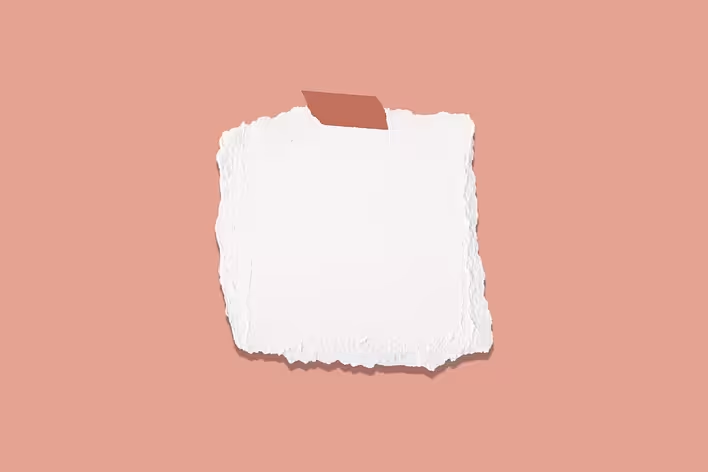
The image is associated with ancient writing tablets, whose surfaces were covered with wax. Records were made on the wax with a pointed tool — a stylus. What was written could be erased by smoothing the surface, allowing the tablet to be reused.
Thus, the phrase refers to something quite mundane: a surface on which nothing has yet been written or from which previous records have been removed. Over time, it became a metaphor for a mind open to new experiences.
What tabula rasa means in philosophy
In a philosophical context, tabula rasa is the notion of a mind that initially contains no pre-existing ideas but acquires them through experience. The question here is not whether a person can forget the past, but rather where the content of our thinking originates from.
A similar image is found in Aristotle. In his treatise “On the Soul,” he compared the mind to a tablet on which nothing has yet been written. This comparison pertained to the mind's ability to acquire knowledge; it should not be automatically equated with all later theories about the influence of upbringing on a person.
Most often, tabula rasa is associated with the English philosopher John Locke. In “An Essay Concerning Human Understanding,” he denied the existence of innate ideas — content that is supposedly already present in the mind before experience is acquired.
In a well-known fragment of this work, Locke compared the mind to a blank sheet of paper with no marks on it. Thus, tabula rasa is a well-established term for his idea, rather than a literal quote from this passage.
How, according to Locke, the “blank slate” is filled
Locke identified two sources of ideas: sensation and reflection.
Through sensation, we receive impressions from the external world: we see color, hear sound, feel warmth or cold. Reflection is the observation of the activity of our own mind: how we think, doubt, desire, compare, or recall.
For example, a person touches snow and feels cold. They can then recall this sensation, compare it to the coolness of water, and reflect on the difference. The mind works with the material it receives: it combines ideas, contrasts them, and forms more complex concepts.
Therefore, the explanation “a person simply absorbs everything the environment provides” is overly simplistic. In Locke's view, the mind not only receives impressions but also actively processes them. These views belong to empiricism — a philosophical direction that posits experience as the foundation of knowledge.
Does this mean we are all the same from birth?
The idea of tabula rasa is sometimes interpreted too categorically: as if a child has no natural traits, and upbringing can make them into anyone. However, the absence of innate ideas and the absence of innate abilities are different claims.
By denying innate ideas, Locke did not deny the natural abilities of the mind — specifically, the ability to perceive, remember, and think. It also does not follow from his argument that people have the same potential or that the environment can shape any trait without limitations.
Thus, tabula rasa should be understood in the context of the specific author. In Locke's case, the central question is the origin of ideas, not the promise to “mold” any personality at will.
How the phrase is used today
Outside of philosophy, the meaning has expanded. Tabula rasa can mean a new beginning, the absence of previous notions, or the opportunity to create something from scratch. The specific nuance depends on the context.
For example, the phrase “In this field, I am a tabula rasa” may mean that a person lacks the relevant knowledge and experience. And the words “Let’s try to imagine this project as a tabula rasa” suggest setting aside previous work and reconsidering everything from the beginning. In discussions about changes in life, the phrase may convey a desire to leave the past behind and start a new chapter.
The phrase itself does not carry a positive or negative connotation. “Clean slate” can mean both freedom from previous constraints and a lack of experience and guidance.
In texts for a general audience, it is often sufficient to use the Ukrainian equivalent — “to start from a clean slate,” “to begin from scratch,” “without previous notions.” The Latin tabula rasa is appropriate when the philosophical association or the image of a mind gradually filled with experience is particularly important.