
This content has been automatically translated from Ukrainian.
At the end of the 1960s, the world was swept by a wave of cultural revolution known as "Flower Power." This movement, which preached peace, love, and harmony, found its expression not only in music or fashion but also in product design. One of the most vivid symbols of this era was the Flowerpot lamp, created in 1968 by the renowned Danish designer Verner Panton.
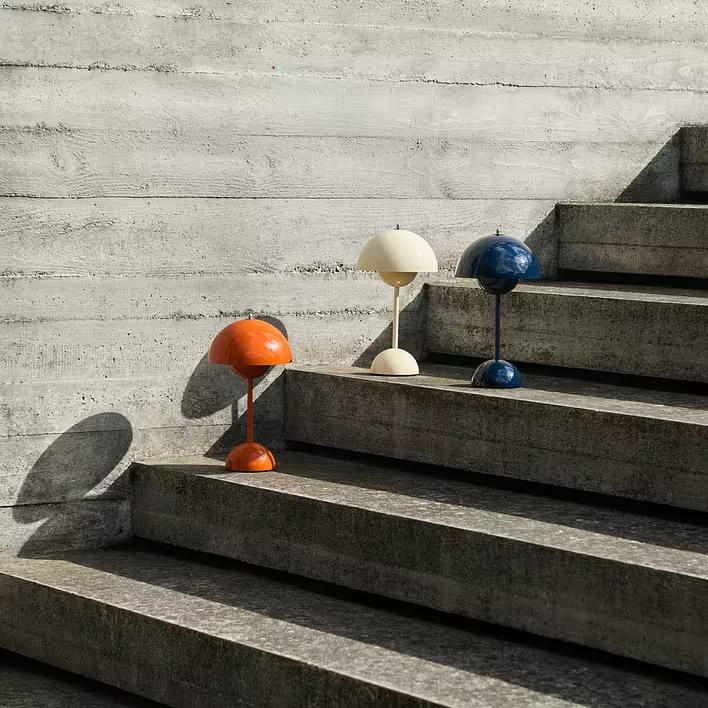
Verner Panton was known for his rebellious approach to traditional Scandinavian design. While most of his colleagues worked with wood and restrained forms, Panton experimented with plastic, bright colors, and futuristic silhouettes. The Flowerpot lamp became the perfect reflection of his philosophy. Its design impresses with ingenious simplicity: it consists of two hemispheres positioned opposite each other so that the smaller sphere not only conceals the light source but also serves as a reflector, creating soft, glare-free lighting.
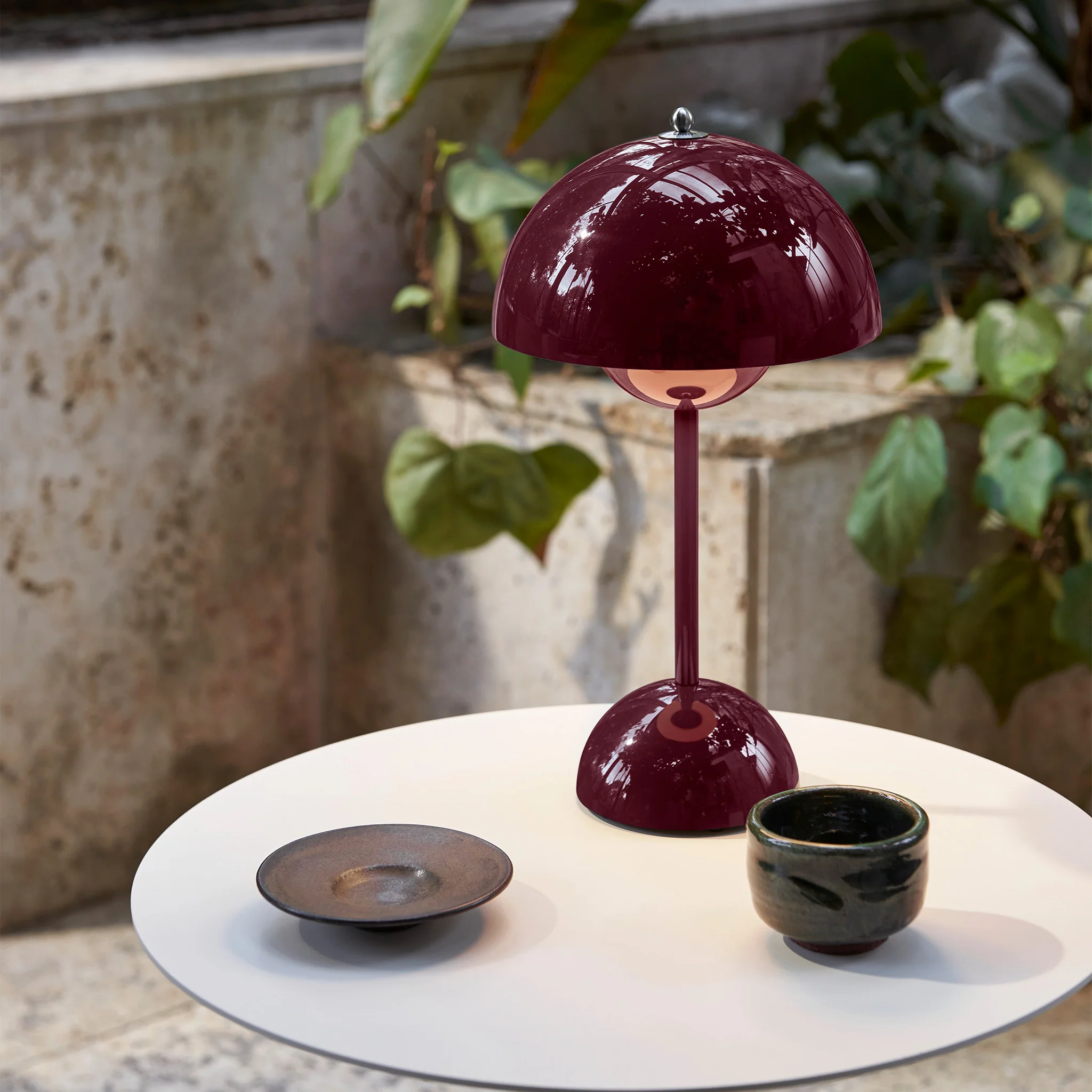
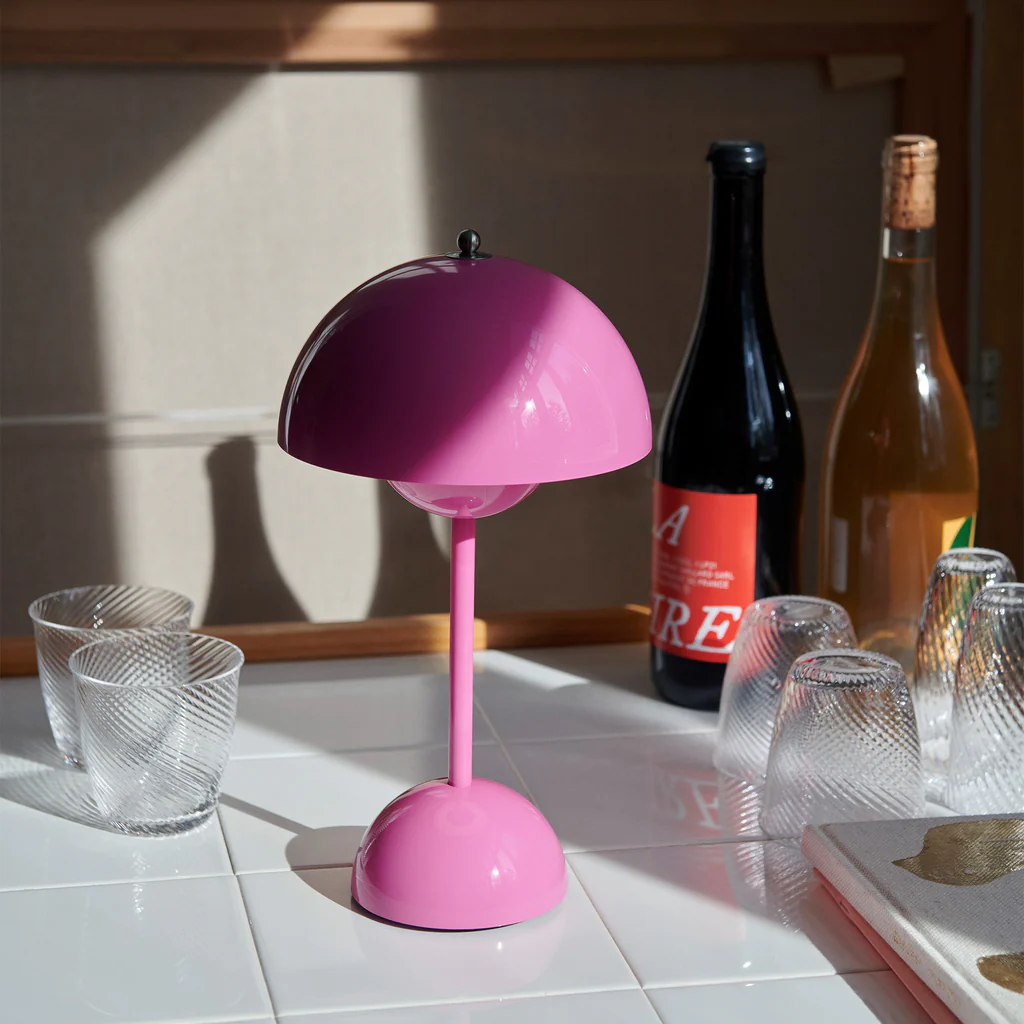
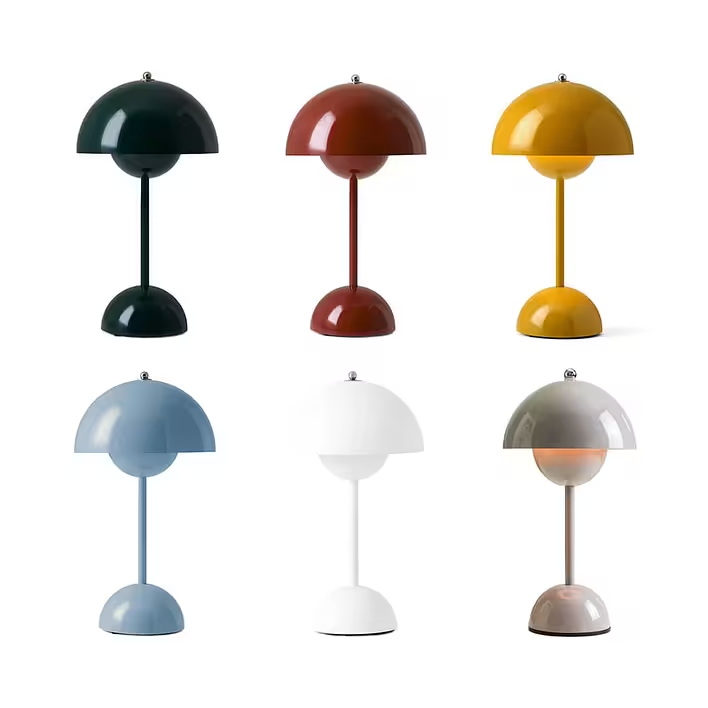
The design of the lamp was inspired by the desire for visual calm and psychological comfort. Panton believed that color could significantly influence a person's mood, which is why the first models of Flowerpot were released in extremely saturated shades that matched the psychedelic aesthetics of the time. This was a radical departure from the dull fixtures of the past. The lamp quickly became popular in restaurants, exhibition halls, and private homes, symbolizing openness to the new and a rejection of outdated dogmas.
The popularity of Flowerpot did not fade even after the end of the hippie era. On the contrary, due to its geometric perfection, it gained the status of a classic in world design. Today, the rights to produce this series belong to the brand &Tradition, which has preserved the author's authentic concept but adapted it to modern needs by adding wireless versions and new textures. The lamp continues to be in demand due to its ability to organically fit into any interior — from minimalist lofts to classic spaces.
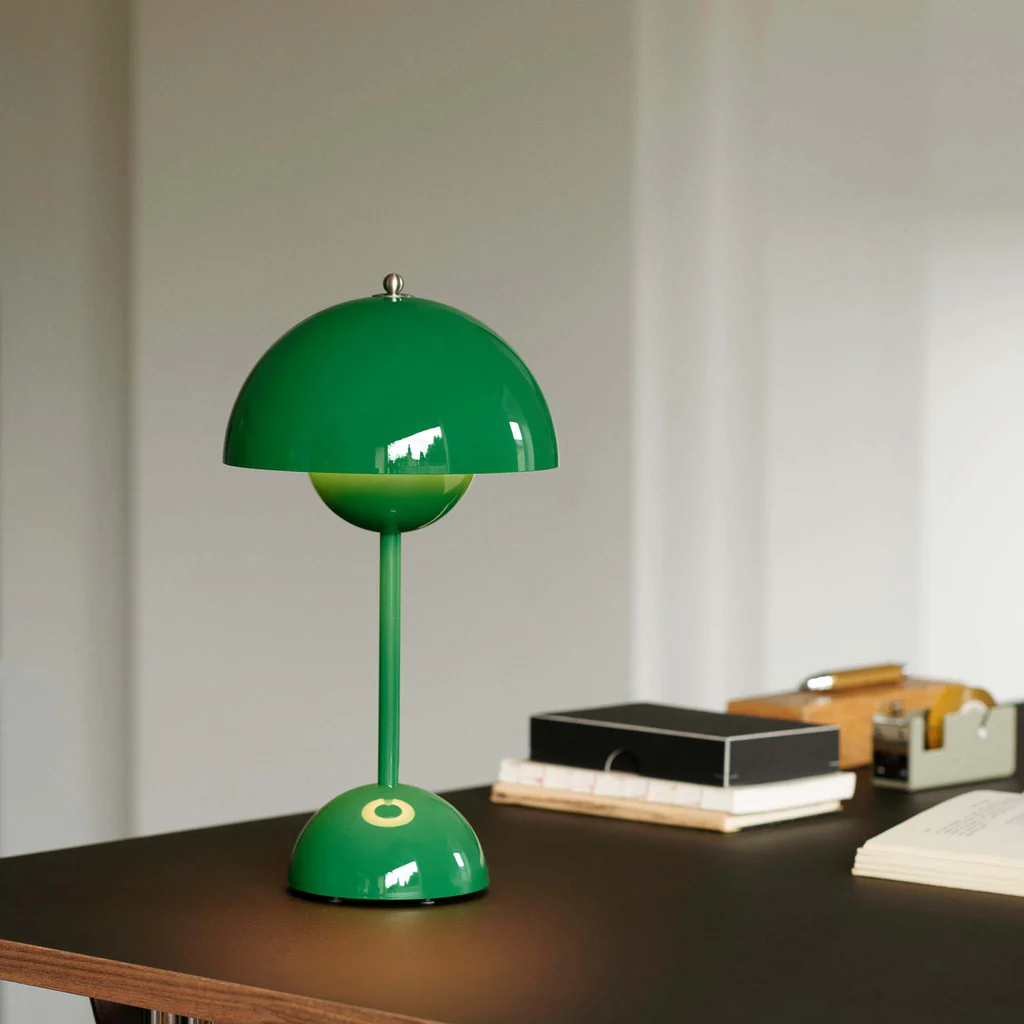
The significance of Flowerpot goes far beyond that of a simple lighting fixture. It is a material testament to how the ideology of social change can transform into a perfect physical form. Even decades later, this lamp remains an embodiment of vitality and progressive thinking, reminding us of a time when design aimed to change the world for the better.