
This content has been automatically translated from Ukrainian.
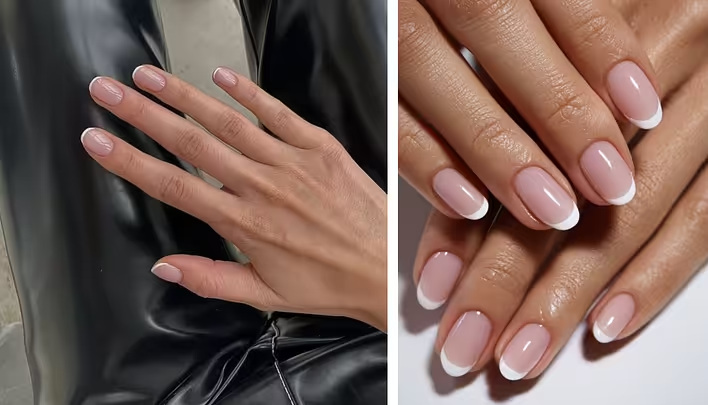
The French manicure has long become something more than just a nail design. For some, it is a symbol of elegance and "expensive minimalism," for others — nostalgia for the fashion of the 1990s and 2000s, and for some, it is a universal option that suits literally any look. It is easily recognizable: a delicate natural base and a neat white tip of the nail. It seems that such a manicure has always existed, so naturally it looks. But the history of the French manicure is actually much more interesting than it may seem.
Why the French manicure is called "French"
Despite its name, the French manicure did not originate in France. Its history is directly linked to Hollywood.
The most common version of the emergence of this style dates back to the 1970s and American entrepreneur Jeff Pink — the founder of the ORLY brand. At that time, a practical problem arose in the film industry: actresses had to constantly repaint their nails to match different costumes and scenes. This took a lot of time and complicated filming.
Pink proposed a simple solution — a manicure that would look natural, neat, and would match almost any style of clothing. Thus, the design with a pink-beige base and white tips was born.
He came up with the name "French manicure" a little later — and, in essence, it was a very successful marketing move. France had long been associated with the world of fashion, Parisian chic, and elegance, so such a name instantly added a sense of luxury and sophistication to the design.
Interestingly, the French themselves often simply call it French or French nails, although the origin of this style is American.
How the French manicure became a global trend
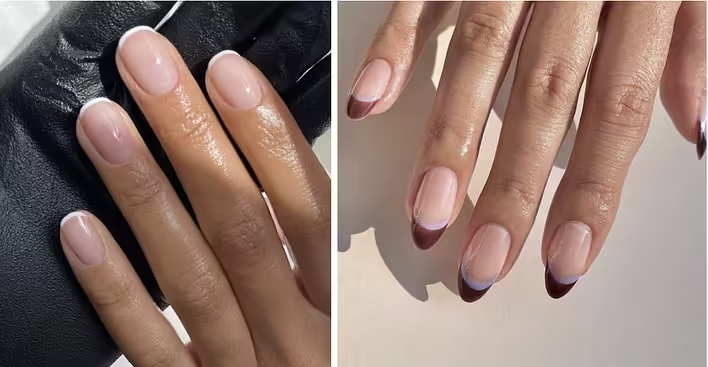
After its appearance in Hollywood, the design quickly moved beyond the film industry. The French manicure began to be used by models, actresses, and celebrities, and eventually became popular in salons around the world.
A particular explosion of popularity occurred in the 1990s and early 2000s. It was during this time that the "French" transformed into almost a standard of well-groomed nails. It was worn by office workers, brides, TV presenters, pop stars, and heroines of glossy magazines.
The reason for its popularity was very simple:
- the manicure matched any clothing;
- it looked neat;
- it did not seem too bright;
- it visually made hands look more well-groomed;
- it was suitable for both everyday and formal occasions.
For many women, the French manicure became a kind of compromise between decorativeness and naturalness.
The secret of the French manicure lies in creating the effect of perfect natural nails. The white tip imitates the natural free edge of the nail but makes it more even and expressive. The semi-transparent pink or beige base adds the effect of a healthy nail plate.
It is precisely because of this "natural perfection" that the French is often associated with cleanliness, neatness, and even status. It does not shout about itself, but at the same time looks very thoughtful.
In a sense, the French manicure became part of the "quiet luxury" aesthetic long before the term quiet luxury itself became fashionable.
The French manicure has also played a special role in wedding fashion. For many brides, it has become almost a traditional choice.
The reason is obvious: the French looks delicate, does not distract attention from the dress or accessories, and pairs well with almost any wedding style. It became especially popular in the 2000s when the "perfect wedding look" was often associated with a neat French manicure.
Even today, despite the vast number of modern designs, many brides return to the classic French.
From classics to experiments
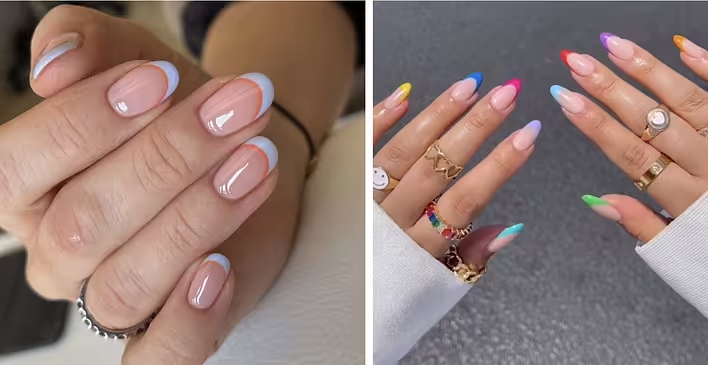
Although the traditional French manicure looks very restrained, over time, masters began to actively experiment with its shape and colors.
Thus appeared:
- colored French;
- black French;
- double lines;
- metal tips;
- neon options;
- asymmetrical French;
- "micro French" with a very thin line;
- reverse French, where the emphasis is placed near the base of the nail.
Modern minimalist options have become especially popular — for example, a thin milky French or barely noticeable shiny edge.
Social media and nail art culture have literally given the French manicure a second life. What was once considered classic office restraint can now look ultra-modern.
The trend for the French manicure moves in waves. From time to time, it is declared "outdated," but after a few years, it returns to trends again.
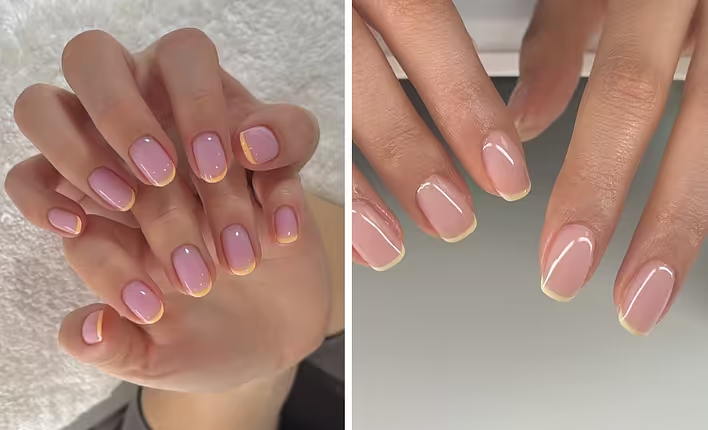
The reason is that the French adapts very well to changes in fashion. In different eras, the shape of the nails, the thickness of the white line, colors, or textures change, but the very idea remains recognizable.
Moreover, after periods of bright and overloaded nail art, people often start to gravitate towards something more restrained and universal again.
That is why the French manicure is almost impossible to definitively "take out of fashion."
For many people, the French is not just a manicure, but a true cultural symbol of a certain era. It is associated with glossy magazines of the 1990s, romantic comedies, the image of the "perfectly groomed woman," and salon aesthetics of the early 2000s.
At the same time, the younger generation today is reinterpreting this style in their own way: making it more minimalist, bolder, or even ironic.
And in this, perhaps, lies the main secret of the French manicure — it is both very simple and very flexible. That is why one small white line at the tip of the nail has managed to survive decades of fashion changes and remain recognizable almost all over the world.