Toothbrush: a small helper that many don't even realize exists
Most people are convinced that caring for teeth is sufficient with just a toothbrush and toothpaste. Some additionally use dental floss or mouthwash. However, dentists have been emphasizing for many years: even the highest quality toothbrush cannot complete...
Most people are convinced that caring for teeth is sufficient with just a toothbrush and toothpaste. Some additionally use dental floss or mouthwash. However, dentists have been emphasizing for many years: even the highest quality toothbrush cannot completely clean all surfaces of the teeth. This primarily concerns the gaps between them. It is for such hard-to-reach places that the interdental brush was created — a simple yet extremely effective tool for daily hygiene.
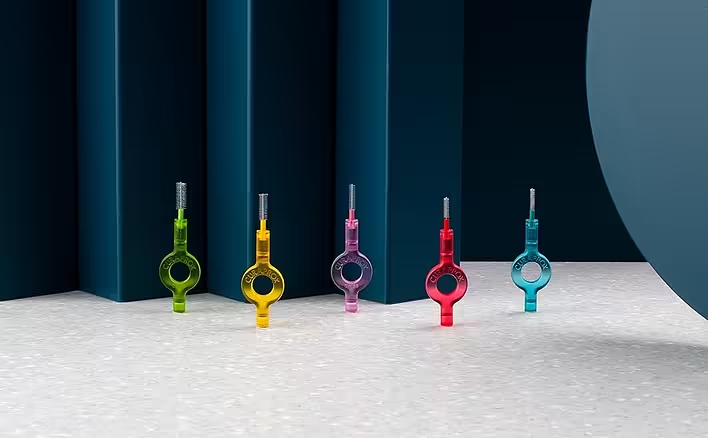
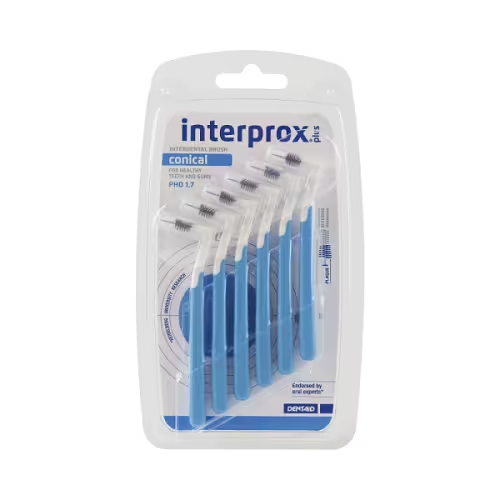
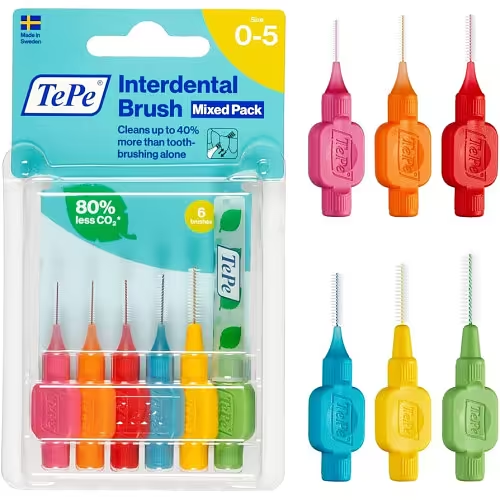
The interdental brush consists of a thin wire stem covered with short bristles and a comfortable handle. Despite its simple design, this small tool performs a job that a regular toothbrush often cannot handle.
The thing is, there are always areas between the teeth where the bristles of a regular brush simply cannot reach. Food debris, bacteria, and dental plaque accumulate there. Over time, this can lead to cavities, gum inflammation, bad breath, and other dental problems.
Traditionally, dental floss is used to clean interdental spaces. However, there is an important difference between floss and the brush. Dental floss helps to remove food debris and soft plaque from the contact areas between teeth, but its contact area with the tooth surface is quite small. The interdental brush works on a different principle. Its bristles directly contact the sides of the teeth and mechanically clean them of bacterial plaque, similar to how a regular toothbrush cleans the outer and inner sides of the dental arch. That is why dentists often refer to the brush as a miniature toothbrush for interdental spaces.
This is important because dental plaque is the main cause of cavities and gum inflammation. If there is enough space between the teeth to use the brush, it often provides more effective cleaning than dental floss.
Interdental brushes are most beneficial for people who have noticeable gaps between their teeth, as well as for those wearing braces, dental bridges, implants, or other orthodontic appliances. In such cases, dental floss does not always allow for thorough cleaning of all surfaces, while the brush easily penetrates the necessary places and removes plaque from all sides.
The popularity of interdental brushes has significantly increased with the development of modern orthodontics. People who wear braces know well how difficult it is to maintain perfect cleanliness of their teeth. Food debris easily accumulates around brackets and wires, which is hard to remove with a regular brush. That is why dentists often recommend brushes as one of the main care tools during orthodontic treatment.
Interestingly, interdental brushes come in various sizes. This is not a marketing gimmick, but a necessity. Each person has different widths of interdental spaces, so a brush that is too small will be ineffective. For this reason, dentists advise selecting the size individually and using several different sizes for various areas of the dental arch.
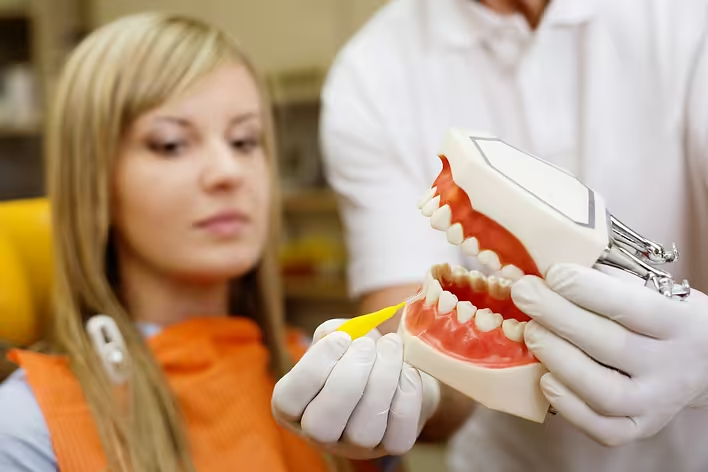
Using the brush is quite simple. It is gently inserted into the interdental space and moved back and forth a few times. There is no need to apply force. If the brush is the right size, it passes between the teeth relatively easily and effectively cleans the surfaces of plaque.
Some people get scared when they notice slight bleeding of the gums after the first uses. In most cases, this is not due to tissue damage, but because the gums were already inflamed due to the accumulation of bacterial plaque. With proper use and regular hygiene, this problem usually gradually disappears.
Dentists often refer to interdental brushes as one of the most underrated oral care tools. Many people spend significant amounts of money on expensive pastes, electric brushes, and whitening procedures, while neglecting the cleaning of interdental spaces. And it is often there that problems begin, which later require treatment.
Modern studies show that thorough cleaning of interdental spaces is no less important than cleaning the visible surfaces of teeth. Therefore, the interdental brush is gradually becoming a common element of daily hygiene for an increasing number of people.
Perhaps this small tool does not look as technological as an electric toothbrush, but its benefits are hard to overestimate. After all, sometimes the simplest things help maintain a healthy smile for many years.
It is difficult to find a piece of men's wardrobe that has such an unusual history as the tie. Today, it is associated with business style, formal events, and official etiquette...