Mockorange or jasmine: why we constantly confuse them and which plant actually scents our gardens
In spring and early summer, the streets, gardens, and yards are filled with a sweet floral aroma. At this time, you can often hear: “The jasmine has bloomed.” However, in most cases, people are mistaken. The plant that is traditionally called jasmine in Ukr...
In spring and early summer, the streets, gardens, and yards are filled with a sweet floral aroma. At this time, you can often hear: “The jasmine has bloomed.” However, in most cases, people are mistaken. The plant that is traditionally called jasmine in Ukraine and many other countries is actually mock-orange.
This confusion is so widespread that even in garden centers and markets, mock-orange is often sold under the name “garden jasmine.” But from a botanical point of view, these are completely different plants that belong to different families and have different origins.
Where the Confusion Comes From
The reason is simple — the aroma.
When mock-orange blooms, its white flowers emit a strong sweet scent that indeed resembles the fragrance of some jasmine species. It is for this reason that European gardeners began calling it “false jasmine” or “garden jasmine” several centuries ago.
The name turned out to be so successful that it became entrenched in the vernacular and even survived botanical reference books.
However, if you look more closely, there are many more differences between these plants than similarities.
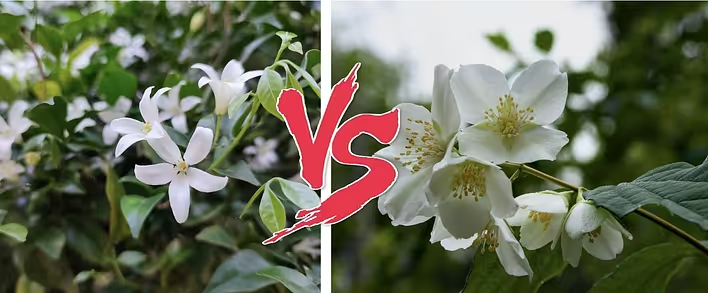
чубушник
Mock-Orange: The King of the Summer Garden
Mock-orange belongs to the genus Philadelphus and is part of the hydrangea family. In nature, it grows in Europe, Asia, and North America.
This is a deciduous shrub that can reach heights of one to four meters, depending on the species and variety. It is most commonly seen in Ukrainian gardens, old parks, and near private houses.
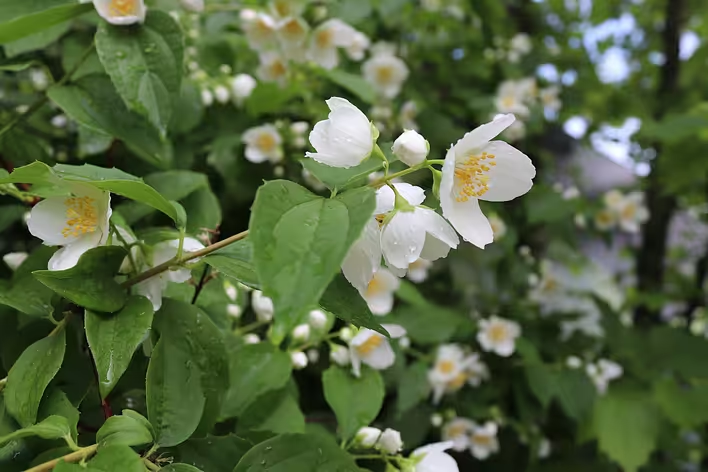
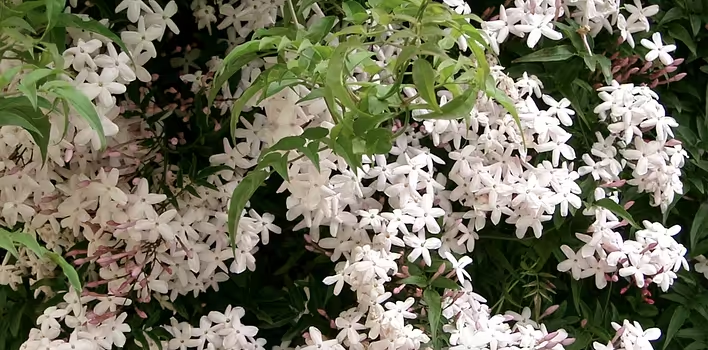
In spring and early summer, mock-orange is literally covered with white flowers. Some varieties have simple flowers, while others have semi-double or double ones. The size of the flowers can also vary significantly.
The main advantage of the plant is its aroma. On a warm evening, the scent of blooming mock-orange can spread for dozens of meters around.
No less important is the fact that mock-orange is surprisingly undemanding. It withstands Ukrainian winters well, requires no complicated care, and can grow in one place for decades.
That is why it is so loved by garden owners.
Where the Name “Mock-Orange” Comes From
The name of the plant has an interesting history. In the past, hollow shoots of some species were used to make chubuks — hollow tubes for pipes.
It is from the word “chubuk” that the Ukrainian name “mock-orange” originates.
Interestingly, most people know the plant only as “jasmine” and are not even aware of its true name.
жасмин
True Jasmine: A Guest from Warm Regions
True jasmine belongs to the genus Jasminum and is part of the olive family.
Unlike mock-orange, most jasmine species come from tropical and subtropical regions of Asia, Africa, and Oceania.
This is no longer a shrub from a temperate climate, but mainly a vine or evergreen shrub. Many jasmine species cannot survive winter outdoors in the Ukrainian climate, so they are grown as houseplants or greenhouse plants.
Jasmine flowers are usually smaller than mock-orange flowers, but their aroma is considered one of the most valuable in the world of perfumery.
It is jasmine, not mock-orange, that is the source of the precious essential oil used to create expensive perfumes.
Jasmine oil is among the most expensive essential oils in the world. To obtain a small amount of aromatic substance, thousands of flowers must be harvested. Moreover, many jasmine varieties are traditionally harvested by hand early in the morning when the concentration of aromatic compounds is at its highest.
No wonder jasmine notes can be found in a huge number of well-known perfumes — from classic to modern.
Its aroma is described as sweet, warm, honeyed, slightly fruity, and at the same time very sensual.
Jasmine Tea: Another Success Story
For many people, the word “jasmine” is primarily associated with tea.
And here it is important to understand one interesting nuance. In most cases, jasmine tea is not made from jasmine leaves.
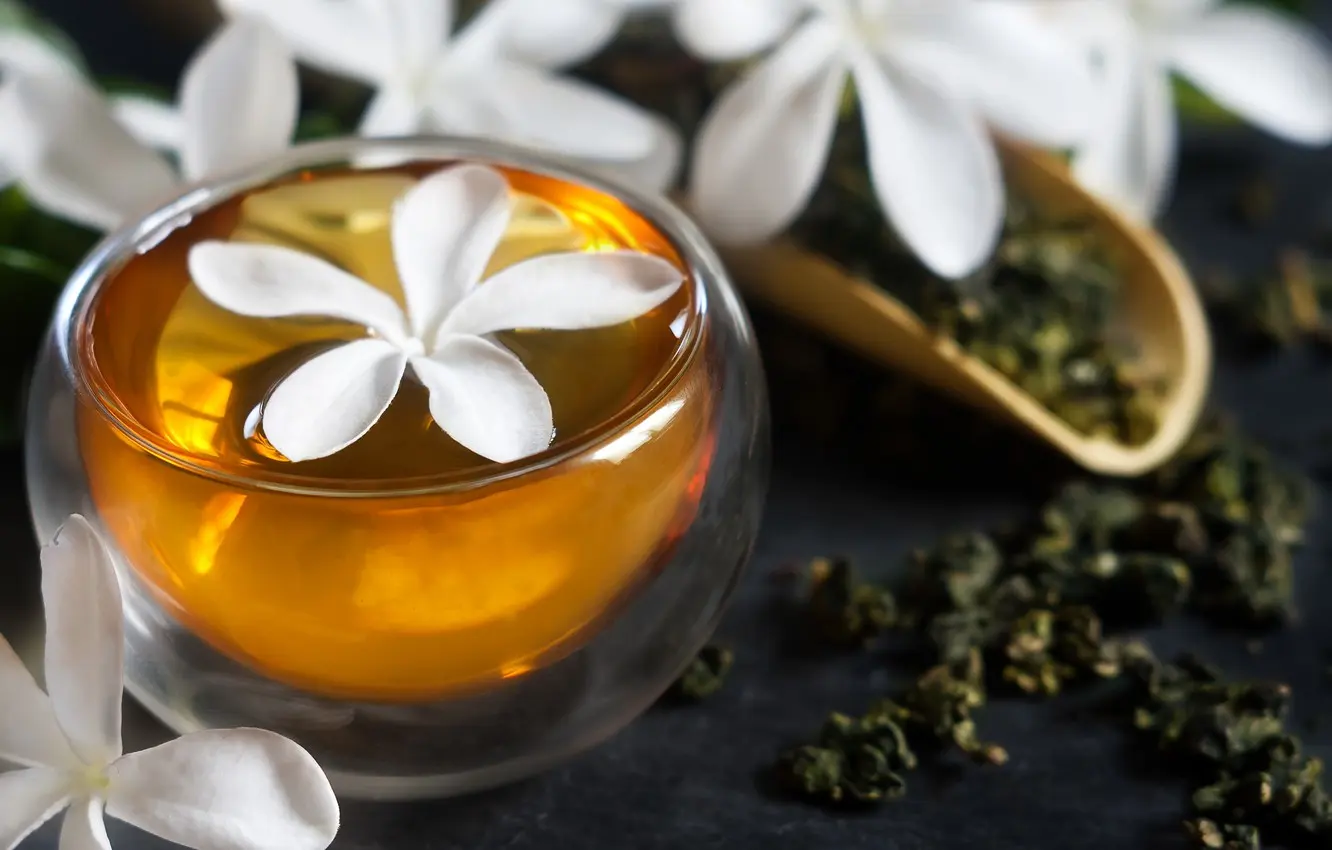
The base is usually green tea, which is flavored with fresh jasmine flowers. During production, the tea leaves are mixed several times with the flowers to absorb their aroma.
Jasmine tea from China is particularly famous, where the technology for its production has been refined over centuries.
As a result, the drink acquires a light floral scent and delicate taste without excessive sweetness.
Today, jasmine tea is one of the most popular flavored teas in the world.
How to Distinguish Mock-Orange from Jasmine
The simplest way is to look at where the plant grows.
If it is a large deciduous shrub in the garden that survives the Ukrainian winter without problems, you are most likely looking at mock-orange.
If it is a heat-loving vine or a decorative houseplant with smaller flowers, then it is more likely true jasmine.
The leaves also differ. Mock-orange leaves are broader and more resemble the leaves of common garden shrubs. In many jasmine species, the leaves are smaller, more delicate, and often have a glossy surface.
A slicer is a kitchen appliance for evenly slicing meat, cheese, sausage, bread, and vegetables. It saves time and provides neat slices of uniform thickness that are difficult t...