Woodpeckers of Ukraine: forest drummers and tireless doctors of trees
It is unlikely that there is a person who has not heard the characteristic tapping of a woodpecker in the forest or park at least once. These birds are among the most well-known inhabitants of Ukrainian forests. Thanks to their strong beaks, long tongues, a...
It is unlikely that there is a person who has not heard the characteristic tapping of a woodpecker in the forest or park at least once. These birds are among the most well-known inhabitants of Ukrainian forests. Thanks to their strong beaks, long tongues, and ability to climb tree trunks, they occupy a special ecological niche. Woodpeckers help control the population of pest insects by destroying larvae hidden under the bark, and their cavities later become homes for many other birds and small animals.
In Ukraine, there are ten species of woodpeckers from the woodpecker family. Some of them are common residents of forests and parks, while others are rare guests in certain regions. Despite their common traits, each species has its own unique features of appearance, behavior, and lifestyle.
Great Spotted Woodpecker (Dendrocopos major)
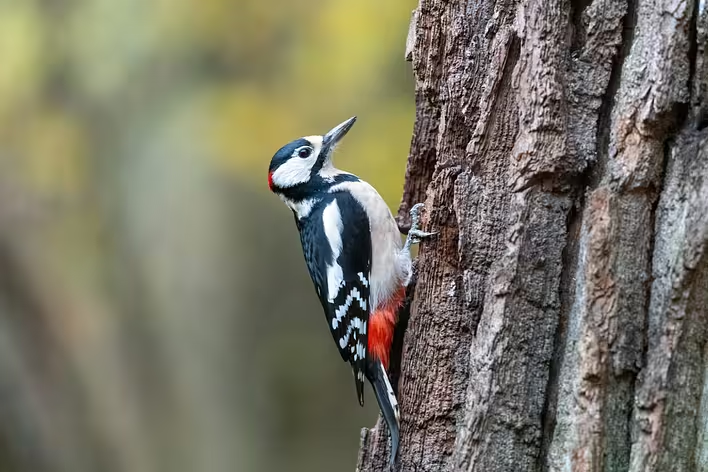
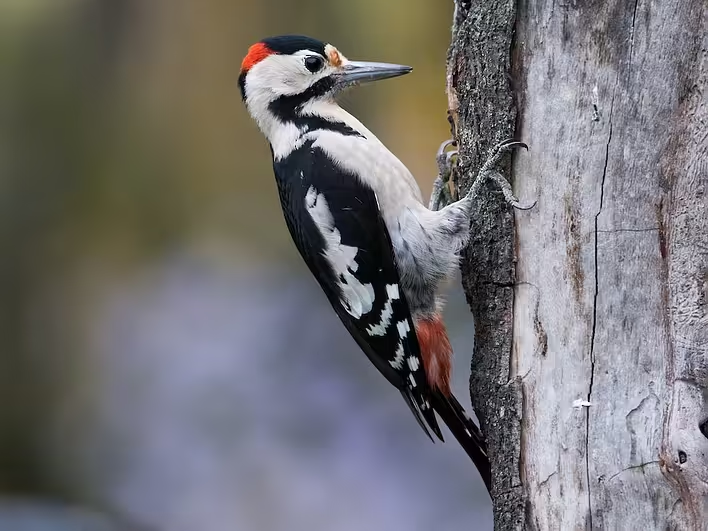
This is the most widespread and well-known woodpecker in Ukraine. Most people imagine this bird when they hear the word "woodpecker." The bird has black and white plumage with a bright red undertail. The male can be recognized by the red patch on the back of its head.
The Great Spotted Woodpecker is found almost throughout the country—from Polissia to steppe forest belts. It feeds on insects, their larvae, and seeds of coniferous trees, and in winter, it often visits feeders.
Middle Spotted Woodpecker (Dendrocoptes medius)
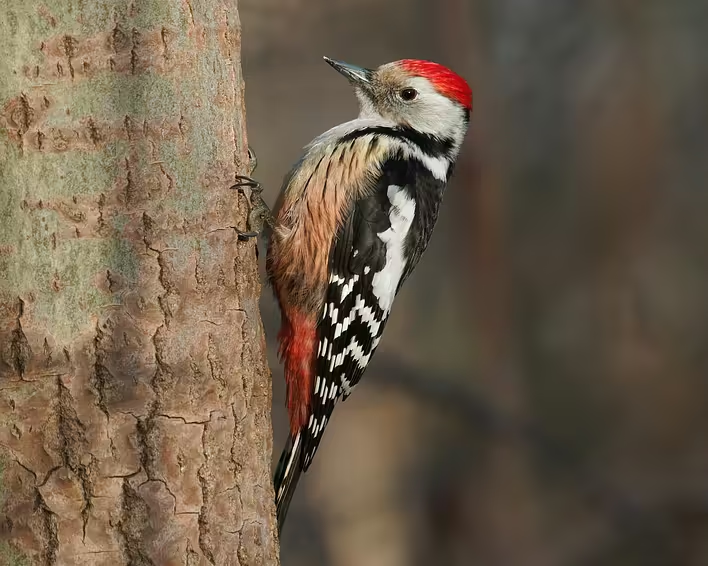
At first glance, this species is very similar to the Great Spotted Woodpecker, but it is slightly smaller. It is easily recognized by the bright red crown, which is present in both males and females.
The Middle Spotted Woodpecker most often inhabits old deciduous forests, especially oak forests. It is less inclined to drill into wood and more often searches for food in the cracks of the bark.
Little Spotted Woodpecker (Dryobates minor)
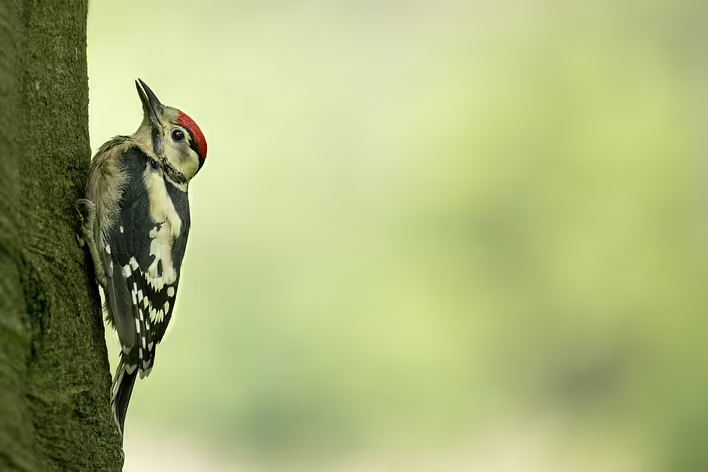
The smallest woodpecker in Ukraine, about the size of a starling. Despite its modest size, it retains all the characteristic features of its larger relatives.
This bird prefers floodplain forests, old gardens, and parks. Due to its small size, it often goes unnoticed even where it lives close to humans.
White-backed Woodpecker (Dendrocopos leucotos)
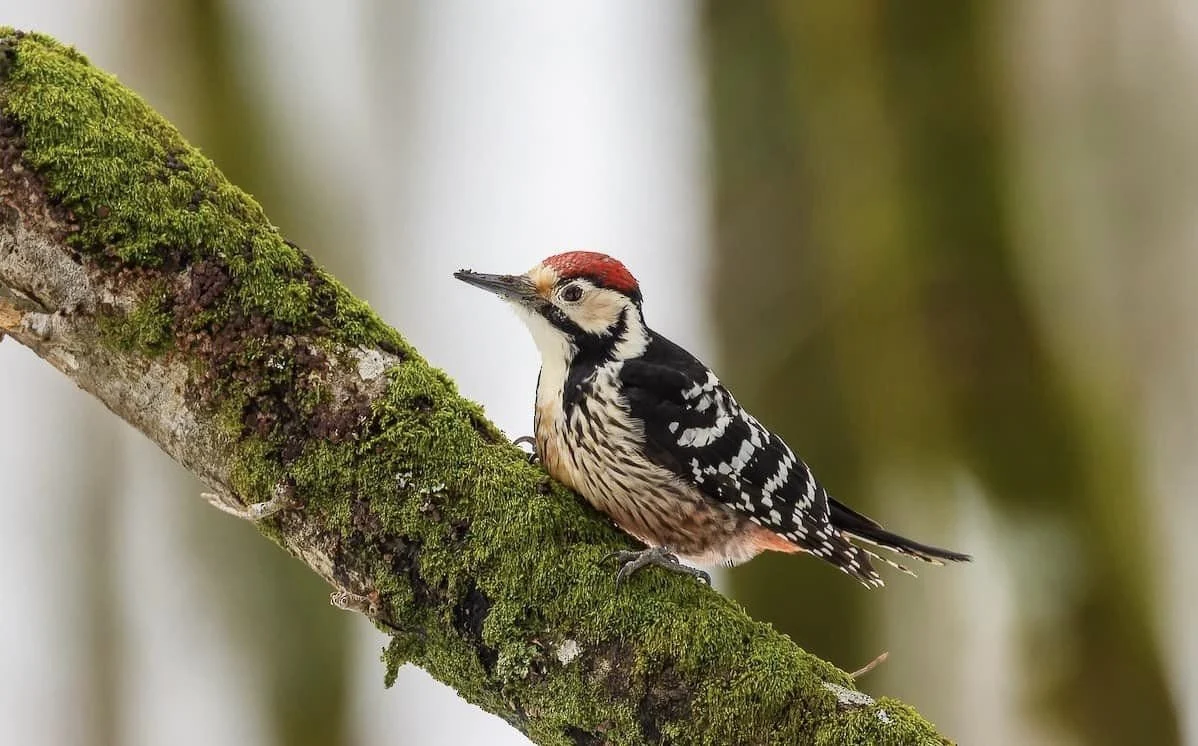
One of the largest spotted woodpeckers in Europe. Its main feature is a large white patch on its back, from which the species name derives.
The White-backed Woodpecker prefers old natural forests with a lot of dead wood and snags. In Ukraine, it is most commonly found in the Carpathians and Polissia.
Syrian Woodpecker (Dendrocopos syriacus)
Despite its name, this species has long become a familiar inhabitant of many Ukrainian cities and villages. In the 20th century, it actively expanded its range from the Balkan Peninsula to the north and east.
The Syrian Woodpecker has adapted well to living near humans. It can often be seen in gardens, squares, and urban parks. It differs from the Great Spotted Woodpecker by some details in the coloration of its head.
Three-toed Woodpecker (Picoides tridactylus)
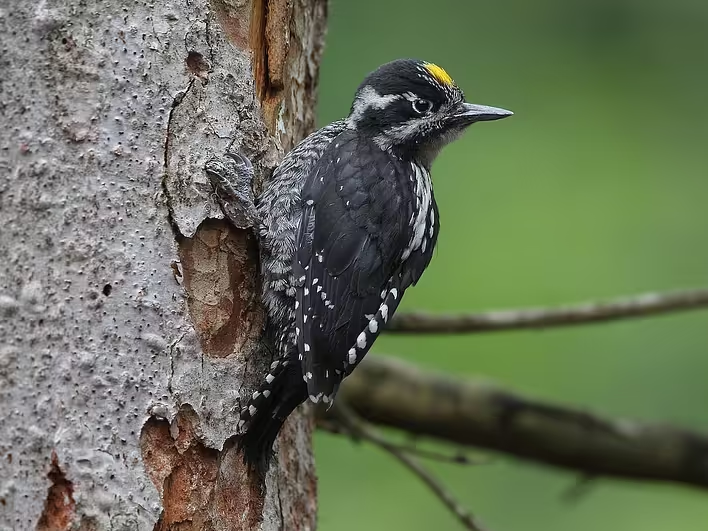
One of the rarest woodpeckers in Ukraine. It got its name due to its unusual foot structure—having only three toes instead of four.
The Three-toed Woodpecker is a typical inhabitant of mountain coniferous forests in the Carpathians. It is particularly dependent on old forests where there are many trees affected by bark beetles.
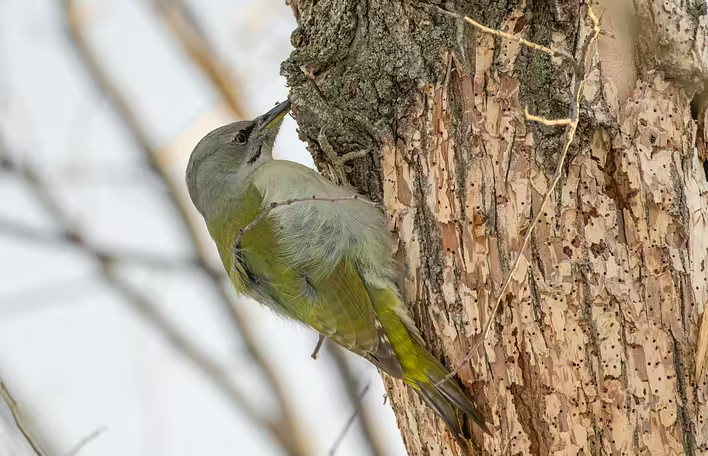
Grey-headed Woodpecker (Picus canus)
This species belongs to the so-called green woodpeckers. It has predominantly grey-green plumage and less contrasting coloration than spotted woodpeckers.The Grey-headed Woodpecker often searches for food not on trees but on the ground. A significant part of its diet consists of ants and their pupae. In Ukraine, it is mainly found in the forested areas of Polissia, the Carpathians, and the Forest-Steppe.
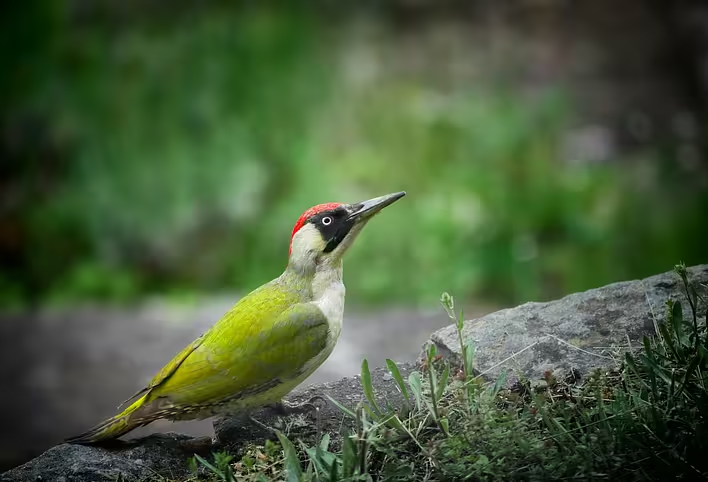
Green Woodpecker (Picus viridis)
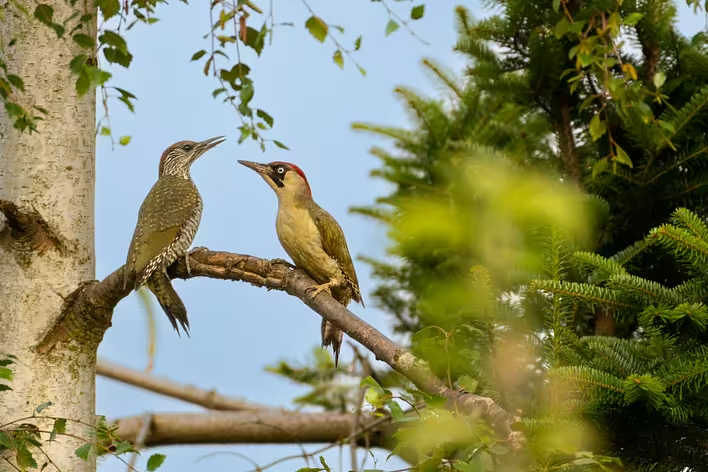
One of the brightest representatives of the woodpecker family in Ukraine. It is easily recognized by its bright green plumage, red crown, and characteristic loud laughing call.Unlike most woodpeckers, the Green Woodpecker spends a lot of time on the ground, digging up anthills. Ants make up the bulk of its diet. In Ukraine, the species is unevenly distributed and is most commonly found in the western part of the country.
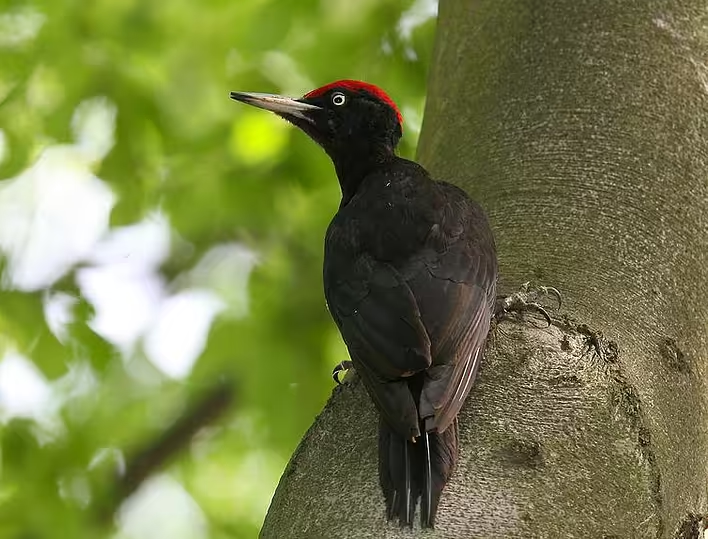
Black Woodpecker (Dryocopus martius)
The largest woodpecker in Ukraine and one of the largest woodpeckers in Europe. Its body length can exceed 45 centimeters. The bird's plumage is entirely black, and it has a bright red "cap" on its head.
The Black Woodpecker is capable of excavating huge cavities, which are then used by owls, stock doves, starlings, and other forest inhabitants. Its loud call and powerful pecking can be heard from a considerable distance.
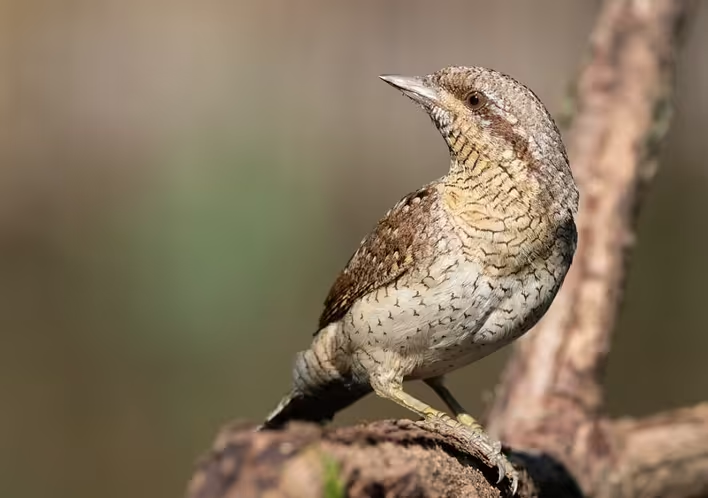
Wryneck (Jynx torquilla)
Although this bird looks nothing like a woodpecker, it also belongs to the woodpecker family. The Wryneck has inconspicuous brown-grey plumage that camouflages it perfectly on the bark of trees.It got its name due to its unusual defensive behavior. When sensing danger, the bird begins to sharply bend its neck and twist its head, resembling a small snake. Unlike other members of the family, the Wryneck rarely drills into wood and primarily feeds on ants and their larvae.
Why are woodpeckers important for nature?
Woodpeckers are often called the doctors of the forest. They destroy a huge number of insects that damage trees and create cavities for dozens of other species of animals. Without their work, many forest ecosystems would look completely different.
At the same time, some Ukrainian woodpeckers depend on old natural forests. The logging of ancient trees and the removal of dead wood deprives them of nesting and foraging sites. That is why the preservation of natural forests is an important condition for the survival of many species of these amazing birds.
Woodpeckers may seem like ordinary inhabitants of our forests, but in reality, each of them is a unique specialist that plays an important role in nature. From the tiny Little Spotted Woodpecker to the huge Black Woodpecker—all of them are an integral part of the rich avifauna of Ukraine.
Owls are among the most mysterious birds in Ukraine. Most people recognize them by their characteristic night hooting, but seeing an owl in the wild is a rare occurrence. These ...