
This content has been automatically translated from Ukrainian.
The patient who comes to treat a tooth for the first time is highly likely to forget about the next preventive check-up if no one reminds them. Dental clinics lose part of their income every day not due to the quality of treatment or staff attitude - the reason is more banal: there is no system that tracks the patient's history and timely reminds them of a follow-up visit. The dental program https://www.ai-clinic.app/stomatology/ addresses this issue by transforming scattered records in the database into a structured approach to working with each patient individually.
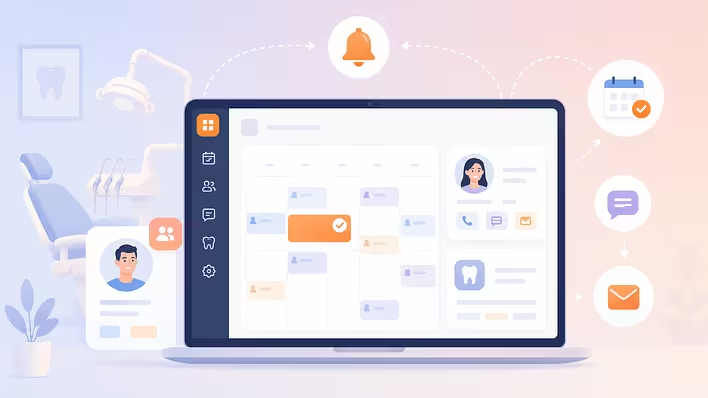
The loss of patients between visits is rarely related to dissatisfaction with treatment. More often, the reason is that the clinic simply does not maintain contact with the person after the course is completed. AI-Clinic helps the clinic not lose patients between visits: it keeps a history of inquiries, schedules follow-up appointments, and sends reminders on time. Thanks to systematic communication, a one-time visitor is more likely to return for preventive check-ups and gradually becomes a regular patient of the clinic.
All patient history in one place
When information about the patient is scattered among paper cards, doctor notes, and the administrator's memory, a personalized approach can be forgotten. The CRM collects all interaction history in one place - from the initial inquiry to the results of each appointment, materials used, and doctor's recommendations.
This allows anyone in the clinic to quickly restore context, even if the patient calls several months after their last visit. The administrator immediately sees the complete picture of treatment and the next planned steps - and the quality of service improves without additional effort from the staff.
Reminders that work on their own
The regularity of dental visits depends not only on the patient's discipline but also on how much the clinic reminds them of itself. Automated messages sent after a certain time following the last visit significantly increase the chance that a person will schedule a preventive check-up rather than only show up when a problem has already escalated.
Personalized reminders that take into account the individual treatment plan work better than general mailings. A patient who is reminded specifically about the relevant stage for them perceives it as care, not a formality.
Not all patients are the same
The CRM allows the database to be divided into groups - those undergoing active treatment, those who have completed a course and need monitoring, and those who have not visited for a long time. Each group requires its own interaction scenario, and automation allows different types of messages to be set up for each.
Patients who have not appeared for a long time receive a separate reminder with an invitation to schedule an appointment, while those in active treatment receive information about the next stages of therapy.
Numbers instead of assumptions
Management gains the ability to track real patient return metrics rather than relying on subjective impressions. How many people return for preventive care, what percentage responds to reminders, at what stage communication is most often lost - all this allows for adjusting the communication strategy based on facts, not guesses.
This kind of analytics also helps identify weak points in the work of individual doctors or administrators.
Fewer missed appointments
A forgotten appointment is a double problem: the clinic loses reserved time, and the patient postpones treatment indefinitely. Reminders the day before an appointment reduce the number of such situations and give the administrator time to reschedule in case of cancellations.
The ability to quickly confirm or reschedule an appointment through a convenient channel also increases discipline - interaction with the clinic becomes simpler and less formal.
When the patient is remembered
Knowledge of previous procedures, the usual appointment time, or even personality traits allows the administrator to communicate in a way that makes the person feel individual attention rather than a conveyor approach. A patient who is remembered is more likely to remain loyal to the clinic for years.
This is especially important for dentistry - trust in the doctor and a sense of comfort often determine whether a person will return specifically here.
What a systematic approach provides in the long term
A clinic that systematically works with its patient base receives not a one-time surge in appointments but a steady flow of repeat visits for years. A patient who is regularly reminded about preventive care and treated personally is less likely to go to competitors even for a more attractive price.
A systematic approach transforms chaotic database management into a controlled process, where every contact with the clinic works towards long-term loyalty rather than remaining a one-time interaction without continuation.