Who is Pepe and how a frog from a comic became one of the main memes on the Internet
The green frog with big eyes can be sad, angry, smugly smile, cry, or stare into the void with the expression of a person who is no longer surprised by anything. Pepe easily adapts to almost any situation, which is why over the years he has transformed into...
The green frog with big eyes can be sad, angry, smugly smile, cry, or stare into the void with the expression of a person who is no longer surprised by anything. Pepe easily adapts to almost any situation, which is why over the years he has transformed into a kind of universal language of emotions.
However, he was not initially a meme or a political symbol. Pepe was just one of the characters in an independent American comic about a group of carefree friends. His subsequent history clearly shows how the Internet can take an image from its creator, endlessly rework it, and imbue it with meanings that were never intended.
Who created Pepe the Frog
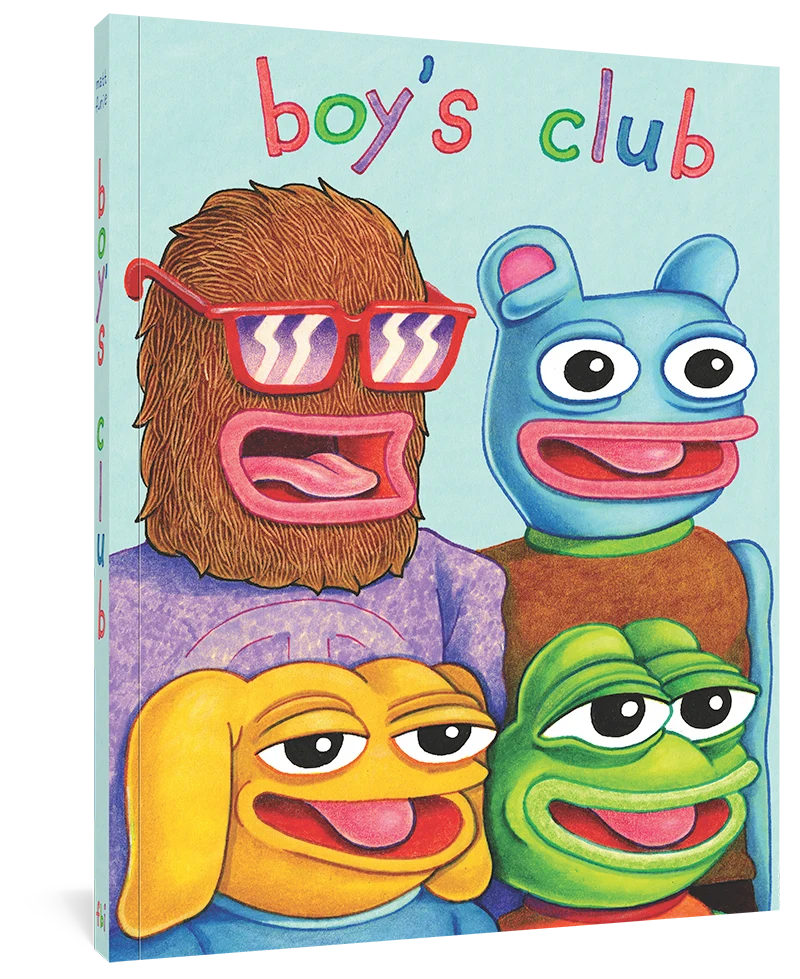
комікс Boy’s Club
Pepe was created by American artist and comic book author Matt Furie. The character appeared in the early 2000s, and in 2005 Furie began publishing the comic Boy’s Club on Myspace.
Its main characters were four anthropomorphic friends — Pepe, Brett, Andy, and Landwolf. They lived together, played video games, listened to music, joked, and found themselves in strange everyday situations. There was no complex overarching plot in this world: the comic was built around absurd humor and the carefree lives of young slackers.
The original Pepe was a friendly, relaxed, and slightly quirky character. He did not embody any political position, social movement, or grand life philosophy.
Where the phrase Feels Good Man came from
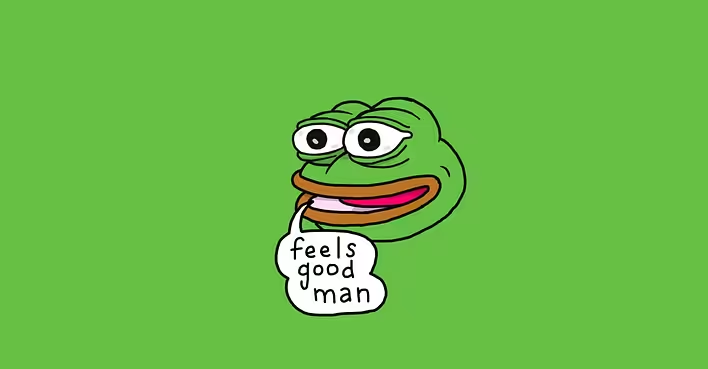
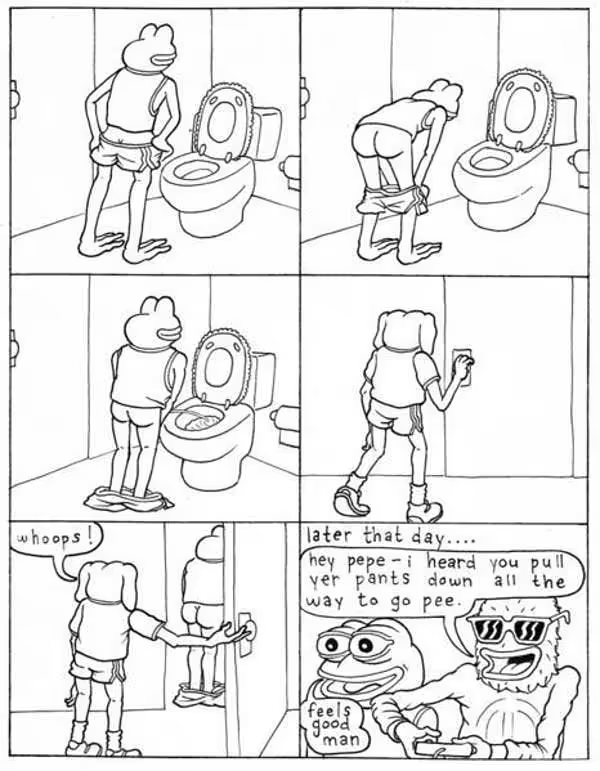
The future meme was born from a short episode of Boy’s Club. In one scene, Pepe walks into a bathroom and pulls his pants down to his ankles. Another character asks why he is doing this. Pepe replies: Feels Good Man — roughly "It feels nice, dude" or "I like it."
Within the comic, it was a typical absurd joke. However, readers began to cut out the frame with the satisfied Pepe and publish it separately. Around 2008, the image gained popularity on forums, particularly on 4chan, and the phrase Feels Good Man became a reaction to something pleasant, successful, or funny.
At this point, Pepe effectively separated from the original source. Many users who spread the image no longer knew about Boy’s Club and perceived the frog as a common internet character.
Why Pepe is always sad
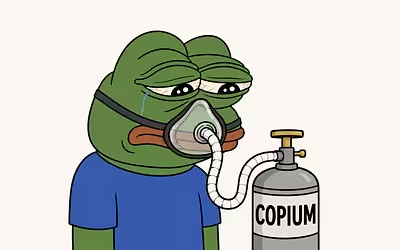
The first popular versions of Pepe mostly repeated his satisfied expression from the comic. Over time, users re-drew the character and created Sad Frog, or sad Pepe. He developed droopy mouth corners, a tired look, and a characteristic expression of quiet disappointment.
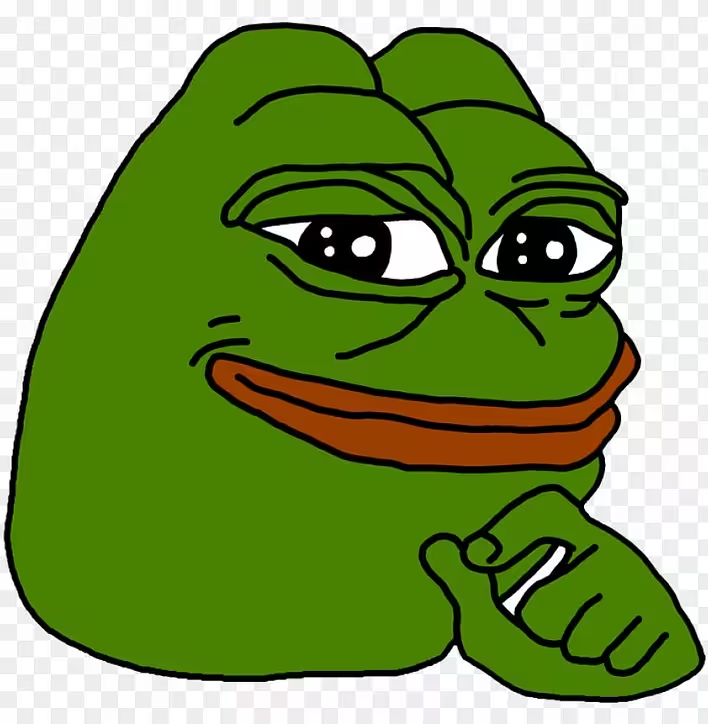
Smug Pepe
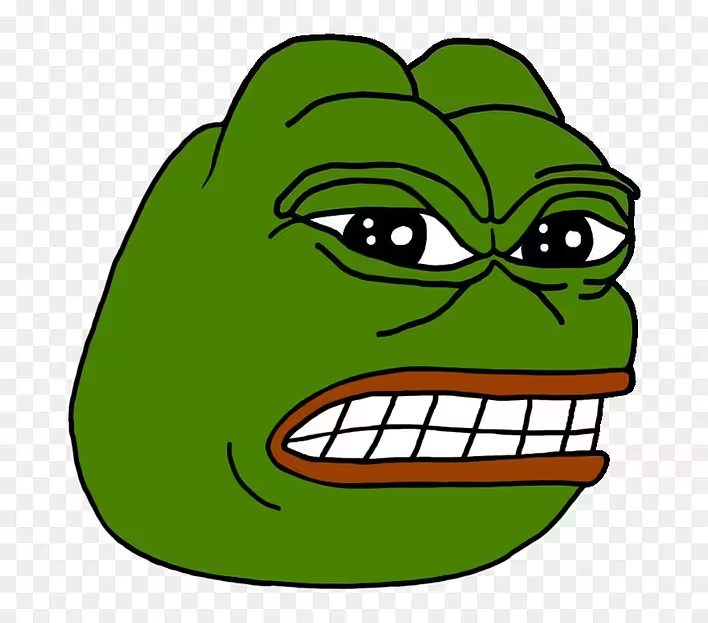
Angry Pepe
It was the sad Pepe that significantly expanded the meme's possibilities. Now the frog could convey loneliness, awkwardness, fatigue, failure, disappointment, or melancholy. Then other variants emerged:
Smug Pepe — smug Pepe;
Angry Pepe — angry character;
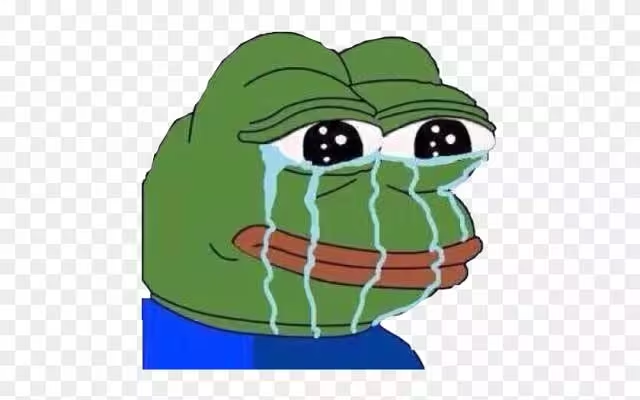
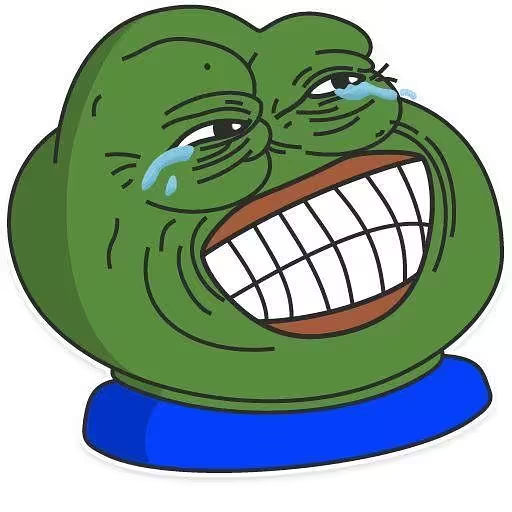
Crying Pepe — Pepe who is crying;
PepeHands — sad Pepe with hands near his face;
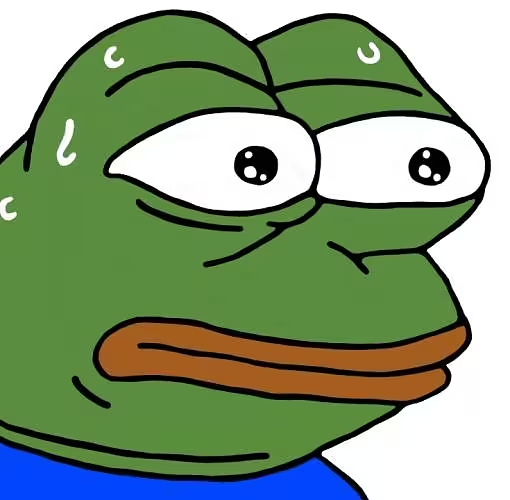
monkaS — scared and sweaty Pepe;
PepeLaugh — the frog trying to hide laughter.
PepeHands
Crying Pepe
Some of these memes became popular on Twitch, Discord, and other platforms. Emotions were often exaggerated, and the character was redrawn as heroes from movies, games, anime, and real people.
Pepe turned out to be particularly convenient for memes due to his simple design. A large head, prominent eyes, and a wide mouth allow his mood to be changed with just a few lines, without losing recognizability.
monkaS
PepeLaugh
What is Rare Pepe
When variations of Pepe became extremely numerous, a joke about Rare Pepe — "rare Pepes" emerged on the Internet. This referred to unusual or lesser-known versions of the meme that supposedly had collectible value.
Users exchanged them, created fake certificates of authenticity, and pretended that some images were extremely expensive and rare. The joke parodied the collecting of artworks, cards, and other valuable items.
Over time, this idea went beyond mere play. Some "rare Pepes" began to be sold as digital collectible assets. Thus, the character also found himself in the early culture of tokenized images, which preceded the mass fascination with NFTs.
Why Pepe was called a symbol of hate
In the mid-2010s, some images of Pepe began to be used by American far-right online communities. The character was depicted with Nazi symbols, added to racist and anti-Semitic materials, and used for provocations and harassment of people on social media.
In 2016, the American Anti-Defamation League added Pepe to its database of hate symbols. However, the organization separately emphasized that most memes featuring Pepe do not have racist or anti-Semitic content, so each image needs to be evaluated in its appropriate context.
Thus, the green frog itself is not an automatic indication of hate or support for a particular ideology. The added symbols, caption, situation, and purpose of the publication are crucial. Sad Pepe in a message about a bad day and Pepe in the guise of a Nazi are not the same.
How the author tried to reclaim his character
Matt Furie reacted negatively to the association of his friendly character with hate. He publicly condemned such images and joined the campaign #SavePepe, aimed at restoring the frog's original peaceful and humorous image.
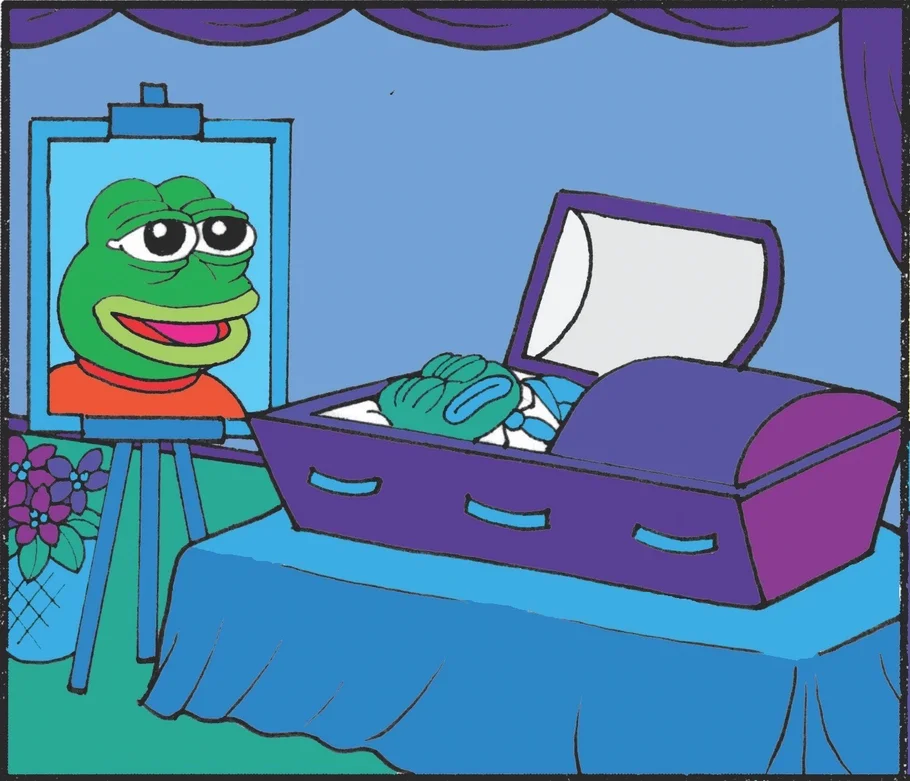
The artist also defended his copyright and sought to remove Pepe from certain propaganda and commercial materials. In 2017, Furie symbolically "killed" the character in a comic, depicting him in a coffin. However, it was already impossible to end the life of the meme in this way: Pepe had long existed independently of the author.
The story of Furie and his struggle for his creation is the subject of the documentary film Feels Good Man from 2020. It shows not only the evolution of Pepe but also the overall mechanism of transforming an author's drawing into a mass internet symbol.
How Pepe became a symbol of protests in Hong Kong
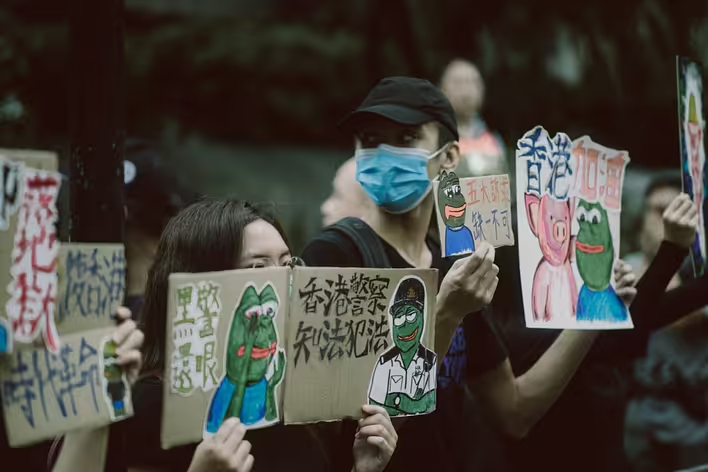
The story of Pepe did not end with American politics. During the protests in Hong Kong in 2019, he began to be used by supporters of the democratic movement. The frog was depicted in a yellow helmet, protective mask, or glasses, and was also added to posters, stickers, and graffiti.
For Hong Kong protesters, Pepe was not a symbol of far-right views. He embodied an ordinary person who feels fear, fatigue, anger, and yet continues to resist. Thus, the character acquired almost the opposite political meaning — freedom and resistance to oppression.
This case particularly well demonstrates that memes do not have the same meaning worldwide. One image can take on different, and sometimes contradictory, meanings depending on the country, community, and historical situation.
Who Pepe is today
Today, Pepe remains one of the most recognizable characters in internet culture. He is used in chats, social media, streaming platforms, and forums. For most people, he is primarily an emotional reaction: a way to non-verbally express sadness, anxiety, disappointment, joy, or ironic self-satisfaction.
At the same time, the complex history of the character cannot be completely ignored. In a certain context, Pepe can indeed be part of a racist or extremist message. But reducing all his appearances to such meaning is also incorrect.
Pepe has become a kind of mask onto which users project their own emotions and ideas. He can be a sad loser, a smug troll, a game hero, a protest participant, or just a frog that perfectly conveys a person's mood on a Monday morning. It is this ability to change that has helped the character survive dozens of internet trends and remain recognizable many years after his first appearance.
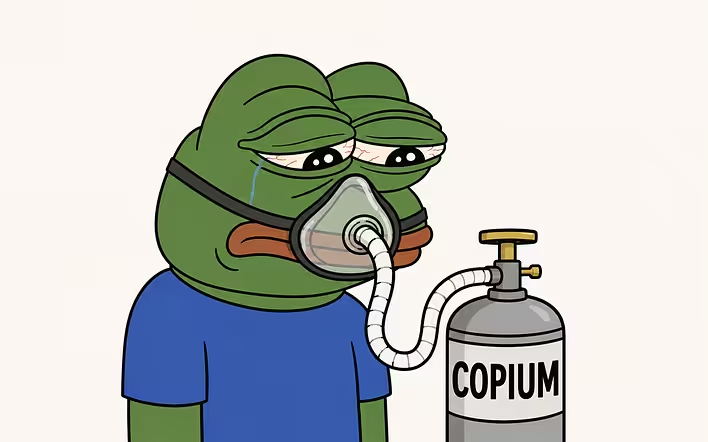
“One more match — and they will definitely bounce back.” “The price has dropped by 70%, so now is the perfect time to buy more.” “This is not a failure, just a clever plan, the ...