Preimplantation genetic diagnosis: what the analysis shows and why it is needed — Medical Center "Mother and Child"
During the program of in vitro fertilization, it is important to assess the potential of embryos for development. One of the modern technologies that helps make infertility treatment more predictable is preimplantation genetic diagnosis (PGD). This study al...
Sponsored contentThis post was created in partnership with an advertiser and contains affiliate links
During the program of in vitro fertilization, it is important to assess the potential of embryos for development. One of the modern technologies that helps make infertility treatment more predictable is preimplantation genetic diagnosis (PGD). This study allows for the examination of the genetic material of the embryo before it is transferred to the uterus, and to select for transfer the one that has the highest chances of developing into a healthy pregnancy.
What is PGD and at what stage of IVF is it performed
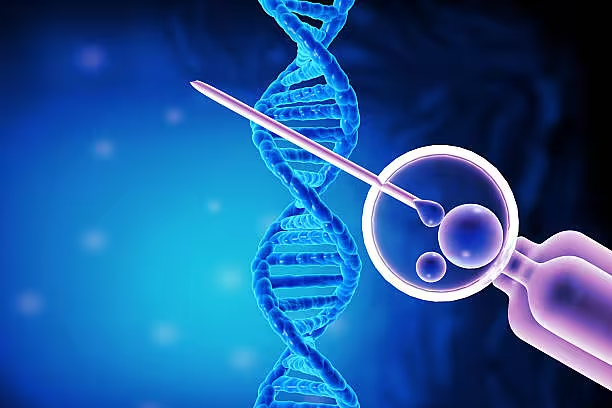
Preimplantation genetic diagnosis is an analysis of the genetic material of embryos obtained in an IVF cycle, which is conducted before their transfer to the uterus. PGD analysis is applied selectively when it is known that one of the parents is a carrier of a specific genetic mutation.
Technically, the process occurs as follows:
after fertilization of the oocytes in the laboratory, the embryos are cultured to the blastocyst stage — this is the fifth to sixth day of development when the embryo already has a clear structure of several dozen cells.
at this stage, the embryologist carefully takes a few cells from the outer layer of the blastocyst (trophoblast), which later forms the placenta, and not from the inner cell mass, which gives rise to the fetus itself. This is a critically important nuance, as the biopsy does not affect the cells from which the child will develop;
after the biopsy, the embryos are frozen using the vitrification method.
The transfer occurs in the next cycle when the results of the genetic analysis are ready.
What genetic disorders does embryo diagnosis detect
Most commonly, PGD detects the following disorders:
aneuploidies — conditions when there is an incorrect number of chromosomes in the cells of the embryo. For example, an extra chromosome that causes Down syndrome, or, conversely, its absence;
structural rearrangements of chromosomes, including balanced translocations. They increase the risk of forming genetically unbalanced embryos, which is often the cause of recurrent miscarriages;
monogenic hereditary diseases, when parents are known carriers of a specific mutation (cystic fibrosis, spinal muscular atrophy, Duchenne muscular dystrophy, thalassemia, hemophilia, and others).
PGD does not replace prenatal diagnosis during pregnancy, as it only checks those indicators that are targeted by the specific study.
Who is PGD recommended for: age, heredity, unsuccessful attempts
The most common reasons for prescribing PGD include:
the age of the woman. After 35 years, the probability of chromosomal abnormalities in oocytes increases significantly and non-linearly, and after 40 years, it becomes one of the main factors that reduce the effectiveness of IVF;
burdened heredity. Known cases of genetic diseases in the family, carrier status of a balanced translocation in one of the partners, or the birth of a previous child with chromosomal pathology;
concerning reproductive history. For example, if the couple has had two or more missed pregnancies or consecutive spontaneous miscarriages, as well as several unsuccessful embryo transfers in IVF without an established cause.
In such situations, PGD helps distinguish the genetic cause of failures from others and adjust the further treatment strategy. If necessary, the "Mother and Child" medical center can offer other infertility treatment methods, including the Micro-TESE procedure (https://mdclinics.com.ua/ua/uslugi/micro-tese/) for men.
How PGD affects the success of embryo transfer
The main task of preimplantation genetic diagnosis is to provide additional information for selecting the embryo. If among the obtained embryos there are those with a normal chromosomal set, they have a higher potential for implantation and pregnancy development.
According to modern international studies, PGT-A can reduce the risk of transferring an embryo with aneuploidy and in certain patient groups shorten the time to childbirth by reducing the number of ineffective transfers and early pregnancy losses.
However, the method has its limits. PGD increases the likelihood of successful implantation but does not guarantee pregnancy one hundred percent, as other factors influence the outcome.
PGD at the "Mother and Child" medical center: technology and laboratory base
At the "Mother and Child" medical center in Kyiv, the PGD program is part of a comprehensive infertility treatment. Each stage is performed by experienced embryologists in a specialized laboratory that meets the quality standards accepted in the clinic. To control all stages of work with biological material, the RI Witness system has been implemented, which automates the identification process and reduces the risk of errors. After obtaining the conclusion, the reproductive specialist, together with the patients, determines the optimal strategy for further treatment and plans cryotransfer.
Before prescribing PGD, the patient receives a consultation from a reproductive specialist, and if necessary, from a geneticist, who explains what specific indications exist in the particular case and what to expect from the study results. Patients receive advance information about all stages of the procedure and associated costs. The trust of patients in the clinic is confirmed by the award "Ukrainian People's Prize 2025". The medical center implements the social project "A Stork Will Come", aimed at supporting couples who need assisted reproductive technologies.
AI agent, or artificial intelligence agent, is a software system that receives a goal, independently determines the necessary steps, and performs actions on behalf of the user. ...